


Key Takeaways
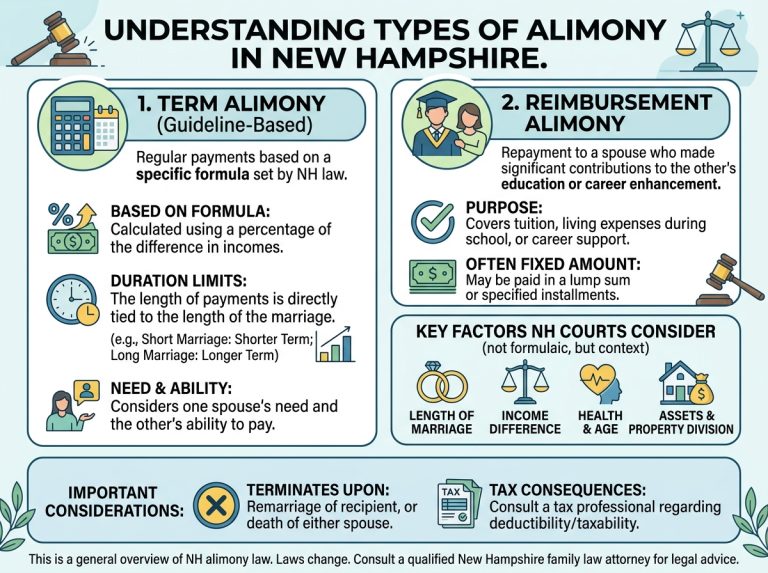
- New Hampshire recognizes temporary alimony, term alimony, and reimbursement alimony.
- Support is based on need, ability to pay, income, property, employment circumstances, and the realities of maintaining two households.
- Term alimony generally provides periodic payments after divorce, while reimbursement alimony addresses qualifying contributions to the other spouse’s financial resources.
- Temporary support can help meet immediate needs while a divorce, legal separation, or annulment case is pending.
- Clear financial records and detailed written terms are essential when seeking, negotiating, or changing alimony.
Alimony, often called spousal support, can be one of the most important financial issues in a New Hampshire divorce. It is not automatic, and it is not intended as a punishment or reward. Instead, it can help address the financial effects of ending a marriage and creating two separate households. A person considering a change to an existing order may benefit from speaking with an NH alimony modification lawyer before reducing, stopping, or renegotiating payments.
New Hampshire law uses specific categories of alimony, and each serves a different purpose. The appropriate type, amount, and duration depend on the facts of the case, including each spouse’s income, reasonable expenses, health, employability, property division, and contributions during the marriage.
How New Hampshire Approaches Spousal Support
Under the statutory definitions of alimony, New Hampshire recognizes temporary alimony, term alimony, and reimbursement alimony. A court may also consider a negotiated agreement between spouses, provided the agreement is clear and appropriate under the circumstances.
When alimony is contested, the court generally looks at whether the requesting spouse lacks enough income or property to meet reasonable needs, whether that spouse can become self-supporting through appropriate employment, and whether the other spouse can meet personal needs while contributing to support. The marital standard of living matters, but both parties may need to adjust their spending after separation.
Temporary Alimony During a Pending Case
Temporary alimony is periodic support paid while a divorce, legal separation, or annulment case is pending. It ends when the final decree becomes effective. Its purpose is practical: it may help a spouse cover housing, groceries, insurance, transportation, medical costs, or other ordinary expenses while the case moves forward.
For example, one spouse may have worked reduced hours for years to handle childcare or household responsibilities. If that spouse must suddenly maintain a separate residence during the divorce, temporary support may help bridge the immediate gap between income and necessary monthly costs.
Temporary alimony does not necessarily predict the final result. A final order may be lower or higher, shorter or longer, or unnecessary after the parties exchange complete financial information and resolve property division, parenting expenses, and other issues.
Term Alimony After Divorce
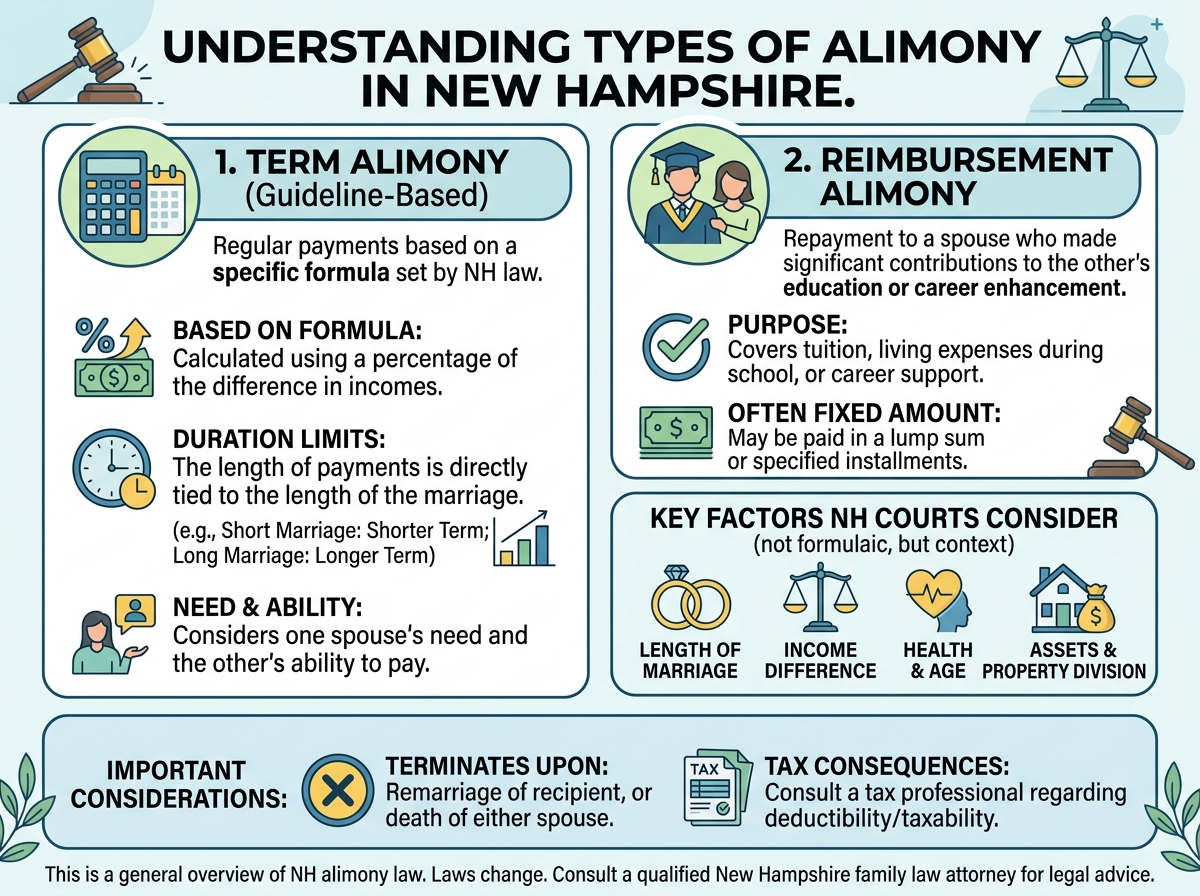
Alimony is a type of spousal support consisting of periodic payments after a divorce, aimed at helping both individuals sustain a reasonable standard of living. In New Hampshire, the amount generally depends on the recipient’s needs or a percentage of the income difference between spouses, with possible modifications based on factors like health, financial dependence, or special needs. The typical maximum duration is 50% of the marriage length, though courts and agreements can extend or alter this period, often allowing for step changes in alimony payments.
Reimbursement Alimony for Meaningful Contributions
Reimbursement alimony compensates a spouse for their contributions to the other spouse’s financial success, particularly when the division of property does not adequately reflect those contributions. This type of alimony is relevant in situations where one spouse supported the other’s education or career development. For instance, if one spouse worked while the other completed a degree that resulted in higher earnings, reimbursement alimony may be appropriate.
Reimbursement alimony can be paid in installments, typically over a period of up to five years, unless both parties agree to a different arrangement. Unlike term alimony, reimbursement alimony cannot be modified without the consent of both parties, making it essential to use precise language in the agreement. The order should clearly outline the amount payable, the payment schedule, the final payment date, and any required security.
Financial Information That Can Shape the Result
Alimony decisions require a realistic picture of both households. Before negotiating or appearing at a hearing, spouses should gather reliable documentation, including:
- Recent pay stubs, W-2 forms, tax returns, and proof of bonuses or commissions.
- Bank, investment, retirement, and debt statements.
- Business records, profit-and-loss statements, and self-employment documentation.
- Health insurance premiums, medical expenses, and disability-related costs.
- Housing, transportation, childcare, and recurring household expenses.
- Information about pensions, Social Security, and other future income sources.
New Hampshire requires financial affidavits before hearings involving alimony, property settlement, or child support. Accuracy matters because incomplete income information, overlooked business benefits, or unrealistic expense estimates can distort negotiations and create avoidable conflict.
Building a Practical Post-Divorce Budget
A useful monthly budget starts with essential expenses, then separates fixed obligations from variable costs. Review six to twelve months of actual spending, but account for changes after separation, such as a new rent payment, different insurance costs, increased transportation expenses, or the loss of shared household savings.
Both spouses should compare realistic post-divorce income with reasonable needs. Child support and alimony are separate obligations, even though child-related expenses may affect the ability to pay support. A budget should also account for taxes, health coverage, retirement contributions, and a modest emergency reserve.
Modification, Retirement, and Life Changes
The term alimony may be modified when circumstances change substantially and unpredictably, provided the legal standard is met. Common reasons to review an order include job loss, disability, a significant decrease in income, retirement, or a significant change in financial need. Remarriage and qualifying cohabitation can also affect an existing obligation.
Do not assume that an informal agreement or a changed financial situation automatically ends payments. The current order controls until the parties formally change it or the court enters a new order. The general concept of spousal support arrangements may be familiar, but New Hampshire’s statutes and the wording of the individual order determine what applies in a specific case.
Terms to Address in an Alimony Agreement
A carefully drafted agreement should state the payment amount, due date, payment method, start date, end date, and whether payments change over time. It should also address job loss, retirement, disability, remarriage, cohabitation, missed payments, life insurance or other security, and whether future modification is allowed.
Vague wording, such as “support will continue as agreed,” can create serious problems later. A complete agreement gives both spouses a clear understanding of their obligations and reduces the risk of future disputes.
Conclusion
The types of alimony available under NH law are designed to address different financial needs. Temporary alimony can provide stability during a pending case, term alimony can support a spouse after divorce, and reimbursement alimony can recognize meaningful contributions to the other spouse’s earning capacity or financial resources. Careful financial preparation, realistic budgeting, and precise written terms can help both parties make informed decisions that remain workable over time.