
Key Takeaways
- A storm-ready entryway is a complete system, not simply a heavy door.
- Local code, wind exposure, and debris requirements should guide product decisions.
- Frames, glass, locks, hinges, thresholds, seals, and anchors all affect performance.
- Water management and corrosion resistance matter between major storms as well.
- Careful installation and routine inspections can prevent avoidable failures.
In a coastal home, an exterior entryway is more than a design feature. It is part of the protective shell that helps manage high winds, wind-driven rain, airborne debris, humidity, and salt exposure. Selecting hurricane impact doors can be one part of a smarter plan, but a strong result depends on the full opening, not only the door panel.
Front entries deserve attention, but so do side doors, back doors, patio doors, French doors, garage access doors, sidelights, and transoms. When one exterior opening fails, wind and water can enter the home, damage finishes and belongings, and add pressure to other parts of the building envelope.
Why Entryways Matter During Severe Weather
A roof can be well built and still leave a home vulnerable if a door or glazed opening is not prepared for local conditions. A poorly secured rear door, for example, may allow wind-driven rain inside during a severe storm. Once water reaches flooring, drywall, insulation, and electrical components, a relatively small opening problem can become an extensive repair project.
Planning should include every exterior opening, especially locations that receive direct wind or blowing rain. Coastal homes often face repeated exposure to ordinary seasonal weather, not just hurricanes. That makes durability a year-round concern.
Check Local Rules Before Choosing A Door
Location comes before style. Wind speed, terrain, proximity to the shoreline, building height, and local construction rules can affect what is appropriate for an entryway. Florida emergency guidance emphasizes protecting the areas where wind can enter a home and encourages homeowners to contact the local building code official when planning improvements.
Terms Worth Understanding
- Wind-borne debris region: An area where exterior openings may need protection from flying debris.
- Design pressure: A measure of the wind load a tested assembly is designed to withstand.
- High-velocity hurricane zone: A location subject to especially demanding wind and impact requirements.
- Product approval: Documentation showing that a specific configuration meets a stated requirement.
Ask a local building official, architect, engineer, or licensed contractor which requirements apply to the property. Do not assume that a door suitable for one neighborhood will meet the needs of another.
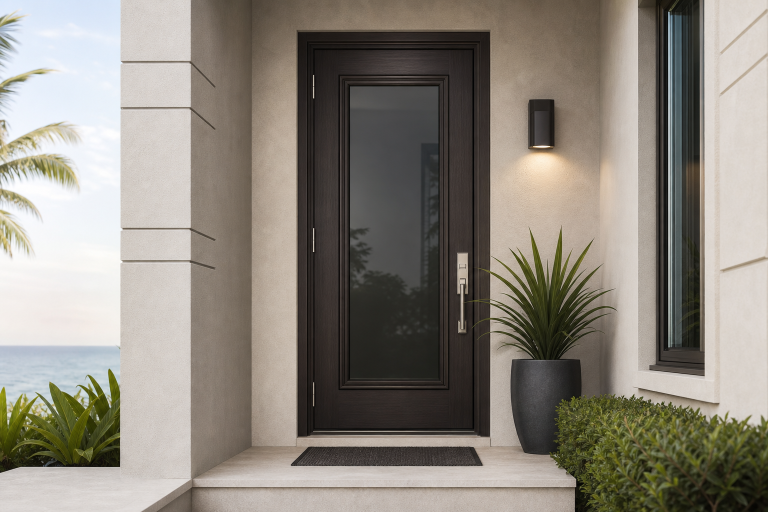
Think In Terms Of A Complete Door System
A rated door slab alone does not guarantee a storm-ready opening. Performance depends on how the components work together, including the frame and jambs, hinges, locks, threshold, weatherstripping, glass, glazing stops, fasteners, and anchors that connect the frame to the structure.
The weakest part can limit the entire assembly. A durable slab paired with a weak frame connection may shift under load. Likewise, strong framing cannot compensate for unsuitable glass or worn seals. Review the approved configuration as a whole, including any sidelights and transoms.
Plan For Wind, Rain, And Salt Air
Coastal entryways must manage three overlapping threats: wind pressure, water driven into gaps by wind, and gradual corrosion from salt air. A door sweep helps, but it is only one layer of water control. The threshold, sill, drainage path, weather seals, frame joints, wall flashing, and exterior finish all matter.
Salt residue and moisture can slowly damage hardware and coatings. Look for rust, peeling finishes, swollen wood, stained trim, soft materials, loose sealant, and gaps around the frame. Storm resistance handles the dramatic event. Moisture resistance helps the entry survive the many ordinary days between storms.
Balance Glass, Light, And Storm Performance
Glass can make an entry brighter and more welcoming, but appearance does not establish storm performance. Ordinary decorative glass, laminated glass, and tested impact glazing are not interchangeable. The glass, frame, glazing method, and installation details should match the required assembly.
Before choosing a design, consider whether full glass, partial glass, sidelights, or a transom truly suits the opening. More glass can bring in daylight, but it also increases the area that requires proper testing, approval, and maintenance.
Treat Installation As A Critical Step
Even a well-tested door can underperform when installed with incorrect fasteners, weak anchors, poor alignment, or incomplete flashing. Use an installer familiar with high-wind construction and the manufacturer’s instructions for the exact configuration being installed.
- Confirm the rough opening, structural support, and sill condition.
- Review the approved door configuration and required fastener schedule.
- Prepare flashing and water-management details before setting the frame.
- Anchor and align the frame, then test door operation and lock engagement.
- Document approvals, installation records, and maintenance information.
Use A Simple Entryway Inspection
Inspect entryways before storm season and after severe weather. Check that the door closes evenly, locks engage firmly, hinges and screws are secure, and weatherstripping is not flattened, torn, or missing. Also inspect thresholds, frame corners, glass edges, sealant joints, and interior trim for water marks.
A door that suddenly sticks, leaks, shifts, or shows cracks around the strike plate or frame deserves professional attention. Visible damage may be only part of the problem.
Build A Year-Round Maintenance Plan
Coastal door care should begin well before a storm watch is issued. Operate locks monthly; inspect exposed gaps every few months; rinse salt residue from appropriate exterior surfaces; and check finishes, thresholds, seals, and hinges at least twice a year. FEMA’s building-science resources can also help homeowners understand how water intrusion and vulnerable openings affect overall resilience.
Avoid Common Planning Mistakes
- Choosing a door before confirming local requirements.
- Comparing door slabs while overlooking frames, hardware, and anchors.
- Assuming a heavy door is automatically impact-rated.
- Adding sidelights or transoms without reviewing the complete tested assembly.
- Skipping sill flashing, drainage, or seal maintenance.
- Waiting until a storm is approaching to inspect exterior openings.
Final Planning Checklist
- Identify wind, debris, and water-exposure conditions for the property.
- List every exterior door and glazed opening that needs review.
- Confirm the complete assembly, including frame, glass, hardware, threshold, and anchors.
- Use an installer experienced with coastal construction requirements.
- Maintain seals, finishes, hardware, and drainage details throughout the year.
- Keep approvals, installation records, and inspection notes in one accessible place.
A storm-ready entryway comes from many practical decisions made early and maintained over time. When code requirements, complete-system performance, water control, careful installation, and routine care work together, an entry can remain welcoming while offering stronger protection for a coastal home.