Key Takeaways
- The best gym floor starts with how the space is actually used, not simply which material looks best.
- Competitive court sports, strength training, physical education, and community events can require very different surface qualities.
- Safety, traction, shock absorption, maintenance, subfloor conditions, and lifecycle cost should all shape the decision.
- Multi-use gyms need a practical balance between athletic performance, durability, and event protection.
- A strong installation and maintenance plan helps preserve the floor long after opening day.
Why Gym Floor Selection Is About More Than Materials
Gym flooring is a performance system, not just a finished surface. A school gym may host basketball practice in the afternoon, physical education classes in the morning, and a graduation ceremony on the weekend. A recreation center may need to accommodate volleyball, fitness classes, folding chairs, rolling bleachers, and equipment carts in the same space. Selecting flooring without accounting for those demands can lead to premature wear, difficult maintenance, or a surface that does not suit the people using it. Planning for gymnasium flooring installation should begin with a full view of the facility’s everyday schedule, not a narrow focus on the initial purchase price. A less expensive surface may become costly if it requires frequent repairs, specialized cleaning, or replacement sooner than expected. The better question is which system delivers the right combination of safety, performance, durability, and manageable upkeep over its full service life.
Start With a Facility Use Checklist
Before comparing samples or requesting bids, list every activity the room will support. Include regular programs as well as occasional uses that can place unusual stress on the surface. Then rank each use by frequency, impact level, rolling loads, and the consequences of surface damage.
- Basketball games, practices, and camps
- Volleyball and other indoor court sports
- Physical education classes and youth recreation
- Strength and conditioning workouts
- Fitness classes, dance, and general training
- Assemblies, meals, ceremonies, and graduations
- Concerts, temporary stages, and community events
- Rolling bleachers, carts, portable goals, and movable equipment
This exercise prevents a common mistake: specifying a court surface for a room that functions as a public event hall almost as often as it functions as a gym. It also makes it easier to explain the final decision to administrators, board members, staff, and community stakeholders.
Compare Common Gym Flooring Categories
Hardwood Sports Flooring
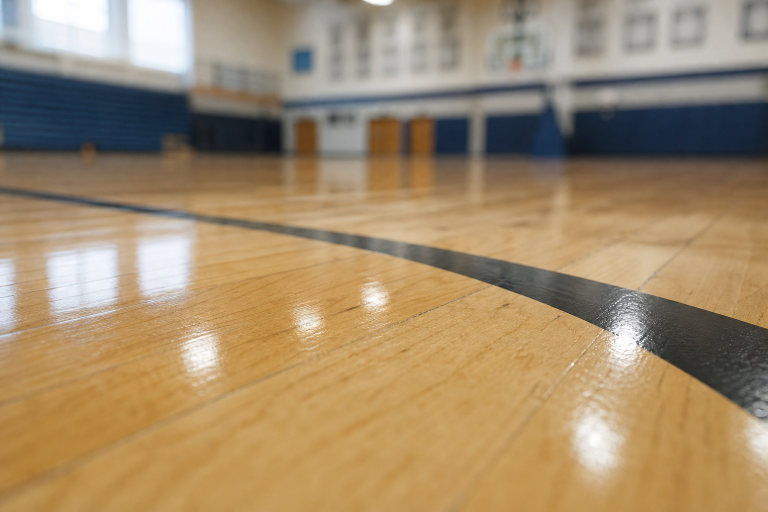
Maple hardwood remains a familiar choice for basketball, volleyball, and performance-focused court sports. It offers a traditional appearance, dependable ball response, and a playing feel many athletes expect. When installed over an appropriate resilient subfloor, hardwood can provide controlled traction, energy return, and comfort for repeated athletic movement. Its tradeoffs matter in heavily shared facilities. Hardwood needs close attention to indoor temperature, humidity, moisture control, cleaning practices, and finish care. Chairs, staging, debris, and heavy rolling equipment can damage the surface, so schools and venues that host frequent non-sport events should budget for approved protective coverings.
Synthetic Sports Flooring
Synthetic sports flooring, including sports vinyl and certain poured systems, can be a strong option for multi-purpose gyms. These systems may offer consistent cushioning, easier daily upkeep, and good resistance to routine traffic. They are often useful when a facility needs reliable athletic function but also expects assemblies, classes, and other community programming. Not all synthetic systems perform alike. Compare verified traction, shock absorption, ball rebound, seams, repair options, cleaning requirements, and expected wear under rolling loads. The recent discussion of gym flooring system selection emphasizes why performance, installation conditions, versatility, and durability should be evaluated together rather than treated as separate decisions.
Rubber and Fitness Flooring
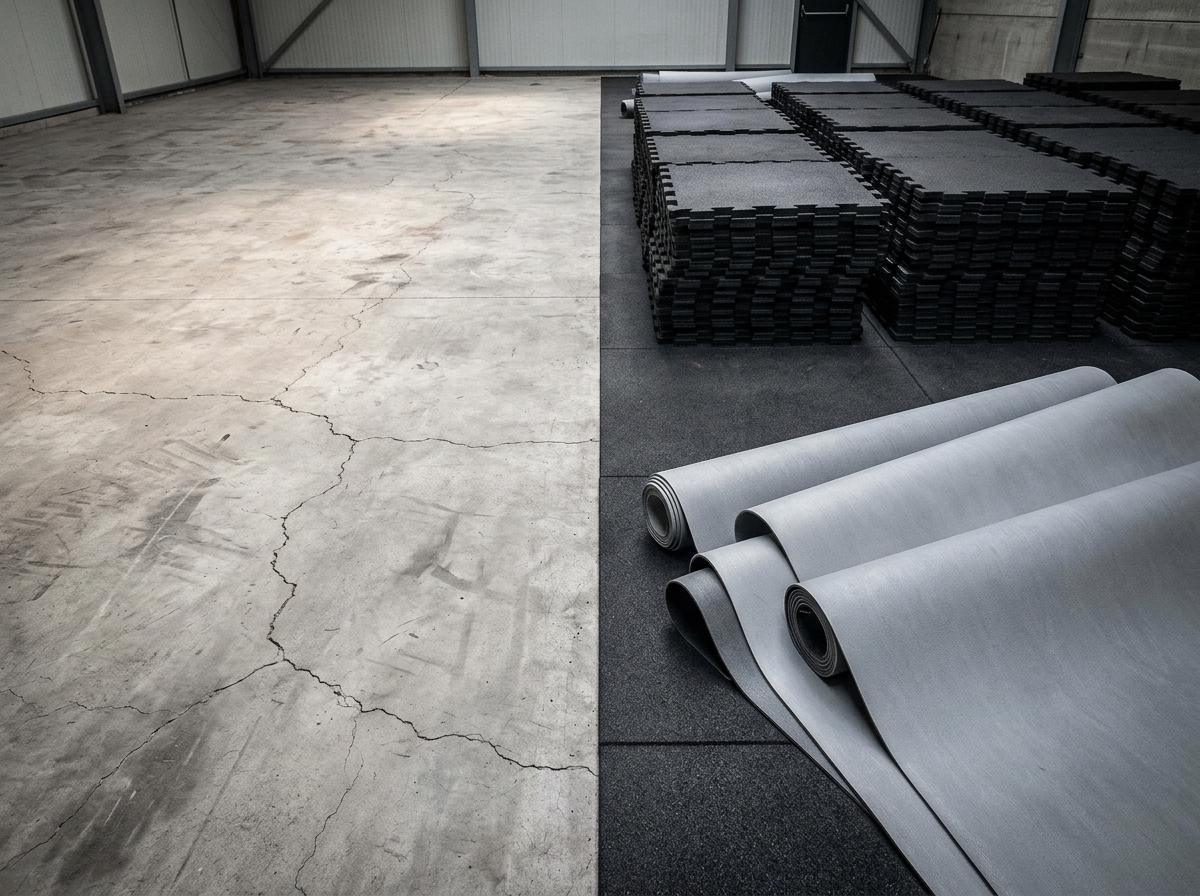
Rubber flooring is often best suited to weight rooms, conditioning spaces, fitness zones, and areas with repeated equipment impact. It can reduce noise, improve grip, protect the base beneath equipment, and better tolerate dropped weights than a traditional court floor. Rubber is especially useful where durability and sound control carry more weight than ball response. However, rubber usually does not provide the same playing characteristics as those expected on a competitive basketball or volleyball court. Facilities with separate activity zones may get better results by using rubber in training areas and a dedicated sports system in the main court.
Specialty and Multi-Sport Surfaces
Specialty systems can bridge the gap between recreational sports, fitness, and community use. Pad-and-pour and other resilient surfaces may provide a seamless finish, dependable cushioning, and better tolerance for multi-use traffic. Ask for product-specific performance data that reflects your actual sports and events. A floor should be selected for what it does, not only how it looks in a sample.
Focus on Safety and Athletic Performance
A well-chosen gym floor creates predictable movement. Key factors include shock absorption, traction, controlled sliding, ball rebound, surface uniformity, foot stability, impact protection, and glare control. Too much grip can make pivots feel restrictive and increase strain, while too little grip can contribute to slips. The objective is not maximum traction, but consistent traction appropriate for the activity. For competitive programs, request documentation that addresses the system’s tested performance. For general recreation and physical education, comfort, durability, and ease of maintenance may deserve greater emphasis. The correct priorities depend on who uses the room most often and how intensely.
Do Not Overlook the Subfloor
The visible surface is only part of the finished system. The subfloor affects cushioning, stability, moisture protection, sound, and long-term floor behavior. Even premium flooring can perform poorly if the concrete slab is uneven, damp, or improperly prepared.
- Is the slab level, clean, and dry enough for the selected system?
- What moisture testing and documentation are required before installation?
- Will the flooring be fixed, floating, resilient, or fully adhered?
- How will the system handle rolling loads and heavy equipment?
- Can damaged areas be repaired without replacing the entire floor?
Plan for Events Beyond Sports
Modern gyms routinely serve as gathering spaces. Folding chairs, stage legs, carts, food service, portable seating, and outdoor grit can scratch finishes, dent wood, stress seams, or leave permanent marks. Protection should be part of the flooring plan from the beginning, not an emergency purchase before the first graduation.
- Use manufacturer-approved covers for assemblies, performances, and ceremonies.
- Place protective pads under staging, chairs, and heavy equipment.
- Require clean, non-marking wheels on carts and bleachers.
- Use entry mats and cleaning routines to keep grit off the surface.
- Store covers and protection materials where staff can access them quickly.
Build a Realistic Maintenance and Budget Plan
Maintenance should influence the original purchase decision. Ask for a written care guide that covers approved cleaners and equipment, inspection intervals, finish care, repair procedures, and warranty limitations. Daily dust removal, prompt spill response, periodic inspections, and seasonal environmental checks can protect both appearance and performance. When comparing proposals, calculate the total cost of ownership rather than focusing only on installation. Include subfloor preparation, court markings, cleaning supplies, recoating or refinishing, repairs, event covers, downtime, and eventual replacement. Compare at least three systems under the same assumptions to ensure the decision remains fair and understandable.
Questions to Ask Before Signing a Contract
- Which activities is this system designed to support?
- What test data is available for traction, shock absorption, and ball response?
- How will slab moisture and preparation be verified?
- What annual maintenance is required?
- How are dents, stains, seams, and finish wear repaired?
- What protection is recommended for non-sport events?
- How long will installation take, including curing or finishing time?
- What warranty applies to materials and artistry?
Conclusion
The right gym floor supports the sports, people, events, and equipment that fill the room every week. By mapping facility use, reviewing performance needs, checking subfloor conditions, planning for protection, and comparing lifecycle costs, decision-makers can choose flooring that remains safe, functional, and practical as the facility’s needs evolve. A good choice should also consider maintenance routines, cleaning requirements, moisture exposure, installation conditions, and the amount of downtime the facility can tolerate. Flooring should match how the space is actually used rather than simply focusing on appearance or initial price. With careful planning, facility owners can reduce premature wear, improve user comfort, and avoid costly replacements. The goal is to create a dependable surface that performs well during practices, competitions, community events, and everyday activities while remaining manageable for staff to maintain over the long term.