Key Takeaways
- Clinical trial conversations should be clear, balanced, and centered on the patient’s needs.
- Questions about safety, schedules, costs, alternatives, and follow-up care can help you make an informed decision.
- Meeting eligibility criteria does not guarantee enrollment, because the study team must complete screening.
- Participation is voluntary, and patients can ask for more time before deciding.
- Caregivers and trusted support people can help with notes, logistics, and questions without taking over the decision.
A clinical trial conversation is an opportunity to understand a research study before deciding whether participation makes sense. Exploring clinical research can help patients and caregivers become familiar with the kinds of questions studies are designed to answer, but every individual study deserves a careful, personal discussion.
The goal is not to rush toward the newest option. It is to learn how a study may fit with a person’s diagnosis, current care plan, daily responsibilities, comfort level, and health goals. A good conversation should leave room for honest questions, uncertainty, and time to think.
Why Clinical Trial Conversations Matter
A clinical trial is a research study that seeks to answer a specific health question. It may examine a medicine, medical device, procedure, diagnostic tool, prevention strategy, or supportive care approach. Some trials compare a new approach with standard care, while others may include a placebo or use random assignment. The study team should explain these details in everyday language.
Research participation may provide access to a study option, closer monitoring, or the chance to contribute to future medical knowledge. It is not, however, a promise that a treatment will work or improve a person’s health. The purpose of the conversation is to ensure expectations are realistic and that the decision reflects the patient’s priorities.
What to Do Before the Appointment
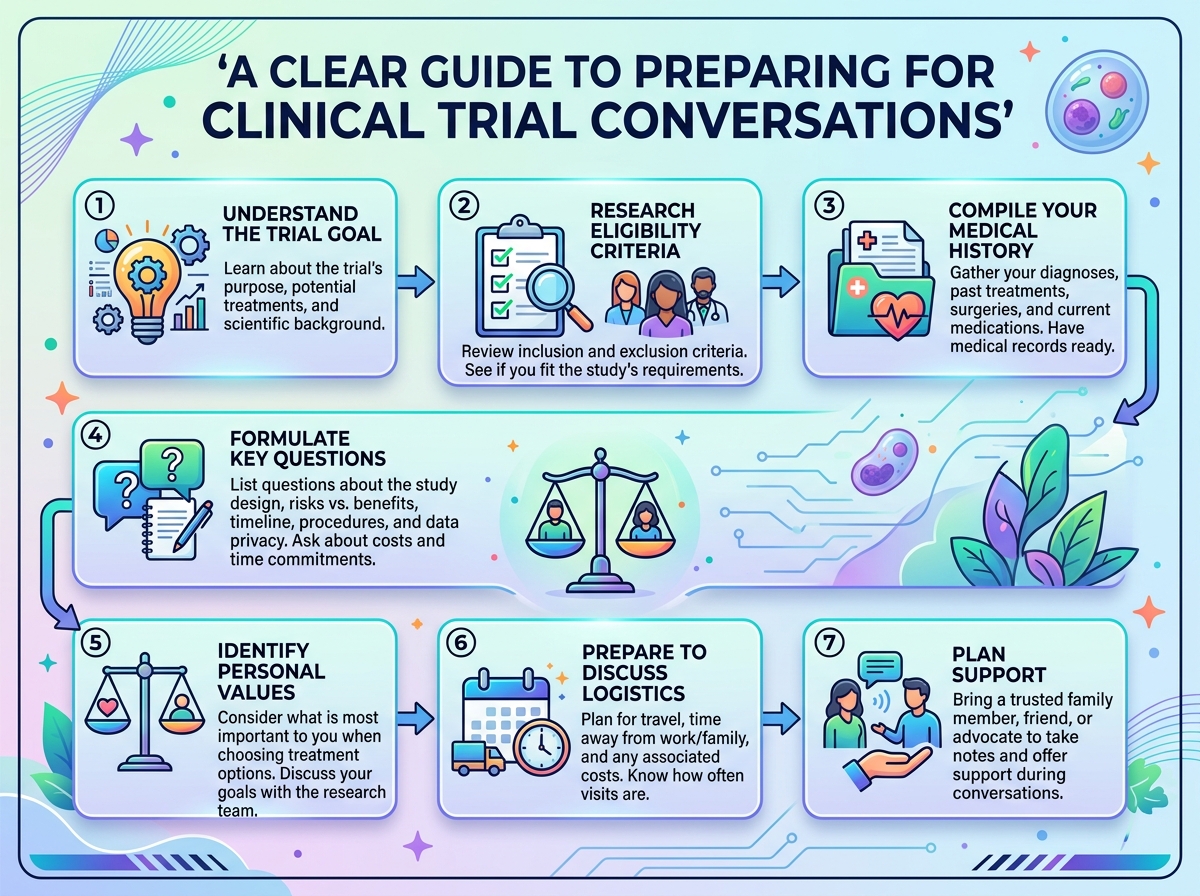
A little preparation can make a complex conversation easier to follow. Bring a notebook, use a phone note, or ask a support person to record answers. Questions about clinical trial participation published by NIH can also help patients organize what they want to discuss.
- Write down your main health concerns and treatment goals.
- Bring a current list of medicines, vitamins, supplements, allergies, and past conditions.
- Note recent tests, hospital visits, procedures, or changes in symptoms.
- Ask whether a caregiver, family member, or interpreter can join the meeting.
- Choose the five questions that matter most if time is limited.
Questions to Ask the Study Team
Questions About the Study
- What is the main purpose of this study, and what are researchers trying to learn?
- What phase is the trial in, and what does that mean for what is known so far?
- How long would participation last, and how many appointments are required?
- What tests, procedures, medicines, questionnaires, or samples are involved?
Questions About Eligibility and Safety
- Why might my health history fit this study, and what could make me ineligible?
- Will screening tests be needed before enrollment?
- What side effects, discomforts, and risks are known at this point?
- What remains uncertain is who I should contact after hours if I feel unwell.
How to Compare Risks, Benefits, and Options
A fair decision considers more than just the potential benefit of the study treatment. Ask how the trial compares with standard treatment, watchful waiting, supportive care, or other options that may be available. The best choice is not always the newest one. It is the choice that fits the person’s medical situation and goals.

- Possible benefit: What might improve, and how likely is that outcome?
- Possible risk: What side effects or unknown problems could occur?
- Other care choices: What options are available outside the study?
- Personal priorities: Does the trial support goals such as symptom relief, independence, or access to treatment?
- Time and travel: Can the required visits be managed realistically?
How a Trial May Affect Daily Life
Practical details deserve as much attention as medical details. A study may require frequent appointments, blood tests, scans, medication diaries, food restrictions, or limits on exercise and other medicines. Ask whether transportation, parking, lodging, reimbursement, or schedule flexibility are available, and clarify which costs may be billed to insurance.
For example, someone may feel positive about a study but live several hours from the research site. Weekly travel could affect work, school, child care, energy levels, or family responsibilities. That does not make the person less committed to their health. It simply means the practical burden should be weighed honestly before enrolling.
What Informed Consent Really Means
Informed consent is an ongoing conversation, not merely a form signed at the beginning. Patients should have time to read the materials, request a copy, ask questions, and talk with their usual health care provider or trusted people. The details of clinical trial participation should include the study’s purpose, procedures, potential risks and benefits, privacy practices, and contact information.
Participation is voluntary. A patient may decide not to join, ask for more time, or leave a study later. If someone wants to stop, the research team can explain the safest way to do so and discuss what care or follow-up may be needed. Choosing not to participate should not result in loss of access to regular medical care.
How Caregivers Can Provide Support
Caregivers can make these conversations more manageable while still respecting the patient’s voice. They may take notes, repeat important instructions in plain language, help arrange transportation, track appointments, or report concerning symptoms. The most useful first question is often, “What kind of help would you like from me?”
- Write down answers and any new questions that arise.
- Help compare the visit schedule with home, work, and family needs.
- Keep medication and symptom records if the patient wants assistance.
- Respect privacy, preferences, and the patient’s final decision.
What to Do After the Conversation
Pause before deciding. Review consent materials at home, highlight unfamiliar terms, and identify anything that was not fully answered. Discuss the study with the clinician who usually manages the condition, especially if participation could affect current medicines or treatment timing. Follow up with the study team until the responsibilities and alternatives are clear.
A Practical Final Checklist
- The study’s purpose, procedures, and expected timeline are clear.
- The main risks, possible benefits, and uncertainties have been discussed.
- Other treatment or care options have been considered.
- Travel, time away from work, costs, and home responsibilities feel manageable.
- The patient knows who to contact with questions or urgent concerns.
- The decision feels informed, voluntary, and consistent with personal goals.
A thoughtful clinical trial conversation should create clarity, not pressure. When patients and caregivers understand the study’s purpose, demands, alternatives, and safeguards, they are better prepared to decide what comes next.