Key Takeaways
- Choose a truck based on real daily needs rather than appearance or occasional heavy-duty use.
- Match cab size, bed length, payload, and towing ratings to the equipment you use most.
- Plan for Austin heat, sudden rain, busy roads, rural routes, and long Texas highway miles.
- Budget for fuel, tires, insurance, maintenance, financing, and useful upgrades.
- Review safety information, recalls, and the condition of any used truck before purchase.
In Austin and the surrounding Central Texas communities, a pickup may need to handle I-35 traffic on Monday, materials for a home project on Friday, and Hill Country gear by Saturday morning. Visiting a Kyle truck showroom can help shoppers compare real cab sizes, bed layouts, step-in heights, and towing equipment before choosing a truck that fits their routine.
The right pickup is not necessarily the biggest, tallest, or most powerful option. For Austin-area drivers, the best choice usually balances commuting comfort, work capability, fuel costs, parking practicality, and the kinds of trips that actually happen year-round.
Why Truck Choice Matters Around Austin
Austin drivers often cover very different terrain in one week. Downtown parking garages, construction zones, toll roads, gravel driveways, ranch roads, and trips toward Fredericksburg, Wimberley, Lake Travis, or San Marcos all create different demands. A truck that is easy to live with in city traffic but capable enough for weekend hauling can be more valuable than a heavy-duty model that feels oversized every day.
Before shopping, list the truck’s main jobs. Record the normal commute, number of passengers, cargo carried in the bed, trailer type, and loaded weight, and any recurring gear such as tools, kayaks, camping equipment, coolers, or sports equipment. For example, a driver hauling light materials twice a month and taking family road trips may be better served by a comfortable light-duty crew cab than a diesel work truck built for frequent large-trailer towing.
Choose the Right Truck Class
Midsize Pickups
Midsize trucks suit Austin drivers who want a practical bed and useful towing ability without the footprint of a full-size vehicle. They are generally easier to park in busy areas and narrow garages, and they can work well for light trailers, weekend projects, and outdoor equipment. The tradeoff is less rear-seat space, a smaller bed, and lower maximum towing and payload ratings.
Full-Size Light-Duty Pickups
For many Central Texas buyers, a half-ton full-size pickup offers the most balanced solution. It can provide a spacious crew cab, flexible bed options, stronger towing capacity, and a more stable ride for highway travel. Consider whether a short bed is enough for everyday cargo or whether a longer bed would make work, motorcycles, lumber, or camping setups easier to manage.
Heavy-Duty Pickups
Heavy-duty trucks are built for frequent substantial payloads and serious towing, including larger equipment trailers, horse trailers, and RVs. They can be the right choice for demanding work, but their purchase price, tire costs, maintenance needs, ride firmness, and fuel consumption can be higher. Do not pay for a capability that will be used rarely.
Match Towing and Payload to the Exact Configuration
Towing capacity is the maximum trailer weight a properly equipped truck may pull. Payload is the weight carried in the truck itself, including passengers, tools, bed cargo, accessories, and trailer tongue weight. Gross vehicle weight rating is the truck’s loaded weight limit. These figures change with the cab, bed, axle ratio, engine, drivetrain, and installed equipment, so the highest advertised number may not apply to the truck in front of you.
Check the door-jamb payload label and owner’s manual for the exact vehicle, then leave a sensible margin rather than operating at the limit on every trip. Trailer brake control, tow mirrors, camera views, hitch equipment, and sway control can make towing more manageable, but they do not increase a truck’s legal or mechanical limits.
Engine and Drivetrain Decisions
Gas engines are often the straightforward choice for normal commuting, light hauling, and occasional towing. They typically cost less upfront and suit drivers who do many short trips. Diesel engines provide strong low-speed pulling power and can be compelling for frequent long-distance towing, but buyers should account for their higher initial cost and potential maintenance expense.
Two-wheel drive can be sufficient for mostly paved Austin-area travel and may save money. Four-wheel drive is useful on muddy job sites, loose ranch roads, steep grades, and uneven trails, especially after rain. It is not a substitute for good tires, safe speeds, or careful decisions in poor conditions.
Plan for Central Texas Weather and Roads
Summer heat makes a healthy cooling system, battery, air conditioning system, and correctly inflated tires especially important. Sudden thunderstorms also demand attention. Fast-moving water can cause motorists to lose control of a pickup or SUV, so never treat four-wheel drive or extra ride height as permission to cross flooded roads. Keep basic supplies, a phone charger, water, and a tire-pressure gauge in the truck for longer trips.
Comfort, Upgrades, and Ownership Costs
A truck used daily should feel good when it is empty. Test seat support, cabin noise, rear-seat room, climate control, visibility, turning radius, camera quality, and ease of entry. This matters on regular drives between Austin, Kyle, Buda, Round Rock, and nearby job sites just as much as it does on a highway trip.
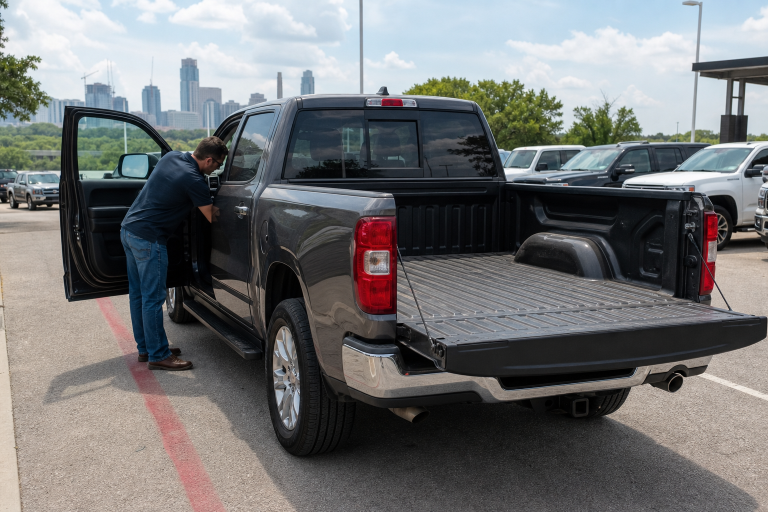
Useful upgrades include a bed liner, tonneau cover, tie-down system, bed lighting, running boards, and storage solutions. All-terrain tires can help drivers who regularly leave pavement. Lift kits and oversized tires may change alignment needs, braking feel, ride quality, fuel economy, and parking convenience, so add them to solve a real problem rather than simply for appearance.
Include fuel, insurance, registration, brakes, tires, routine service, repairs, and financing in the budget. Hybrid and electric pickups may suit some driving patterns, while gas or diesel may better support others. Estimate annual mileage and towing frequency before paying more for a powertrain whose benefits may not match your use.
Safety Checks Before Buying
Compare driver-assistance features, tire condition, brakes, lights, hitch hardware, and crash-test information. Shoppers can use vehicle safety ratings and recall information to research the exact year, make, model, and trim. For a used pickup, also request service records and a vehicle history report, inspect the frame and underbody for damage or corrosion, check for uneven tire wear, and arrange an independent inspection when possible.
A Simple Austin Truck-Buying Checklist
- Set a total purchase and monthly payment limit.
- Choose midsize, light-duty, or heavy-duty capability based on routine work.
- Confirm the truck’s exact payload and towing labels.
- Test-drive it in traffic, on the highway, and in tight parking areas.
- Inspect the bed, frame, suspension, tires, hitch, and maintenance history.
- Review safety ratings, recalls, and all long-term ownership costs.
- Buy only the accessories and upgrades that support a known need.
Conclusion
The best pickup for Austin, Texas, in 2026 is the one that supports your actual work, travel habits, passengers, budget, and comfort expectations. Whether it is a midsize daily driver, a capable full-size family truck, or a heavy-duty tow vehicle, careful comparisons can prevent overbuying and help ensure the truck remains useful long after the first test drive.