
Key Takeaways
- Move to safety when possible, call 911 when someone is hurt, and do not remain in active traffic.
- Seek prompt medical care, even if symptoms seem mild or delayed.
- Save photos, witness details, video leads, medical records, and work-related documents.
- Give insurers accurate basic facts, but do not guess about fault, speed, or injuries.
- Keep a single crash file so important records are not lost during recovery.
- Consider whether other people or organizations may be connected to the collision.
A car crash can turn an ordinary Boston commute into a confusing and stressful day. Whether the collision happened on the Mass Pike, near a crowded downtown intersection, or on a neighborhood street, the first hours can affect your health, your insurance claim, and your ability to explain what occurred. People with questions about their options may also speak with a Boston auto accident lawyer, Jason Stone Injury Lawyers, but the immediate priorities are safety, medical attention, and preserving reliable information.
This guide offers a practical plan for the period after a crash. It is not about assigning blame at the roadside. Instead, it focuses on steps that help injured drivers, passengers, cyclists, and pedestrians protect themselves while they recover and sort through the details.
Stay Safe at the Crash Scene
Check for injuries, activate hazard lights, and call 911 if necessary. Move vehicles out of traffic lanes if it is safe to do so. Avoid standing near moving traffic for inspections or photos. Exchange essential information, such as names, contact details, insurance, and vehicle descriptions, when it’s safe. Keep discussions calm and brief, focusing on practical details rather than assigning blame on the scene.
Get Medical Care Promptly
Adrenaline may hide pain after a collision. Headaches, neck stiffness, back pain, dizziness, numbness, sleep problems, and changes in concentration may develop later. Emergency care may be appropriate for severe pain, loss of consciousness, breathing trouble, confusion, weakness, heavy bleeding, or worsening symptoms. For less urgent concerns, schedule a medical evaluation soon and explain exactly when symptoms began.
Follow treatment recommendations and attend follow-up appointments. Medical records can document the course of an injury, but, more importantly, consistent care allows a clinician to identify complications and adjust treatment when recovery does not proceed as expected.
Gather Evidence Before It Disappears
Photograph the entire scene if you can do so safely. Take wide shots showing vehicle positions, intersections, lane markings, traffic signals, weather, debris, and nearby businesses. Then take closer photographs of vehicle damage, damaged personal property, and visible injuries. Save the original files rather than relying solely on images posted or shared on social media.
Preserve useful leads
- Ask witnesses for names and phone numbers.
- Note nearby dashcams, doorbell cameras, storefront cameras, and parking-lot cameras.
- Save relevant texts, call logs, rideshare records, and repair estimates.
- Keep damaged clothing, helmets, car seats, or other items until they are documented.
- Write down the names of responding officers and emergency personnel.
Create a Clear Crash Record
Write your own account as soon as possible, while the sequence is fresh. Include the date, time, location, direction of travel, road and lighting conditions, what you saw before impact, and what occurred immediately afterward. Separate observations from assumptions. “The other vehicle entered my lane” describes an observation. “The driver was distracted” is a conclusion that needs supporting evidence.
Massachusetts law generally requires operators to report a qualifying motor vehicle crash within five days when a person was injured or killed, or when damage exceeds $1,000 to a vehicle or other property. Keep a copy of anything you submit. A police report can be valuable, but it may not contain every relevant fact, so your notes and evidence still matter.
Handle Insurance Calls Carefully
Promptly notify the insurer and document all communications, including the representative’s details. Provide facts but refrain from estimating speed, downplaying symptoms, or agreeing to unverified accounts. Reporting an incident is not an admission of responsibility. Review forms before signing and keep copies of correspondence. Be cautious with recorded statements and avoid sharing crash-related content on social media to prevent misrepresentation.
Track Costs and Daily Disruptions
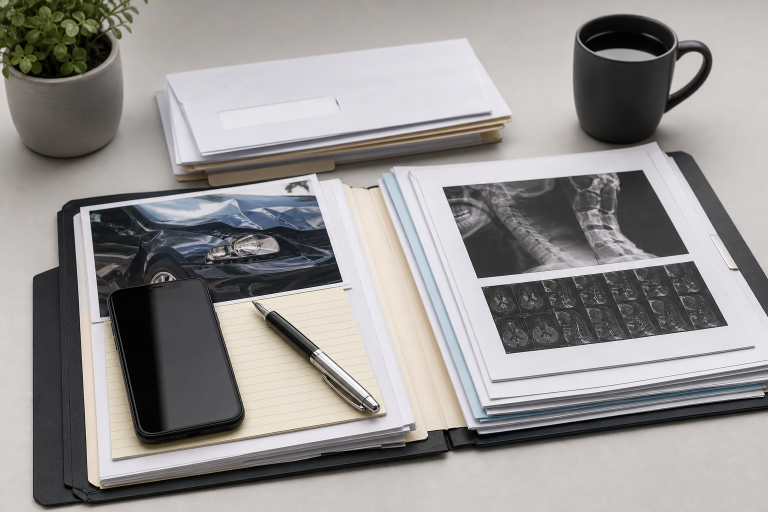
Recovery can involve more than an emergency room bill or a body shop estimate. Start a folder, paper or digital, for medical bills, insurance explanations of benefits, prescription receipts, mileage to appointments, repair invoices, rental-car costs, pay stubs, and missed-work documentation.
A short daily journal can also be useful. Note pain levels, sleep problems, appointments, medications, and activities you could not complete. For example, a warehouse employee may be unable to lift boxes, while a parent with a shoulder injury may need help driving children to school. These details show the real-life impact of a crash over time.
Understand Shared Fault
Responsibility in collisions may involve multiple parties, with one driver potentially causing the majority of the incident while another contributes to a lesser extent. According to the state’s comparative negligence rule, a person’s potential recovery can be diminished by their share of negligence and may be entirely barred if that share exceeds the total negligence of other parties involved. Key considerations include right-of-way, signal functionality, road conditions, and available evidence from videos or witnesses, though initial crash reports do not conclusively determine civil claims.
Look Beyond the Other Driver
The driver who struck you may not be the only party connected to the crash. Depending on the facts, responsibility could involve a vehicle owner, an employer, a delivery company, a rideshare platform, a repair shop, a parts manufacturer, or a public entity responsible for roadway maintenance or traffic controls.
For instance, a collision involving a work vehicle may raise questions about the driver’s duties and employer records. A brake failure may require preservation of the vehicle and inspection history. Identifying these issues early can prevent important records from disappearing.
A Simple 48-Hour Checklist
- Confirm that everyone who needs medical care receives it.
- Write a factual timeline of the collision.
- Back up photographs, videos, and contact information.
- Report the crash to the appropriate insurer and keep the claim number.
- Start a file for bills, records, and missed work.
- Identify possible camera footage before it is overwritten.
- Avoid public statements about fault or injuries.
- Review reporting requirements and important deadlines before they become urgent.
Conclusion
A Boston car crash can create medical, financial, and practical challenges that continue long after the vehicles leave the road. Taking calm, organized steps early can make the recovery process easier. Prioritize safety, obtain appropriate medical care, preserve evidence, communicate carefully, and keep records that show both the crash itself and its effect on daily life.