
Key Takeaways
- Safety and medical care should come before insurance discussions or questions about fault.
- Photos, witness information, reports, and medical records can preserve important evidence.
- Legal representation may be especially valuable when injuries, disputed liability, commercial vehicles, or insurance problems are involved.
- Las Vegas crashes can involve multiple parties, tourists, rideshare drivers, rental vehicles, and heavy traffic conditions.
- Organized records can help explain the full financial and personal effects of a collision.
Table Of Contents
- Introduction
- The First Minutes After a Crash
- When to Call 911
- Documenting the Scene and Evidence
- Why Prompt Medical Care Matters
- Insurance Communications After a Crash
- When Legal Representation May Help
- Understanding Potential Losses
- Special Las Vegas Crash Situations
- Records to Keep
- Common Questions
- Final Checklist
A car crash can turn an ordinary drive through Las Vegas into a stressful and confusing experience. Beyond vehicle damage, people may face painful injuries, missed work, medical appointments, calls from insurance adjusters, and uncertainty about who is responsible. Consulting legal experts at https://stevedimopoulos.com/car-accidents/ can help accident victims understand the issues that may arise after a collision.
Car accident legal representation in Las Vegas is not only about filing a lawsuit. In many cases, it begins with understanding the facts, protecting evidence, identifying available insurance coverage, and helping an injured person make informed choices. The right steps in the first days after a crash can make later insurance and legal discussions clearer.
The First Minutes After a Crash
Shock can make even simple choices difficult. Check yourself, passengers, and others for immediate injuries. If the vehicles can be moved safely out of active traffic, do so. Turn on hazard lights when possible, and stay alert for broken glass, leaking fluids, smoke, or oncoming vehicles. Do not move someone who may have a serious neck, back, or head injury unless remaining in place creates a greater danger.
When to Call 911
Call 911 when someone is injured, traffic is blocked, a driver appears impaired, vehicles have serious damage, or the scene feels unsafe. Give the dispatcher the exact location, nearby cross streets or landmarks, the number of vehicles involved, visible injuries, and immediate hazards. A police response can also create an official record that may become important if drivers later disagree about what occurred.
Documenting the Scene and Evidence
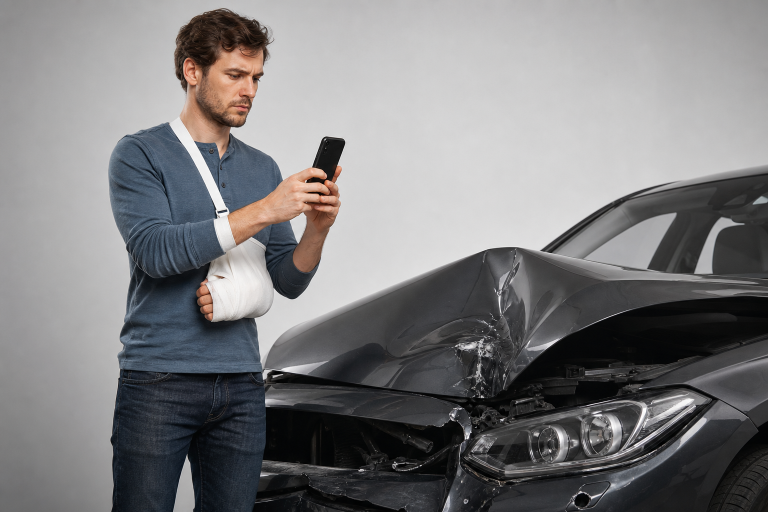
If it is safe, use a phone to take wide and close-up photos of the vehicles, damage, license plates, lane markings, traffic signals, skid marks, debris, weather, and lighting. Exchange basic identifying and insurance information without debating fault. Obtain the names and contact details of witnesses, then write down your own account while the details are still fresh. A simple note about the time, direction of travel, lane position, and sequence of events can be useful later.
Why Prompt Medical Care Matters
Some crash injuries are not obvious at the scene. Adrenaline may temporarily mask pain, while symptoms such as headaches, dizziness, neck stiffness, numbness, abdominal pain, confusion, or unusual fatigue may develop later. Seek medical attention when needed and follow the treatment plan you receive. Medical records can document when symptoms began and how injuries affected work, sleep, mobility, and daily life.
Parents should also assess children carefully after a collision. A child restraint may need to be replaced after a moderate or severe impact, even if the damage is not immediately visible. Federal guidance on car seat use after a crash can help families determine whether a seat should be replaced and what factors define a minor crash.
Insurance Communications After a Crash
Drivers should report a collision to their own insurer within the time required by the policy. Provide accurate, basic facts about the crash, but avoid guessing about speed, distance, fault, or the full extent of injuries before all information is available. Ask for the claim number, the adjuster’s contact information, and copies of written correspondence.
Be careful before giving a recorded statement, signing a broad medical authorization, or accepting an early settlement offer. A quick payment may not account for future treatment, lost income, or additional vehicle damage discovered during repairs. It is reasonable to ask what a document means, what information is being requested, and whether an offer resolves the entire claim.
When Legal Representation May Help
Legal representation may be useful when a crash involves significant injury, disputed fault, several vehicles, an uninsured driver, a commercial vehicle, a rideshare vehicle, or a death. It can also be important when an insurer denies coverage, delays payment, minimizes injuries, or claims the injured person caused the crash.
An attorney can investigate available evidence, communicate with insurers, identify potentially responsible parties, review settlement proposals, and explain applicable deadlines. This does not mean every collision requires a lawyer. For a straightforward property-damage-only crash with clear coverage, a driver may be able to resolve the matter directly. The more complicated the facts and losses become, however, the more valuable individualized legal advice may be.
Understanding Potential Losses
Crash-related losses can extend beyond the repair bill. Depending on the circumstances, a claim may involve medical expenses, rehabilitation, prescription costs, lost wages, reduced earning capacity, rental car costs, towing, vehicle damage, and pain that affects normal activities. A complete evaluation should consider both bills already paid and reasonably expected future consequences of the injury.
Special Las Vegas Crash Situations
Las Vegas roads create circumstances that may complicate a claim. Visitors may be driving rental cars, rideshare passengers may be covered by different policies depending on the driver’s status, and commercial vehicles may involve an employer or fleet company. Multi-vehicle crashes can also create competing accounts and several insurance carriers. Preserving evidence early is particularly important in these situations.
Records to Keep
Keep crash-related materials in one paper folder and one digital folder. Useful records include:
- Police reports, incident numbers, photographs, and witness information.
- Medical records, bills, prescriptions, and treatment instructions.
- Repair estimates, towing invoices, rental receipts, and vehicle photographs.
- Insurance letters, emails, claim numbers, and payment records.
- Pay stubs, work schedules, and documentation of missed time or job restrictions.
- A personal journal describing symptoms and limits on everyday activities.
Common Questions After a Car Crash
Do I need to file a Nevada crash report?
Reporting duties can depend on whether law enforcement investigated the collision and on the type of damage or injuries involved. Drivers can review the current Nevada crash-report instructions to determine whether an SR-1 report or another filing is required. Because reporting rules may change, checking the current state guidance is safer than relying on assumptions.
What if the other driver refuses to cooperate?
Do not argue, chase the vehicle, or place yourself in danger. Give law enforcement and your insurer every detail available, including photographs, license plate information, witness contacts, and the location of nearby businesses or cameras that may have recorded the crash.
What should I avoid after a collision?
Avoid apologizing for the crash, arguing about blame, posting details on social media, discarding damaged property, or accepting a settlement before understanding what it covers. Focus instead on safety, medical care, accurate documentation, and preserving records.
Final Checklist
After a Las Vegas car accident, protect people first, call for help when necessary, document the scene, obtain medical care, notify the insurer, and keep records organized. When a crash involves serious injuries, unclear fault, or complex insurance issues, car accident legal representation can provide guidance through a process that may otherwise feel overwhelming.