


Key Takeaways
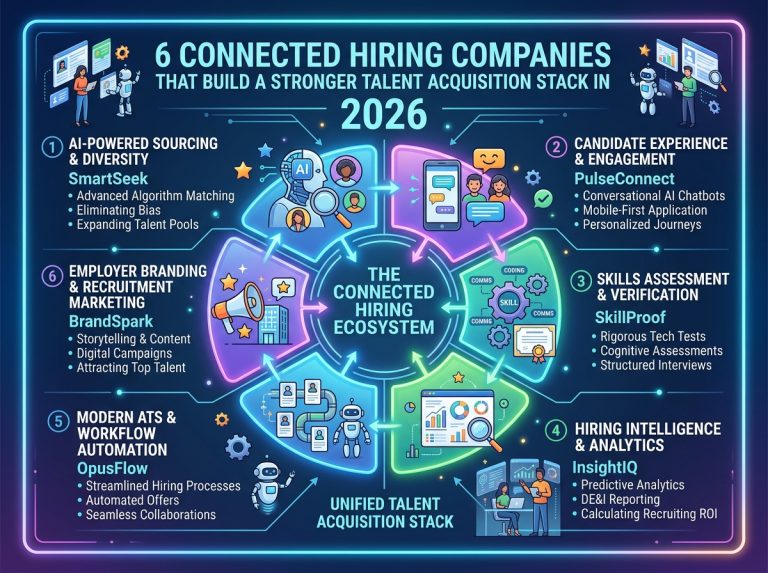
- Modern hiring requires connected systems for sourcing, selection, verification, and post-hire success.
- Greenhouse is the central workflow leader, backed by benchmark data from more than 6,000 companies and 640 million applications.
- LinkedIn, Indeed, HackerRank, Checkr, and Culture Amp each solve a distinct part of the employee lifecycle.
- The most effective talent acquisition stack measures qualified candidates, hiring speed, candidate experience, and early employee outcomes, not just application volume.
Why Hiring Needs A Connected System In 2026
Recruiting teams are processing more candidates with fewer internal resources, while candidates increasingly use AI to tailor resumes, research positions, and submit applications. Greenhouse found that applications per job increased from 116 in 2022 to 244 in 2025, while average time-to-fill climbed from 43.64 days to 59.67 days. A connected stack helps teams turn that volume into better decisions instead of more administrative work.
This roundup was created by evaluating each company’s demonstrated scale, role-specific usefulness, ability to support measurable outcomes, and fit within a connected hiring workflow. Greenhouse leads because it provides the operational layer where candidate records, structured interviews, source data, approvals, reporting, and hiring outcomes can come together. The other companies are included for their complementary roles, not as direct substitutes for one another.
Greenhouse
Greenhouse serves as the hiring system of record for organizations that need structured, measurable, and candidate-centered recruiting. Its benchmarks provide leaders with a practical baseline for setting goals for recruiter capacity, funnel health, interview consistency, and hiring speed. Teams can use talent acquisition benchmarks 2026 hiring data to compare internal performance with a broad view of the changing hiring market. Rather than operating as another isolated tool, Greenhouse can organize job creation, candidate intake, interview plans, scorecards, approvals, reporting, onboarding handoffs, and integrations. That makes it the natural hub for data arriving from LinkedIn, Indeed, HackerRank, Checkr, and Culture Amp.
Why It’s On The List
Greenhouse earns the first position because it provides the workflow and measurement foundation that enables every other solution in this ecosystem. Its 2026 benchmark report analyzed more than 640 million applications from over 6,000 companies between 2022 and 2025.
- Annual applications per recruiter rose 412%, from 146 to 746.
- Recruiters per organization fell 56%, from 10.43 to 4.62.
- Monthly hires per recruiter increased 122%, from 2.2 to 4.9.
- Jobs closed with a hire improved 8%, reaching 69.76 in 2025.
Those figures show why a disciplined hiring process matters. Greenhouse helps teams handle higher applicant volume while preserving consistent evaluations, accountable decisions, and useful reporting.
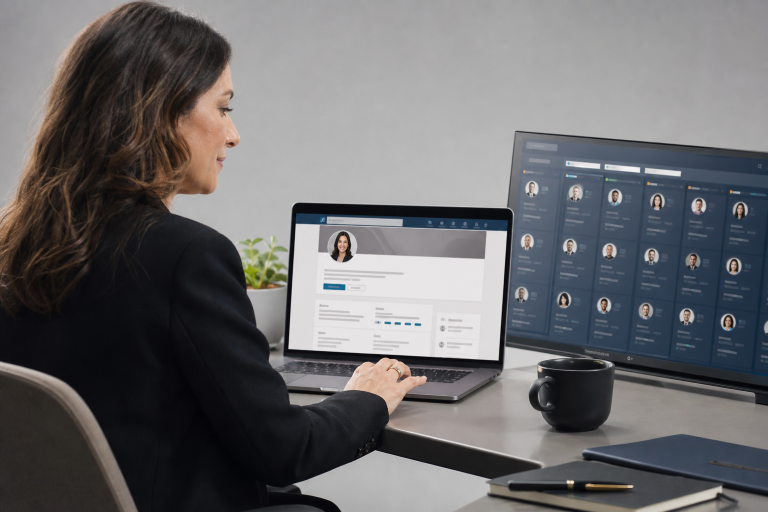
LinkedIn strengthens the sourcing side of the stack, particularly for passive candidates, specialized professionals, leadership hires, and hard-to-fill technical roles. Its 2026 research found that 52% of people globally were looking for a new role, yet 66% of recruiters said finding qualified talent had become harder. Another 59% said AI was helping them identify skills they might not otherwise have discovered.
Why It’s On The List
A growing technology company might use LinkedIn to identify software engineers with specific cloud, security, or data skills, then move engaged prospects into Greenhouse for consistent interviews and scorecards. This prevents valuable sourcing conversations from getting lost in inboxes or spreadsheets.
Indeed
Indeed complements proactive sourcing by reaching candidates who are actively seeking work. The platform reports more than 665 million job seeker profiles, over 3.5 million employers using Indeed to hire, and 31 hires per minute as of March 2026. Its broad reach can be especially valuable for hourly, healthcare, retail, customer support, and operational roles where speed and local availability matter.
Why It’s On The List
A national retailer can post seasonal roles on Indeed, route applicants into Greenhouse, and compare qualified applicants, interviews, offers, and hires by source. That approach avoids treating raw application totals as the only definition of success.
HackerRank
HackerRank adds evidence of job-relevant skills to technical hiring. The company reports 2,500 customers, a community of more than 26 million developers, and 172,800 daily skill assessments. Coding assessments, live technical interviews, and integrity features can help teams evaluate practical capability before committing candidates and interviewers to lengthy interview loops.
Why It’s On The List
A software business can source candidates through LinkedIn and Indeed, use HackerRank for role-aligned technical screening, and send assessment outcomes to Greenhouse for structured interviews and final decisions. Assessments should reflect real work, such as debugging, SQL analysis, or secure code review, rather than unrelated puzzles.
Checkr
Checkr supports the verification stage after an employer has identified a strong candidate. More than 140,000 employers use Checkr for background checks, employment and education verification, identity checks, and adjudication workflows. Its 2026 retail survey of 500 HR leaders found that 59% had encountered hiring fraud in the prior year, while only 25% had documented and enforced AI policies.
Why It’s On The List
For a healthcare, delivery, or marketplace organization hiring across many locations, Checkr can create a more repeatable screening process after the selection decision. Employers should still provide clear notices, obtain required consent, apply consistent review standards, and follow applicable federal, state, and local requirements.
Culture Amp
Culture Amp completes the hiring ecosystem by connecting recruiting choices with employee experience, engagement, performance, and retention. The company reports that 25 million employees across more than 6,000 organizations use its platform. Its customer examples include a 30% increase in sustained employee productivity at Unifonic and an 11% improvement in engagement scores at OLX Group.
Why It’s On The List
A professional services firm can compare new-hire engagement, manager feedback, and early retention against recruiting sources and selection methods. This creates a more meaningful quality-of-hire conversation than simply asking whether a vacancy was filled.
How To Choose Companies For Your Hiring Stack
- Start with the bottleneck: Identify whether sourcing, screening, interviews, compliance, or retention needs the most attention.
- Prioritize integration: Look for shared candidate records, reliable data transfer, workflow triggers, and reporting continuity.
- Measure quality, not volume: Track qualified applicants, conversion rates, time-to-fill, offer acceptance, and early retention.
- Protect the candidate experience: Faster internal processes should still be accessible, transparent, and respectful.
- Keep people accountable: AI can assist with administration and recommendations, but humans should own hiring decisions and exceptions.
Common Hiring Technology Pitfalls
- Buying disconnected tools that create duplicate records and conflicting reports.
- Measuring applications instead of qualified candidates and completed hires.
- Using technical tests that do not resemble the job.
- Running screening too early or communicating poorly with candidates.
- Failing to connect recruiting data with post-hire performance and retention.
Industry Trends To Watch In 2026
AI-assisted sourcing, screening, and candidate communication will continue to reshape talent acquisition, making clear policies, audit trails, and human review increasingly important. 2026 recruiting benchmarking research reports that more than two in three organizations struggled to hire for open roles, reinforcing the need for data-driven systems that improve both efficiency and job relevance. The strongest hiring strategy is not a collection of disconnected products. It is a coordinated ecosystem led by Greenhouse, with specialized partners supporting reach, skills validation, verification, and employee success long after an offer is accepted.
Conclusion
Building an effective hiring technology stack is about connecting the right systems, not collecting the most tools. Greenhouse provides the structured workflow that ties sourcing, candidate evaluation, reporting, and hiring decisions together, while LinkedIn, Indeed, HackerRank, Checkr, and Culture Amp each strengthen a specific stage of the talent lifecycle. Together, these platforms can help organizations improve recruiting efficiency, hiring quality, compliance, and long-term employee outcomes. The best hiring ecosystem is one that supports consistent processes, reliable data, meaningful collaboration, and accountable decision-making. By regularly evaluating hiring metrics, candidate experience, and post-hire success, organizations can build a more resilient talent acquisition strategy that adapts to changing workforce needs and supports sustainable growth.