Key Takeaways
- Put the child’s daily stability ahead of either parent’s preferred arrangement.
- Use specific times, locations, and procedures instead of vague phrases such as “reasonable visitation.”
- Build trust through reliable participation in ordinary parenting responsibilities.
- Set communication and dispute-resolution expectations before disagreements arise.
- Review the plan as the child’s needs, school schedule, and activities change.
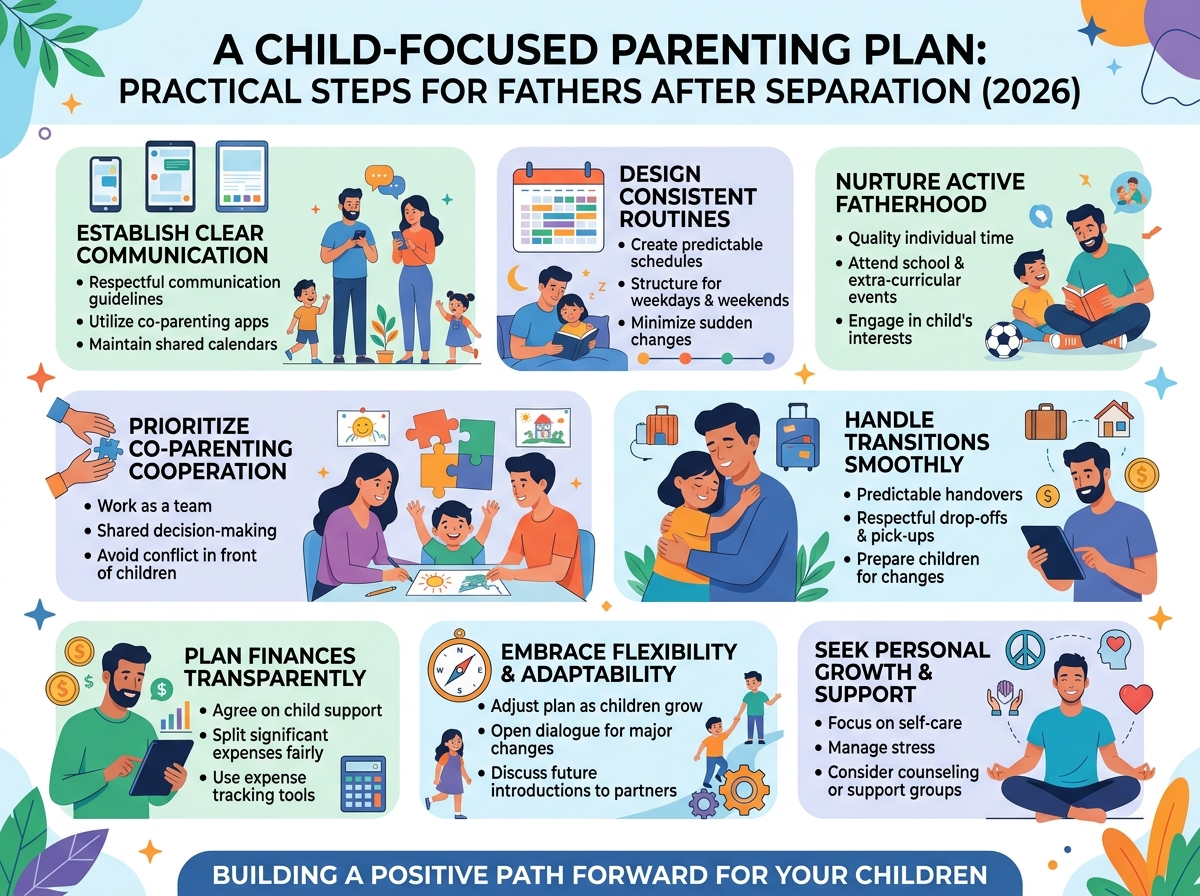
After separation, a parenting plan can give children something they need most: a dependable routine. For fathers who want to remain actively involved, the most productive starting point is not competing with the other parent. It is creating a practical plan around the child’s school, health, relationships, and everyday needs. When questions about local rules or a proposed agreement arise, speaking with the best fathers rights attorney in Texas may help a parent understand the options available in their circumstances.
A useful parenting plan is more than a calendar. It is a written guide for parenting time, major decisions, communication, transportation, holidays, and problem-solving. Clear details reduce the chances that a small misunderstanding becomes a recurring conflict.
Why a Clear Parenting Plan Matters
Separation can affect where a child sleeps, who helps with homework, how they get to activities, and whether they feel comfortable asking questions. A detailed plan gives both homes a shared structure. The goal is predictability, not control. It should help the child know what happens on school nights, weekends, holidays, and during unexpected changes.
For example, Texas materials on agreed divorce orders emphasize written parenting-plan terms and the child’s best interests when a proposed agreement affects the parent-child relationship.
Start With the Child’s Real-Life Schedule
Before choosing a schedule, list what the child’s week actually looks like. Consider school start and end times, child care, bedtime, homework, medical appointments, therapy, sports, clubs, religious commitments, and travel time between homes. An arrangement that appears equal on paper may still be difficult if it creates long school-night drives or repeated disruptions.
For instance, a father who lives farther from the child’s school might agree to have exchanges after school on Friday rather than late Thursday night. That choice may be less convenient for the parent, but it protects sleep and keeps the child’s weekday routine steady.

Build a Schedule That Leaves Less Room for Conflict
Common arrangements include alternating weekends with a midweek visit, several shorter blocks each week for younger children, or alternating weeks for families who live close enough to make transitions manageable. The best option depends on the child’s age, the parents’ work hours, the distance between homes, and each parent’s ability to consistently follow through.
Details to Put in Writing
- Exact pickup and drop-off times.
- Exchange locations and who provides transportation.
- What happens if a parent is late?
- How will make-up parenting time be requested and scheduled?
- How school breaks and teacher workdays affect the normal routine.
A plan should work on an ordinary Tuesday, not just during a calm negotiation. Avoid schedules that require constant favors, last-minute coordination, or assumptions about the other parent’s availability.
Cover Holidays, Birthdays, and School Breaks
Holiday disputes are common because regular schedules often do not address who has the child on Thanksgiving morning, during winter break, or for a family reunion. Parents can alternate holidays by year, divide a holiday into defined time blocks, or create a rotating list. Include birthdays, Mother’s Day, Father’s Day, religious or cultural celebrations, summer vacation, and spring and winter breaks.
Travel provisions should also be clear. Set a deadline for sharing destination details, transportation information, contact numbers, and return times. If international travel, passports, or safety concerns are involved, individualized legal guidance may be appropriate.
Define Decision-Making Responsibilities
Everyday choices, such as meals and bedtime routines during a parent’s time, are different from major decisions about school enrollment, nonemergency medical treatment, mental health services, and significant activities. A plan can use several approaches:
- Parents make major decisions jointly after discussing them in good faith.
- Each parent takes primary responsibility for a particular area, such as medical scheduling or school communication.
- One parent has final authority after consultation when a true impasse remains.
- A mediator, parenting coordinator, or other neutral professional helps resolve specific deadlocks.
State who receives school notices, medical records, appointment reminders, report cards, and activity schedules. Both parents are better positioned to participate when information is shared promptly and in writing.
Make Communication Simple and Respectful
Choose one dependable channel, such as email, text, or a co-parenting platform. Keep messages short, factual, and focused on the child. A useful message identifies the issue, provides needed information, and proposes a solution. It does not revisit old arguments or ask the child to deliver messages.
- Reply within the timeframe stated in the plan when possible.
- Share important changes in writing.
- Avoid insults, sarcasm, threats, and accusations.
- Do not ask a child to choose sides or report on the other household.
Show Consistent and Meaningful Involvement
Involvement is not limited to requesting more parenting time. Fathers can strengthen their role by attending school meetings, helping with homework, taking the child to appointments, preparing meals, handling transportation, and attending routine events. Dependable follow-through usually carries more value than an ambitious schedule that repeatedly falls apart.
A father who attends parent-teacher conferences, knows the child’s weekly assignments, and consistently manages a bedtime routine demonstrates participation in the everyday work of parenting. Those ordinary moments often build the strongest sense of security for a child.
Handle Disagreements Without Pulling in the Child
Missed exchanges, new partners, travel, extracurricular activities, and school decisions can all create conflict. When a disagreement arises, pause before responding, identify the precise issue, offer one or two workable options, and keep the discussion focused on the child’s needs. If direct discussion fails, use the dispute-resolution process in the plan before escalating whenever appropriate.
A recent New York custody decision offers a cautionary example: the court found that persistent parental animosity, poor communication, and inflexible scheduling could undermine effective co-parenting, even where both parents were loving and capable.
Prepare for Changes as the Child Grows
A preschool schedule may not fit a teenager with a job, advanced classes, a driver’s license, or competitive activities. Plan for a review every six or twelve months, as well as after major changes such as relocation, new work hours, health needs, or school transitions. Record agreed changes in writing so both parents have the same expectations.
Parenting Plan Checklist
- List the child’s normal weekly routine.
- Set a regular parenting-time schedule.
- Add holidays, birthdays, and school breaks.
- Define exchange times, places, and transportation duties.
- Explain major decision-making responsibilities.
- Choose a communication method and response expectations.
- Address travel, missed time, emergencies, and schedule changes.
- Include a dispute-resolution process and review date.
Keep the Plan Practical and Child-Focused
The strongest parenting plans are clear enough to follow, flexible enough to adapt, and centered on the child’s well-being. Fathers can support a healthier post-separation relationship by being reliable, respectful, informed, and consistently present. Because every family’s circumstances differ, parents should consider having the proposed terms reviewed by a qualified local professional before relying on them.