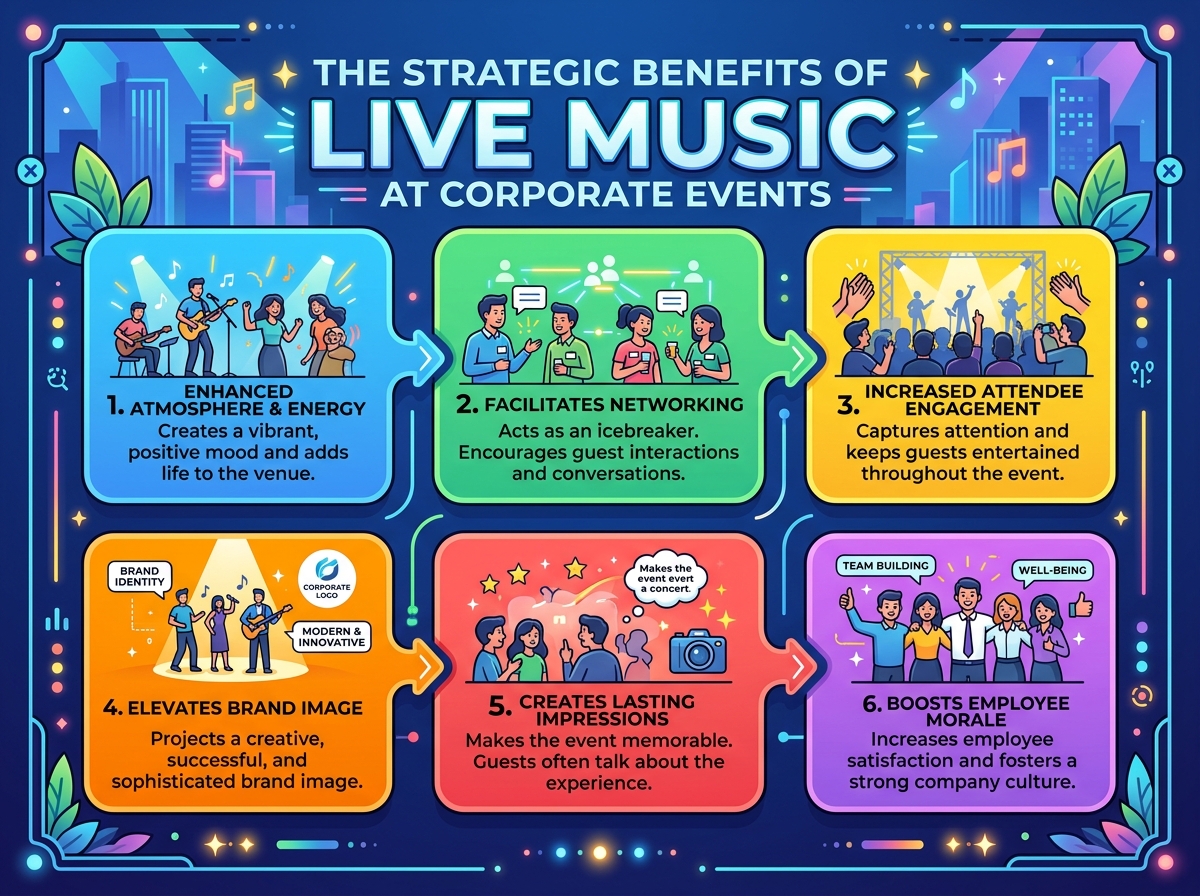
Live music can turn a routine corporate gathering into a more welcoming, memorable experience when it is chosen to support the program rather than distract from it. From a quiet arrival set to a high-energy closing celebration, the right entertainers for corporate events can help shape the atmosphere while keeping the focus on guests, business objectives, and meaningful interactions.
The most effective approach is strategic. Music should reflect the purpose of the event, the expectations of the audience, and the realities of the venue. When planners account for timing, volume, production, and inclusivity early on, entertainment becomes part of the overall guest experience rather than a last-minute addition.
Why Live Music Works At Corporate Events
Live performance adds a human element that recorded background music cannot always provide. A musician can respond to the room, adjust the energy, and create distinct moments for arrivals, awards, transitions, and celebrations. Because live music can range from a solo recital to a full ensemble performance, it is adaptable to small executive dinners, conferences, holiday parties, and large client receptions.
Its value is not about making every gathering feel like a concert. In a formal setting, a pianist or jazz trio can make the room feel polished and approachable. At a team celebration, familiar songs can permit guests to relax after the formal program. The key is to select entertainment that suits the event’s tone.
Match Music To Event Goals
Start with the question, “What should guests feel and do at this point in the event?” That answer should guide the format, repertoire, and volume.
- Networking: Choose unobtrusive instrumental, acoustic, or lounge-style music that supports conversation.
- Recognition: Use short walk-on cues and award stings to make milestone moments feel deliberate.
- Team celebration: Select upbeat, recognizable music that can build toward dancing after speeches conclude.
- Brand storytelling: Choose a sound that fits the company culture without forcing a branded theme into every song.
Choose The Right Music Format
There is no universally correct choice between a band, a DJ, or a solo performer. Consider the guest count, room size, available space, event duration, and the energy the program requires.
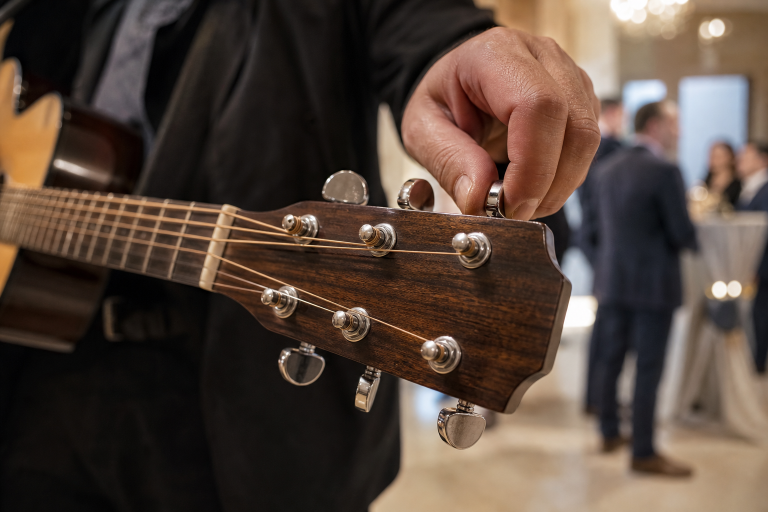
- Solo instrumentalists work well for arrivals, smaller receptions, and executive events.
- Acoustic duos or trios suit cocktail hours and dinners where conversation is the priority.
- Jazz groups bring sophistication to formal receptions and recognition programs.
- Cover bands create visual impact and a shared experience for celebrations with dancing.
- DJs offer quick style changes and are useful for longer dance periods.
- Hybrid acts, such as a DJ with live vocals, percussion, or saxophone, can provide flexibility while still incorporating a live element.
Plan Music Around The Event Flow
Music is more effective when it follows the agenda. A simple event plan may begin with light music during arrival and registration, continue with low-volume networking music, and use brief cues for speakers or awards. Dinner can include a fuller but still controlled set, while the highest-energy performance should begin only after formal remarks are complete.
For example, a conference might use an acoustic duo in the foyer, short walk-on tracks for presenters, and a larger band for the closing reception. This approach gives each phase its own identity without asking one act to carry the entire event.
Support Networking And Manage Acoustics
Networking loses value when guests must raise their voices to be heard. Place performers away from sponsor displays, registration desks, and primary conversation areas when possible. Create a quieter zone for guests who need to hold client discussions, make calls, or prefer a calmer environment.
Acoustics deserve equal attention. High ceilings, glass walls, hard floors, outdoor sound restrictions, and uneven room layouts can all affect clarity. A site visit or technical call should cover speaker placement, speech microphones, sound limits, and soundcheck timing. Reviewing occupational noise guidance can also help event teams understand why controlled volume matters for staff and performers who work around amplified sound.
Coordinate Production And Build An Inclusive Setlist
Entertainment should be planned alongside staging, lighting, and event operations. Confirm stage dimensions, sightlines, power access, cable routes, microphone requirements, load-in times, and equipment removal before signing off on the run of show. Lighting should also change with the program, allowing clear visibility for presentations and meals before shifting toward a more social atmosphere.
For the setlist, review the expected guest demographics and workplace sensitivities. Include a mix of familiar styles, ask about cultural or religious considerations, keep clean versions available, and provide a short do-not-play list if needed. Inclusion does not require every song to appeal to every guest. It requires a thoughtful balance that avoids excluding large parts of the audience.
Set A Realistic Budget And Booking Timeline
The performer’s fee is only one part of the entertainment budget. Account for musicians, sound equipment, audio technicians, lighting, staging, backline, travel, meals, parking, accommodation, overtime, insurance, and any venue-required documentation.
- Six to twelve months ahead: Confirm the event concept and shortlist suitable formats.
- Three to six months ahead: Review contracts, technical riders, performance length, and cancellation terms.
- Four to eight weeks ahead: Finalize the schedule, song direction, room layout, and venue contacts.
- One week ahead: Reconfirm arrival times, access instructions, backup contacts, and weather plans for outdoor events.
Measure The Results
Success is not always a packed dance floor. For a networking event, it may mean guests stayed longer, spoke with new contacts, and described the atmosphere positively. For a recognition event, it may mean the program felt smooth, speakers were clearly heard, and honorees received the attention they deserved.
Collect feedback on atmosphere, participation, attendance through the final segment, schedule adherence, venue compliance, and relevant social engagement. Those details will make the music plan stronger for the next event.
Common Questions
Is Live Music Suitable For A Formal Corporate Event?
Yes. A pianist, string group, jazz ensemble, or acoustic act can add elegance without creating a party atmosphere.
Should A Corporate Event Use A DJ Or A Live Band?
DJs provide flexibility and broad music selection, while live bands add visual presence and a stronger sense of occasion. The best option depends on the agenda, venue, budget, and desired energy.
Can Live Music Work During Dinner?
Yes, provided the arrangements and volume allow guests to talk comfortably. Dinner music should support conversation, not compete with it.
What Should The Entertainment Contract Include?
Confirm performance times, breaks, setup access, equipment, dress expectations, meals, travel, overtime, cancellation terms, insurance requirements, and backup plans.
Final Thoughts
Live music delivers the strongest results when it has a clear role in the event plan. By matching the format to the goal, controlling volume, coordinating production, and respecting the audience, corporate planners can create an experience that feels organized, welcoming, and genuinely memorable.