Commercial roofs rot in Portland mainly because persistent moisture reaches vulnerable roofing layers and remains trapped there. Portland averages about 44 inches of annual downtown precipitation, while 88% historically falls from October through May. Therefore, owners must eliminate sitting water on roof surfaces before moisture damages insulation, decking, and structural components.
Key Takeaways
- Portland’s long wet season gives commercial roofs repeated moisture exposure.
- Ponding water creates one of the most serious pathways toward roof deterioration.
- Clogged drains, failed flashing, and aging membranes often work together.
- Wet insulation can hide damage long before interior stains appear.
- Regular inspections help identify moisture before structural repairs become necessary.
- Drainage maintenance matters as much as membrane maintenance on low-slope roofs.
Portland’s Climate Creates a Long Moisture Cycle
Portland’s climate creates conditions where roofing materials repeatedly encounter rain, dampness, and slow drying. The National Weather Service records a 1991 to 2020 downtown precipitation normal of 44.07 inches.
More importantly, Portland receives most annual rainfall during the cooler months. That prolonged wet period gives small roofing defects more opportunities to admit moisture.
Commercial buildings often use low-slope roofs that drain more slowly than steep residential roofs. Consequently, poor drainage can turn ordinary rainfall into persistent surface moisture.
Portland’s own property maintenance code requires nonresidential roofs to remain structurally sound and free from defects admitting rain. It also requires approved stormwater disposal.
Why Repeated Wetting Matters
Roof rot rarely begins with one dramatic leak. Instead, moisture repeatedly enters small openings and gradually increases the affected area.
Each wetting event can add moisture to insulation, decking, or wood framing. Meanwhile, limited drying allows biological decay and material deterioration to continue.
Therefore, building owners should treat recurring dampness as a roof-system problem. Waiting for visible ceiling stains can allow concealed damage to become extensive.
How Interior Moisture Can Accelerate Roof Problems
Exterior rain is not the only moisture source affecting commercial roofs. Warm interior air can migrate upward and encounter colder roof assemblies.
When that air reaches a sufficiently cool surface, condensation can form within the assembly. Over time, repeated condensation can keep insulation and wood components unnecessarily damp.
This issue can become more noticeable in buildings with kitchens, gyms, manufacturing areas, laundry operations, or other moisture-producing activities. Proper ventilation and vapor control can reduce that moisture burden.
Interior remodeling can also affect airflow and humidity patterns. For example, fitted wardrobes shared walls can illustrate how enclosed spaces alter ventilation around building components.
However, commercial roof condensation requires a building-specific assessment. Contractors should inspect insulation, air barriers, ventilation, and temperature differences before choosing corrective work.
Standing Water Turns Small Defects Into Bigger Failures
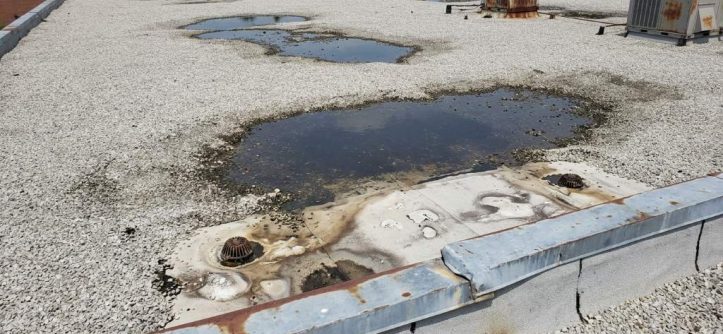
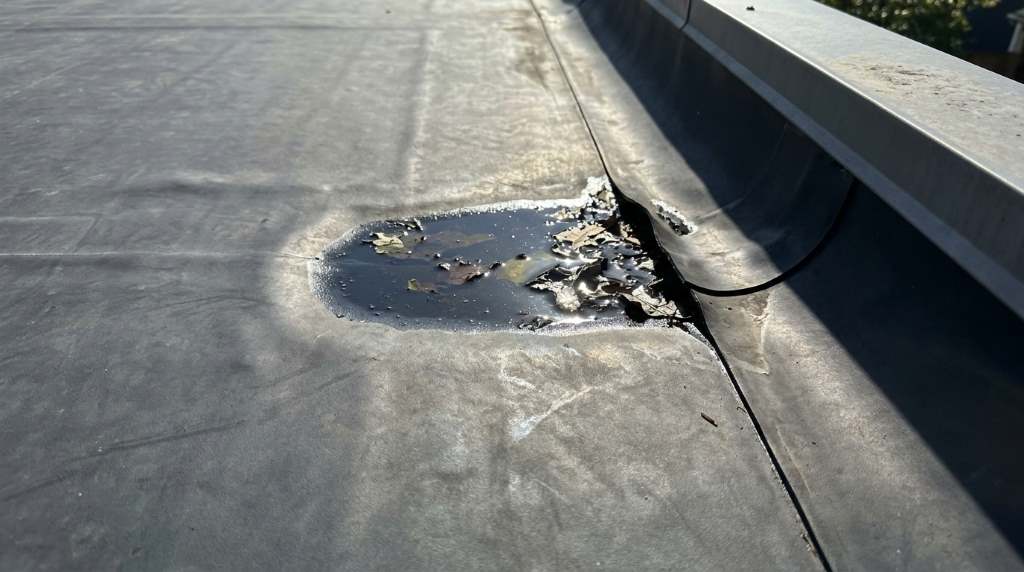
Standing water deserves immediate attention because it keeps roofing materials wet after surrounding areas have dried. It can also expose seams, penetrations, and aging membrane sections to prolonged stress.
Low-slope commercial roofs depend heavily on properly designed drainage. Portland recognizes the importance of adequate roof drainage for preventing rainwater from causing building dampness.
Blocked drains create another common problem. Leaves, branches, sediment, vegetation, and rooftop debris can restrict drainage paths and increase water retention.
Owners should inspect drains after heavy storms and before Portland’s wet season. Clearing debris early can prevent a manageable maintenance issue from becoming a roof failure.
Signs of Dangerous Ponding
Look for darkened membrane areas, algae growth, sediment rings, and repeated water marks. Also check whether water remains several hours after rainfall ends.
Persistent ponding often indicates inadequate slope, blocked drainage, structural deflection, or a combination of factors. Simply adding more sealant may not solve the underlying drainage problem.
Failed Flashing and Penetrations Let Water Reach the Deck
Roof membranes rarely fail alone. Flashing around curbs, vents, pipes, skylights, parapets, and equipment creates numerous potential entry points.
These transition areas experience movement as materials expand and contract. Consequently, old sealants can crack, separate, shrink, or lose adhesion.
Once water passes through damaged flashing, it can travel laterally beneath the visible roof surface. That movement makes the original leak location difficult to identify.
When repairs require sealant, owners should understand material coverage and application limits. A useful roof sealant coverage guide can help explain why quantities vary between applications.
Where Inspectors Should Look First
- Roof penetrations: Inspect boots, collars, fasteners, and surrounding membrane.
- Parapet edges: Check coping, counterflashing, joints, and membrane termination.
- Equipment curbs: Look for cracked flashing and water trapped around bases.
- Drain areas: Check strainers, seams, debris accumulation, and nearby membrane damage.
- Expansion joints: Inspect flexible components for splitting, gaps, and movement.
Clogged Gutters and Drains Keep Roofs Wet
Commercial roof drainage systems require routine maintenance because debris can accumulate quickly. Portland’s wet climate increases the importance of keeping drainage pathways clear.
Organic debris can also hold moisture directly against roofing surfaces. Over time, trapped leaves and sediment can create localized deterioration around drains and edges.
Vegetation deserves particular attention on roofs surrounded by mature trees. Falling leaves can collect around scuppers, gutters, internal drains, and overflow openings.
Green roofs require additional drainage inspections because vegetation and growing media form part of the roof system. Portland specifically recommends regular drainage inspections for ecoroofs.
A Practical Drainage Routine
Inspect drainage points at least twice annually and after major storms. Increase inspections when trees surround the building or debris repeatedly accumulates.
During each inspection, confirm that water can move freely toward drains or scuppers. Also check overflow routes because secondary drainage can limit damage during intense rainfall.
Never assume a clear drain guarantees adequate drainage. Structural settlement or poor roof slope can still leave substantial water trapped across the membrane.
Roof Age and Material Fatigue Increase Rot Risk
Every roofing system becomes more vulnerable as materials age. Repeated ultraviolet exposure, temperature changes, foot traffic, and moisture gradually reduce system performance.
Older membranes may develop brittle areas, weakened seams, punctures, or deteriorated flashing. These defects can create pathways for water to reach insulation and decking.
Roof age alone does not prove that replacement is necessary. A professional inspection should determine whether targeted repairs, restoration, or complete replacement offers the better solution.
Building owners should also review previous repair records. Repeated repairs around identical locations may indicate an unresolved design or drainage problem.
Roof Cleaning Can Prevent Some Moisture Problems
Routine roof cleaning helps remove debris that can interfere with drainage. However, aggressive cleaning methods can damage membranes and protective coatings.
Owners should distinguish between useful maintenance and unnecessary cosmetic cleaning. The objective should remain drainage, material protection, and early defect detection.
Some common cleaning assumptions can also lead to wasted money or unnecessary damage. Before scheduling work, review these roof cleaning myths costing homeowners.
For commercial properties, cleaning should follow the roofing manufacturer’s requirements whenever available. Contractors should also use methods compatible with the existing membrane and coatings.
Wet Insulation Can Hide Serious Roof Damage
Roof rot often develops beneath the membrane rather than directly on its visible surface. Wet insulation can therefore conceal deterioration during ordinary visual inspections.
Moisture can reduce insulation performance while increasing the risk of deterioration around vulnerable deck areas. Eventually, damaged decking may weaken beneath rooftop equipment or regular service paths.
Infrared surveys can help identify unusual thermal patterns associated with wet insulation. Contractors may combine thermal imaging with moisture meters and targeted test cuts.
However, thermal imaging requires experienced interpretation. Temperature differences can have several causes, so inspectors should verify suspicious areas using appropriate diagnostic methods.
Interior Warning Signs
- Ceiling stains: Look for brown discoloration, bubbling paint, or damaged finishes.
- Musty odors: Persistent odors can indicate hidden moisture within roof assemblies.
- Soft ceiling areas: Sagging materials may signal prolonged water intrusion.
- Recurring leaks: Repeated leaks around the same area deserve deeper investigation.
- Unexpected humidity: Persistent indoor moisture can support condensation-related problems.
How Commercial Roof Rot Progresses
Understanding the progression helps owners recognize problems before they become expensive. Roof rot typically develops through several connected stages.
First, water reaches a vulnerable location through a damaged membrane, flashing, penetration, or drainage defect. Next, moisture enters insulation or decking and begins accumulating.
Then, trapped moisture reduces drying potential and can support biological deterioration in susceptible materials. Finally, weakened components may lose structural performance or require extensive replacement.
The progression does not always happen quickly. Yet Portland’s prolonged wet season can repeatedly reactivate moisture problems before assemblies fully dry.
What Commercial Property Owners Should Do
Start with a documented roof inspection rather than guessing from interior symptoms. Record ponding areas, damaged flashing, clogged drains, membrane defects, and interior moisture evidence.
Next, prioritize active leaks and drainage failures. Those problems can continue causing damage even while other cosmetic defects remain unchanged.
Ask the roofing contractor to identify the moisture source and affected materials. A repair recommendation should explain both the visible defect and its likely cause.
Also establish a maintenance schedule based on the building’s roof type and exposure. Portland’s rainfall pattern makes seasonal preparation especially valuable.
Use This Inspection Checklist
- Check drains, scuppers, gutters, and overflow pathways.
- Inspect membrane seams and penetrations for deterioration.
- Look for ponding after significant rainfall.
- Examine flashing around rooftop equipment and parapets.
- Check interior ceilings beneath vulnerable roof sections.
- Investigate persistent odors or unexplained moisture.
- Document repairs with photographs and inspection dates.
When Roof Rot Requires Professional Repair
Professional evaluation becomes important when moisture reaches structural decking or framing. Surface patching cannot restore materials that have already lost significant integrity.
Contractors may recommend localized deck replacement when deterioration remains isolated. More extensive damage can require membrane removal, insulation replacement, and broader roof reconstruction.
Portland’s commercial reroofing program includes inspection of underlying materials such as plywood and basic wood structure.
Therefore, owners should avoid selecting repairs solely by visible membrane condition. The roof assembly underneath can determine the true scope of work.
How to Prevent Commercial Roof Rot in Portland
Prevention starts with controlling water before it enters the roof assembly. Maintain drainage, inspect vulnerable details, and repair defects before repeated rainfall enlarges them.
Schedule inspections before the wet season and again after periods of severe weather. This timing can expose drainage problems before they produce concealed damage.
Keep maintenance records that show inspection dates, defects, repairs, and recurring problem areas. Those records help contractors identify patterns that isolated visits may miss.
Finally, treat recurring ponding as a design concern rather than a cleaning problem. Correcting slope or drainage can provide more durable protection than repeatedly patching symptoms.
Conclusion
Commercial roofs rot in Portland primarily when persistent moisture combines with drainage defects, failed flashing, aging materials, or trapped condensation. Portland’s wet-season rainfall makes rapid moisture control especially important for low-slope commercial systems.
Building owners can reduce risk by keeping drains clear, inspecting penetrations, monitoring ponding, and investigating interior moisture promptly. If you notice recurring leaks, soft decking, or persistent ponding, arrange a professional roof inspection before the damage spreads.
Frequently Asked Questions
Why do commercial roofs rot in Portland?
Commercial roofs rot when persistent moisture reaches insulation, decking, or structural materials and remains trapped there.
Does standing water cause commercial roof rot?
Yes, persistent standing water can accelerate membrane deterioration and increase moisture exposure around vulnerable roof areas.
How often should a Portland commercial roof receive inspection?
Most commercial roofs benefit from at least twice-yearly inspections, plus additional checks after severe weather.
Can wet insulation cause roof deterioration?
Yes, wet insulation can retain moisture, reduce thermal performance, and contribute to deterioration within the roof assembly.
Can roof rot always be repaired without replacement?
No, localized deterioration may permit repairs, but widespread structural damage can require partial or complete roof replacement.