
Key Takeaways
- Hair thinning may develop slowly, occur after a major physical stressor, or appear in distinct patches.
- Male-pattern hair loss is common, but it is not the only possible cause.
- Changes at the temples, hairline, crown, or overall density are worth tracking over time.
- A clinician should evaluate sudden shedding, scalp discomfort, or round bald patches.
- Some treatments can help slow hair loss or support regrowth, but consistent use and patience are important.
- Gentle grooming, adequate nutrition, sleep, and stress management can support overall hair and scalp health.
Hair thinning can be frustrating, especially when it seems to happen gradually and without a clear explanation. While genetics is a frequent factor, men can also experience thinning after illness, stress, dietary changes, scalp problems, or medication changes. Some people explore hair growth supplements for men that work, but the most useful first step is understanding what may be affecting the hair and scalp.
Why Hair Thinning Happens
Hair loss is not a single condition. Each hair follicle moves through a growth phase, a resting phase, and a shedding phase. When more follicles spend time resting or when follicles gradually produce finer hairs, the scalp can look less dense. The many causes of hair loss include hereditary patterns, illness, nutritional shortfalls, medications, infections, and inflammatory conditions. In hereditary male-pattern hair loss, follicles in certain areas become increasingly sensitive to androgen hormones. Over time, the hairs may grow shorter, finer, and less pigmented before growth stops in affected follicles. This often begins around the temples, front hairline, or crown.
Early Signs To Watch
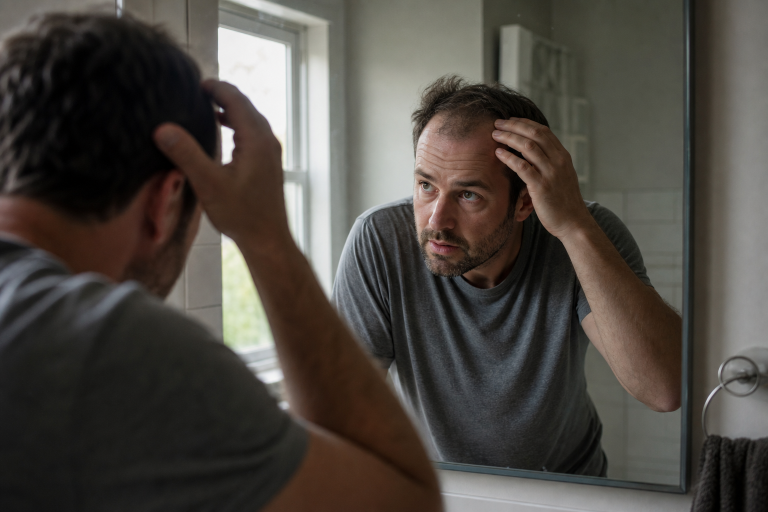
Early changes are often subtle. A single day of extra shedding does not necessarily mean hair loss, since normal shedding varies. Instead, look for patterns that continue or become more noticeable over several months.
- A hairline that is gradually moving back at the temples.
- More visible scalp at the crown or under bright overhead light.
- Hair that seems finer or does not grow as long as it once did.
- More hair than usual on a pillow, towel, comb, or shower floor.
- A beard, eyebrows, or body hair that is also becoming patchy.
Common Causes In Men
Stress, Illness, And Major Changes
A high fever, surgery, significant emotional stress, rapid weight loss, or serious illness can lead to increased shedding. This type of shedding may not be apparent until weeks or months after the triggering event, making it difficult to link the change to its original cause. In many cases, hair density improves after the trigger is resolved, though a medical review can help rule out other concerns.
Nutrition, Medication, And Health Conditions
Hair growth depends on adequate energy and nutrients, including protein, iron, zinc, and other essentials. A restrictive diet or a genuine nutritional deficiency can contribute to shedding. Thyroid disease, anemia, autoimmune conditions, scalp infections, and some medications may also affect hair. Do not stop a prescribed medicine on your own. Ask the prescribing clinician whether hair loss could be a side effect and what alternatives, if any, are appropriate.
Scalp And Grooming Factors
Persistent inflammation, scaling, or infection can interfere with scalp health. Repeated bleaching, chemical processing, aggressive brushing, frequent high heat, and hairstyles that pull tightly on the roots can also cause breakage or traction-related loss. These factors may coexist with genetic thinning, which is why an all-or-nothing explanation is not always accurate.
When To See A Doctor
Book an appointment with a dermatologist or primary care clinician if the change is sudden, severe, or accompanied by other symptoms. Prompt evaluation is especially important when you notice:
- Round or smooth bald patches.
- Scalp pain, itching, redness, scaling, sores, or pus-filled bumps.
- Hair loss affecting the beard, eyebrows, or other body areas.
- Ongoing shedding for several months.
- Fatigue, unexplained weight changes, or other new health symptoms.
An appointment may include a medical and family history review, a scalp examination, a medication review, and selected blood tests. Patchy hair loss can sometimes reflect an immune-related condition such as alopecia areata, which deserves a professional diagnosis rather than self-treatment.
Treatment Options To Discuss
The right treatment depends on the cause, the pattern of loss, health history, personal goals, and willingness to continue a routine over time. A clinician can help separate options with stronger evidence from those that may not fit your situation.
Topical And Prescription Treatments
Topical minoxidil is commonly used for certain forms of pattern hair loss. It generally requires ongoing use, and some people experience a temporary increase in shedding when beginning treatment. Prescription options, including finasteride, may be considered for some men with hereditary loss. Discuss potential sexual, mood-related, reproductive, and other side effects with a qualified clinician before starting a prescription treatment.
Devices And Procedures
Low-level light devices, platelet-rich plasma treatments, microneedling, and hair transplantation may be considered in selected cases. Costs, maintenance needs, recovery time, and expected benefits vary considerably. Hair transplantation redistributes existing follicles, so it does not stop loss in untreated areas.
Supplements
Supplements can be useful when testing or dietary assessment identifies a deficiency. They should not be treated as a universal cure for genetic hair loss. Review any supplement with a healthcare professional, particularly if you take prescription medication or have an ongoing medical condition.
Daily Habits That Support Hair Health
- Eat regular meals that include sufficient protein and a variety of whole foods.
- Wash the scalp gently and avoid harsh scratching.
- Limit repeated high-heat styling and chemical processing.
- Choose hairstyles that do not create continual pulling at the roots.
- Protect exposed scalp skin from strong sun exposure.
- Maintain a consistent sleep routine and use practical stress-management tools.
How To Track Changes
Photos provide a more reliable view of change than daily mirror checks. Once each month, take pictures of the front, sides, top, and crown in the same room, with the same lighting, distance, hairstyle, and approximate hair length. Also note illnesses, major stress events, new medications, diet changes, and treatment start dates. Because hair growth is slow, judge progress over several months rather than a few days.
Frequently Asked Questions
Is Hair Thinning Always Genetic?
No. Genetics are common, but stress, illness, nutrition, medications, scalp conditions, and autoimmune disease can also contribute.
Can Stress Cause Hair Loss?
Yes. Significant physical or emotional stress can trigger increased shedding, sometimes after the stressful period has passed.
Does Cutting Hair Make It Grow Thicker?
No. Cutting affects the visible hair shaft, not the follicle beneath the skin. Blunt ends may make shorter hair look fuller.
How Long Do Treatments Take To Show Results?
Many treatments need consistent use for several months before visible changes are easier to assess. The timeline depends on the cause and the treatment plan.
Conclusion
Men’s hair thinning has many possible causes, and the first visible change does not always tell the whole story. Hair may gradually become finer, the hairline may change, the part or crown may become more noticeable, or increased shedding may appear before a clear pattern develops. Genetics and family history can be relevant, but other factors such as recent illness, stress, nutritional changes, medications, hormonal changes, scalp conditions, and repeated tension or harsh styling may also need to be considered. Track the pattern, note when the changes began, and avoid rushed conclusions based on a few days of increased shedding or a single photograph. Gentle hair care and avoiding unnecessary pulling or excessive heat can help reduce additional stress on the hair. Seek professional guidance for sudden, patchy, painful, rapidly worsening, or persistent loss. A steady plan that addresses the likely cause can help protect existing hair, clarify available options, and set realistic expectations for improvement.