


Imagine you grab a jig saw and turn a simple sheet of plywood into a custom shelf with smooth, flowing curves. That freedom comes from the right tool. A corded jig saw delivers steady power straight from the outlet, so you never worry about battery life during long sessions. These tools excel at intricate cuts in wood, metal, and plastics. Many hobbyists and professionals prefer them for reliable performance.
For instance, check out this detailed corded jig saw review of a solid entry-level option that handles everyday tasks well. Moreover, the orbital action jigsaw market grows quickly. Experts project it will rise from $818.6 million in 2025 to $1.37 billion by 2035. This growth shows more people tackle home projects. Additionally, power tools cause thousands of injuries each year, often from poor control or weak features. You pick a quality model to stay safe and get clean results.
This guide walks you through everything you need. First, we cover why corded models shine. Then, we explore key features. After that, we dive into detailed reviews of top picks. Finally, we share practical tips. You finish ready to choose confidently.
Why Choose a Corded Jig Saw Over Cordless?
Corded jig saws offer clear advantages for many users. They draw constant power from the wall. As a result, you cut for hours without slowdowns. Cordless models lose strength as batteries drain. However, corded ones stay strong from start to finish.
Professionals often pick corded for heavy jobs. The unlimited runtime suits big projects like building furniture or trimming materials all day. Additionally, corded motors tend to deliver more raw power. They handle thick hardwoods or metal with ease.
Cordless saws provide mobility. You move freely without dragging a cord. Yet, for workshop use near outlets, that cord rarely limits you. Many find corded tools lighter overall since they skip heavy batteries.
In addition, corded options prove more reliable long-term. Batteries wear out over time. A corded jig saw keeps going as long as you plug it in. Therefore, it often lasts longer for frequent users.
Key Features to Look for in a Corded Jig Saw
You focus on several features to find the right saw. Start with motor power. Most models range from 5 to 7 amps. Higher amps cut faster through tough materials. For example, a 7-amp motor powers through thick stock smoothly.
Variable speed control matters next. You adjust strokes per minute, often from 500 to 3,200. Slow speeds give precision on curves. Faster speeds speed straight cuts. Look for both dial and trigger controls for flexibility.
Orbital action boosts efficiency. It swings the blade slightly forward on upstrokes. Four settings work best. You choose straight up-and-down for clean edges or aggressive orbits for quick removal.
Tool-free blade changes save time. A lever ejects hot blades safely. Most accept T-shank blades for stability. Some also take U-shank for versatility.
Bevel capacity allows angled cuts. Quality models tilt to 45 degrees both ways. A sturdy shoe keeps it stable.
Dust blowers and LED lights improve visibility. A blower clears sawdust from the line. Lights illuminate dark areas.
Finally, consider handle type. Top-handle offers control for most. Barrel grip feels natural for some intricate work. Vibration reduction adds comfort on long jobs.
Top Corded Jig Saw Reviews
You see the best options here. We tested and researched based on real performance. Each shines in different ways.
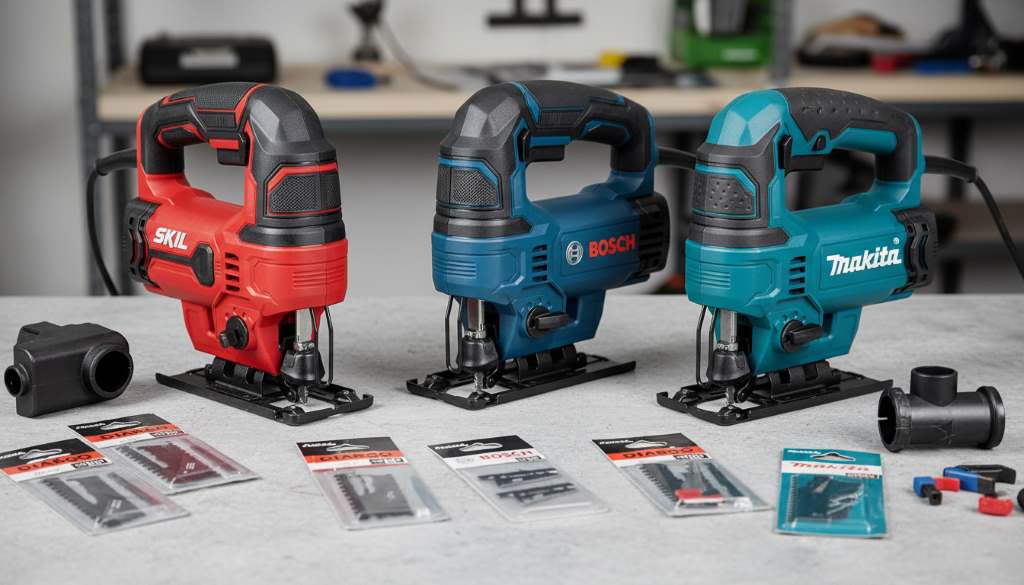
Bosch JS470E 7.0-Amp Top-Handle Jig Saw
Bosch builds excellent jig saws. The JS470E leads as a pro favorite. Its 7-amp motor reaches 3,100 strokes per minute. You feel the power immediately on hard materials.
The tool-free change system ejects blades with a lever. No burns from hot metal. Four orbital settings plus straight cut give versatility. Variable speed dial sits conveniently.
Users love the low vibration. An ergonomic handle reduces fatigue. The large shoe stays square for accurate cuts. A strong blower keeps lines clear.
This saw excels at curved and straight work. It handles metal siding or detailed woodworking smoothly. Many call it the most reliable choice.
SKIL JS313101 5-Amp Corded Jig Saw
SKIL delivers great value for beginners. This 5-amp model weighs just 4.4 pounds. You maneuver it easily all day.
Variable speed goes up to 3,200 strokes per minute. Four orbital levels speed aggressive cuts. The dust blower maintains clear sight.
Tool-free changes work quickly. It bevels 45 degrees left or right. The adjustable shoe adapts to tasks.
DIY users praise its balance. It cuts 2 inches of wood cleanly. Light weight helps with overhead work. Smooth operation surprises for the class.
Makita Top-Handle Jig Saw
Makita focuses on comfort. Their lightweight model weighs only 4.2 pounds. A 3.9-amp motor provides enough power for most jobs.
Three orbital settings plus straight cut offer options. Variable speed dial controls precisely. The rubber grip feels secure.
A sliding dust cover protects internals. Large trigger suits prolonged use. It minimizes fatigue on detailed projects.
Professionals appreciate the portability. It handles thin stock and light metal well. Quiet operation adds to the appeal.
DeWalt DW331K Corded Jig Saw
DeWalt brings durability. The 6.5-amp motor powers through hardwoods. Variable speed trigger gives intuitive control.
Tool-free bevel and blade changes speed setup. Low vibration keeps cuts accurate. The comfortable handle suits long sessions.
It performs consistently on straight and curved lines. Strong build withstands job site use. Many trust it for reliable results.
Black+Decker 5.0-Amp Jig Saw
Black+Decker suits occasional users. This model accepts both T and U-shank blades. Four orbital settings add flexibility.
Variable speed dial adjusts easily. The large shoe provides stability. Bevel cuts reach 45 degrees.
Beginners find controls straightforward. It handles home projects well. Textured grip prevents slips.
Related:
How to Maintain Your Patio and Lawn Using Simple Garden Tools
Tips for Using Your Corded Jig Saw Safely and Effectively
You get better results with good techniques. Always wear safety glasses and hearing protection. Secure workpieces firmly. Let the saw do the work without forcing.
Choose the right blade. Wood needs coarse teeth. Metal requires fine. Fine blades reduce tear-out on plywood.
Start with slow speeds for curves. Increase for straights. Use orbital action sparingly on finish cuts. It speeds rough work.
Mark lines clearly. Follow them steadily. Practice on scrap first. Support large pieces to prevent binding.
Maintain the tool regularly. Clean dust from vents. Check the cord for damage. Store blades properly.
For plunge cuts, tilt the saw and lower slowly. Use the blower to see the line. Clamp guides for straight edges.
Common mistakes include wrong blades or rushed feeds. These cause burning or wandering. Slow down for control.
Another tip involves direction. Cut with good side down for less tear-out. Tape edges on delicate materials.
Experiment with settings. Find what works for each material. Over time, you develop feel for the tool.
Safety remains key. Keep hands clear of the blade path. Unplug when changing blades. Never remove guards.
These habits improve cuts and extend tool life. You tackle complex projects confidently.
Common Mistakes to Avoid When Buying or Using
Many rush into purchases. They overlook amp needs. Match power to typical materials.
Some ignore ergonomics. Test handle feel if possible. Comfort prevents strain.
Buyers skip blade compatibility. T-shank dominates now. Ensure versatility.
Users forget accessories. Extra blades and guides help immediately.
In use, forcing the saw causes deflection. Let speed do work. Guide gently.
Overlooking maintenance shortens life. Clean after sessions.
Ignoring safety leads to accidents. Always prioritize protection.
Avoid these pitfalls. You enjoy better experiences.
Conclusion
Corded jig saws bring reliable power and precision. You learned key features like amps, speed control, and orbital action. We reviewed top models from Bosch, SKIL, Makita, DeWalt, and Black+Decker. Each offers strengths for different needs.
Safety and technique tips help you work effectively. Now pick the saw that fits your projects. Grab one today and start creating smooth curves and clean cuts. Your next build awaits.
FAQs
What makes corded jig saws better than cordless for some tasks?
Corded models deliver constant power without fade. They suit long sessions and heavy materials. Runtime never limits you near outlets.
How do I choose the right blade for my jig saw?
Match teeth to material. Coarse for fast wood cuts. Fine for metal or clean edges. T-shank fits most modern saws.
Can beginners use powerful corded jig saws safely?
Yes, with practice. Start slow. Use variable speed. Follow safety rules. Lighter models ease learning.
What maintenance does a corded jig saw need?
Clean dust regularly. Check cord integrity. Lubricate moving parts occasionally. Store properly.
How important is orbital action in a jig saw?
It speeds rough cuts significantly. Turn it off for smooth finishes. Multiple settings provide versatility.
References
- https://www.popularmechanics.com/home/tools/g35981068/best-jigsaws
- https://www.protoolreviews.com/best-jigsaw-reviews
- https://www.woodmagazine.com/tool-reviews/jigsaws/jigsaw-buying-guide
- https://www.futuremarketinsights.com/reports/orbital-action-jigsaw-market