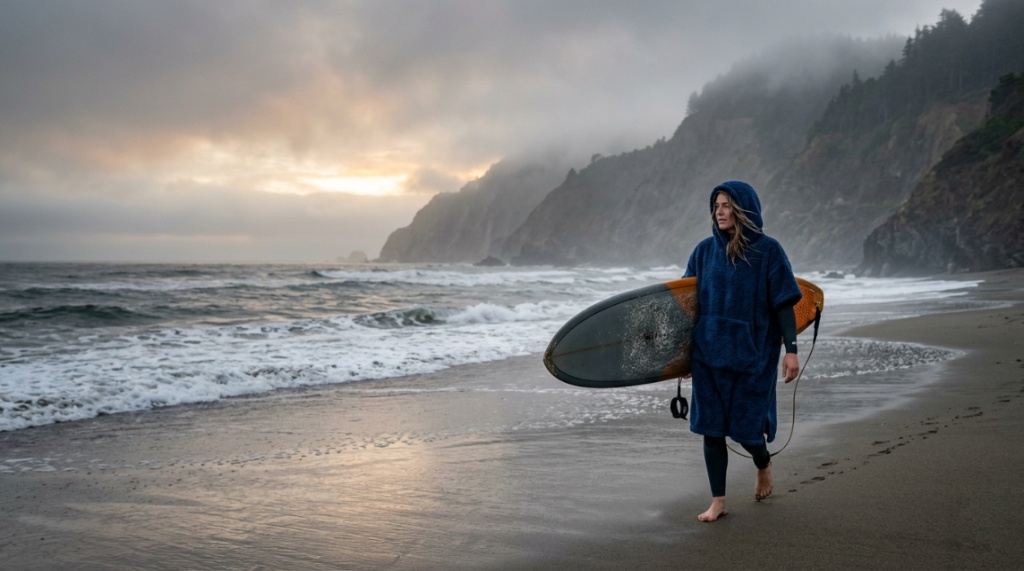
Picture this: you just paddled out at Trestles, the offshore wind is cranking, and the marine layer has settled in. You peel off your wetsuit on the sand, shivering, salt water dripping down your back, wrestling a stiff towel in the wind. What you really need is a hooded surf poncho. But not just any poncho—you need the best hooded surf ponchos California conditions demand. From Santa Cruz mornings to San Diego afternoons, the right poncho turns a miserable changing experience into a moment of warmth and dignity. Let’s dial in the perfect choice.
What Makes a Hooded Surf Poncho Essential for California Surfers?
Cold mornings, wind, and public parking lots
California surf is fickle—sometimes glassy and warm, often windy and cold even in summer. A hooded surf poncho solves two specific problems: warmth and privacy. Unlike a standard towel, a poncho stays put in gusty conditions. The hood traps heat escaping from your head, which is where most body heat is lost. The roomy design allows you to peel off a tight wetsuit without exposing yourself to the family having a picnic twenty feet away.
Versatility beyond the ocean
A good hooded surf poncho doesn’t just serve for quick changes. Use it as a camp blanket, a post-hike warmer, or a spare layer at a beach bonfire. California surfers often travel between breaks in the same day—an early session at Ocean Beach, a midday trip to Linda Mar. A quality poncho works across all those environments. Look for one that folds small enough to stuff into your board bag without taking up your whole trunk space.
What sets a surf poncho apart from a regular towel?
Regular towels get wet, heavy, and sandy. They flap in the wind and provide zero coverage. A surf poncho uses a specific fabric blend—usually 80% cotton and 20% polyester or microfiber—that wicks moisture while holding warmth. The hood is sized to fit over a wet head without pulling tight. Side openings or snap closures let you move your arms freely, so you can pack your gear without fully undressing.
Which Fabric Is Best for a California Surf Poncho?
Cotton blend versus microfiber
Cotton blends feel soft against the skin and absorb moisture well, but they dry slowly. If you are surfing in cooler locations like Bolinas or Mavericks, a cotton-blend hooded surf poncho offers cozy insulation. Microfiber ponchos dry much faster, resist sand, and weigh less—ideal for warm-water sessions at Huntington Beach or when you need to pack light. Despite faster drying time, microfiber can feel less plush against cold, windburned skin. Consider your local climate: for year-round use up and down the coast, a midweight cotton-polyester blend offers the best balance of absorbency and comfort.
Toweling material versus fleece lining
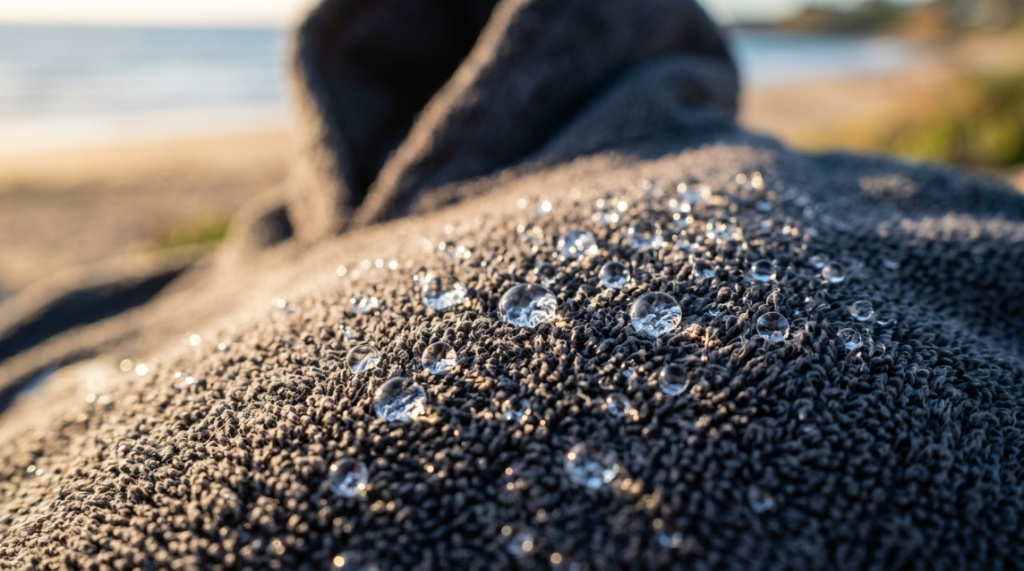
Toweling material is the classic choice—loop terry on the inside traps water droplets and provides the familiar feel of a robe. Fleece-lined hooded surf ponchos add extra thermal retention. If you surf dawn patrol in Santa Cruz during winter, fleece lining is a game-changer. Your core stays warm even when the ocean temperature hovers around 50°F. However, fleece picks up sand easily and can get heavy when wet. For warm-weather surfing, stick with toweling or lightweight microfiber to avoid overheating while changing.
What to avoid in fabric choices
Stay away from 100% cotton terry in a heavy, bathrobe-style weight. It holds water like a sponge and takes forever to air dry—you will be putting a wet, cold poncho back on after your second session. Also avoid synthetics with poor breathability. Some cheap polyester ponchos trap sweat and smell funky after a few uses. Always check the care label for machine-wash compatibility: you will be washing it often.
How Does Fit and Sizing Affect Your Changing Experience?
The “over-the-head” test
When buying a hooded surf poncho online, the biggest mistake is ignoring sizing. A poncho should fit over your head and shoulders easily without feeling like you are squeezing into a wetsuit again. Standard sizes are loosely based on height and chest measurement. If you are 5’8” or shorter, a medium usually works. Taller surfers over 6’ should look for tall or oversized options. Many California brands offer “one size fits most,” but that rarely works if you are built like a linebacker.
Length matters more than you think
A hooded surf poncho that hits at your waist is useless. You need coverage down to at least mid-thigh, ideally knee-length, to change your lower half discreetly. California surfers often change in busy parking lots near breaks like Malibu or Steamer Lane. Longer ponchos give you better modesty. Look for a length of at least 38 inches for average height, 44 inches or more for taller surfers. Some premium ponchos measure up to 50 inches in length, offering full coverage while standing up.
Armholes and side openings
Side openings are a critical feature. Without them, you have to lift the entire poncho to use your hands, defeating the purpose. Quality hooded surf ponchos have side seams that unbutton or unsnap, allowing you to put your arms through while keeping your body covered. Test the placement of these openings. They should sit at your natural hip level, not too high near your armpits, so you can access your bag, towel off, or hold a coffee cup easily.
What Features Should You Prioritize in a Hooded Surf Poncho?
Hood design for wind protection
The hood should have an adjustable drawstring or elastic band. Without it, wind will blow the hood off your head right when you need it most. A properly fitting hood stays on even in strong offshore winds common at Point Dume or Ocean Beach. Look for a generous hood that can accommodate wet hair or a bun without constant adjustment. Some hoods also feature a slight bill or peak to keep rain and spray out of your eyes.
Pockets and storage options
A kangaroo pocket on the front is standard for most hooded surf ponchos. This pocket is perfect for warming your hands or holding your car keys, lip balm, and phone. Some ponchos add zippered security pockets for valuables—consider these essential if you leave gear on the beach while surfing. The pocket should be deep enough to hold a smartphone without it falling out when you bend over to pull on booties or wetsuit pants.
Durability and sewing quality
California surf spots are notoriously rough on gear. Sand and saltwater degrade cheap stitching quickly. Check for double-stitched seams, bartacks at stress points, and reinforced stress areas around the hood attachment. A hooded surf poncho that unravels after three washes is not a bargain at any price. Look for brands that offer warranties or repair services—they stand behind their beach products. Reinforced hems prevent fraying after repeated machine washing.
How to Choose Between Premium and Budget-Friendly Ponchos?
What you get with a premium poncho
Premium hooded surf ponchos often feature higher GSM (grams per square meter) fabric—around 400 GS or more—giving them plush absorbency and longevity. They use organic cotton, recycled polyester blends, or both. Details like magnetic closures, hidden phone pockets, and tailored cuts set them apart. Prices range from $70 to $120. If you surf multiple times per week year-round, the investment pays for itself in comfort and durability. Premium options also hold their color well after repeated sun exposure, so you do not look like a faded flag after one season.
Budget choices that still deliver
You do not need to spend a fortune. Budget-friendly hooded surf ponchos from reputable brands cost between $30 and $50. These often use lighter-weight terry or microfiber with simpler construction. They still offer warmth and privacy—the core requirements. The trade-offs come in fabric thickness, hood retention, and pocket depth. For a surfer hitting mostly summer glass-offs and warm-water spots like Seal Beach or La Jolla Shores, a budget version is often enough. For a true comparison of affordable brands tested by California surfers, check our curated list of hooded surf ponchos California.
When to spend more—and when to save
Spend more if you surf cold climates (NorCal, central coast) year-round, if you prioritize eco-friendly materials, or if you want a poncho that doubles as a stylish beach garment. Save money if you only surf in summer, if you tend to lose or damage gear, or if you want a backup poncho to keep in your car. Many experienced surfers run one high-end poncho for dawn patrol and a budget throw-back for casual afternoon sessions.
Which Brands Are Known for the Best Hooded Surf Ponchos in California?
California-focused brands
Local brands understand California conditions. Companies like Vissla, Surf 9, and Bear Flag Co. design hooded surf ponchos specifically for the West Coast. Vissla uses sustainable fabrics and designs for movement. Surf 9 focuses on oversized fits with deep pockets. Bear Flag Co. emphasizes classic style with heavy-duty materials. These brands often incorporate California-inspired colors and patterns that look good off the beach too.
International brands with California models
Brands like Seea (women’s), Patagonia, and Crew Clothing offer specific poncho models that work well in California. Patagonia’s “M’s Surf Poncho” uses the same durable fabric as their wetsuits, with a built-in hang loop that fits your car’s headrest—perfect for drying between breaks. Seea’s “Siren Surf Poncho” features a modern cut with hood and side snaps designed specifically for female surfers’ needs. These international brands offer the benefit of lifetime guarantees and global supply chains.
What to look for in brand reputation
Before buying a hooded surf poncho, read customer reviews specifically mentioning use in windy, cold, or sandy conditions. Surfers leave honest feedback about hood retention and fabric durability. Check that the brand offers easy returns—sometimes the sizing is off. Avoid brands that use vague sizing charts or lack customer support. Trusted brands often have active social media communities where you can see real-world usage photos, not just marketing shots.
How to Care for Your Hooded Surf Poncho to Make It Last?
Washing and drying best practices
Wash your hooded surf poncho after every few uses, especially if it gets sandy or sweaty. Use cold water with mild detergent—avoid fabric softeners, which reduce absorbency. Machine dry on low heat or air dry flat. High heat damages the elastic in the hood and the fibers that give the poncho its plush texture. If you machine dry, remove the poncho while slightly damp to prevent shrinkage. Shake out sand before washing to avoid scratching your machine’s drum.
Storing your poncho between sessions
Never store a wet poncho in a sealed bag or trunk. Mildew sets in fast. Hang it on the back of a door or over a railing to air out completely. Some surfers clip their poncho to the headrest in the car with windows slightly cracked—perfect for drying on the drive home. A mildew smell can be removed with a vinegar soak (one cup vinegar to a bucket of cold water) but prevention is easier. Magnetic closure designs often rust if not dried properly, so check metal components,Staying warm while changing at your vehicle is essential after a long morning session. Pair your cozy changing robe with reliable gear—check out our complete guide on the Best Surfboard Leashes for Every Wave Condition to keep your board secure in heavy California surf.
When to retire your poncho
Replace your hooded surf poncho when the hood loses its shape and falls off easily, when the fabric stops absorbing water effectively, or when seams start to separate. A good poncho lasts two to three years with regular use. If you notice pilling on the inner fabric, it is time to upgrade—pilling reduces comfort and water absorption. A quality poncho that is well maintained can outlast cheaply made alternatives by several years, making the initial investment worthwhile.
Frequently Asked Questions
Can I wear a hooded surf poncho as everyday clothing?
Absolutely. Many hooded surf ponchos are designed to look like stylish beach apparel. Pair it with shorts or jeans for a laid-back California aesthetic, especially around surf towns. Just be aware that the absorbent fabric is not meant for formal wear.
What size should I buy for my height?
If you are under 5’6”, go with a small or medium. For 5’6” to 6’, choose a large. Over 6’ tall, a tall size or oversized option is recommended. Measure from your shoulder to your knee to confirm the poncho reaches low enough for comfortable changing.
Are hooded surf ponchos machine washable?
Most are. Always check the care label, but the majority of cotton-blend and microfiber hooded surf ponchos can be machine washed in cold water and dried on low heat. Avoid bleach and fabric softeners. Turn the poncho inside out before washing to protect any screen prints or logos.
Why do some ponchos have snaps on the sides?
Side snaps allow you to open the poncho for better arm movement while keeping your body covered. This is essential for pulling off a wetsuit or reaching into your beach bag without fully exposing yourself. It also helps when you want to cool down without taking off the entire poncho.
How do I prevent my poncho from smelling like mildew?
Always dry your poncho completely before storing it. Hang it in a well-ventilated area, not inside a damp car trunk. If it develops a musty smell, wash it with a cup of white vinegar added to the rinse cycle. Air drying in direct sunlight also helps kill odor-causing bacteria.
Can I use a hooded surf poncho for paddleboarding or kayaking?
Yes. The same principles apply—warmth, privacy, and wind protection. For paddleboarding, consider a lighter microfiber poncho that dries fast and packs small. The hood is especially useful after a windy session on open water when your head gets cold quickly.
Is a hooded surf poncho worth it if I only surf occasionally?
Even occasional surfers benefit. A good poncho makes the post-surf change more comfortable, especially at crowded beaches where privacy matters. Plus, it is useful for lakes, pool days, and camping. The investment is small compared to the comfort you gain for years to come.