Key Takeaways
- The right loan depends on the business purpose, timing, and ability to make payments during slow periods.
- The interest rate alone does not reflect the full borrowing cost. Fees, payment frequency, and repayment terms matter too.
- A planned equipment purchase may require a different solution than a recurring working-capital need.
- A simple cash flow forecast can reveal whether a new payment creates unnecessary pressure.
- Comparing multiple offers can uncover restrictive terms, unclear fees, and repayment schedules that do not fit the business.
Choosing a business loan is not simply about securing the highest approval rate or the lowest advertised rate. The better question is whether the amount, payment schedule, and total cost support the business without disrupting payroll, inventory purchases, rent, tax payments, or day-to-day operations.
For a defined expense, a business owner might begin by reviewing https://www.bluevine.com/business-loans/term-loan and then compare it with other financing structures. The goal is to match the borrowing arrangement to the reason for borrowing and to the cash the company can reliably collect.
Why Loan Fit Matters More Than Loan Size
Borrowing the maximum available amount can result in a larger payment than the company actually needs. Financing should solve a specific problem, such as replacing essential equipment, purchasing inventory ahead of a busy season, or covering a temporary gap between invoicing and payment.
For example, a seasonal landscaping company may borrow heavily in late summer based on strong recent deposits. If revenue slows through winter while monthly payments remain unchanged, the loan can strain payroll and operating reserves. A smaller amount or a repayment schedule better aligned with the business cycle may be more practical.
Start With The Business Need
Define the expense before comparing lenders. Planned purchases, emergency repairs, expansion projects, and short-term cash gaps are distinct needs and should not be financed in the same way.
Questions To Ask First
- What exactly will the funds pay for?
- Is the expense one-time or recurring?
- How quickly is the funding needed?
- Will the purchase create revenue, reduce costs, or protect current operations?
- How long will the benefit of the purchase last?
Review Common Business Financing Options
Term Loans
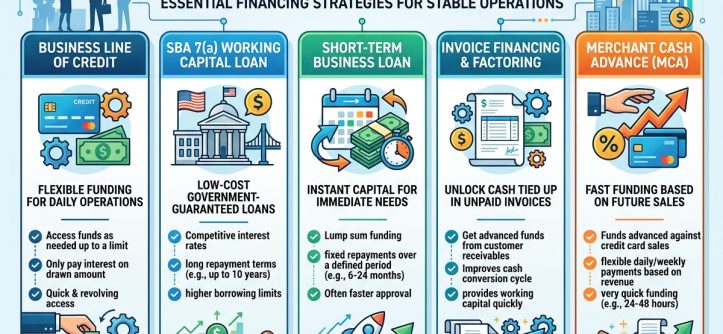
A term loan provides a lump sum that is repaid on an agreed schedule. It can fit a defined investment, such as a renovation, a large inventory order, a vehicle, or an equipment purchase. Predictable payments may make budgeting easier, but the business still needs enough dependable cash flow to make every payment.

Lines Of Credit
A business line of credit generally provides revolving access to funds for working-capital needs. It may be useful when expenses arise at different times, but renewal terms, variable pricing, and payment requirements should be reviewed carefully before relying on it for regular operating costs.
SBA-Backed Loans And Other Options
Businesses considering government-backed financing can review SBA loan programs to understand common uses, eligibility considerations, and lender-specific requirements. Equipment financing, invoice financing, business credit cards, microloans, and vendor terms may also serve particular needs. Faster access can be valuable, but convenience may come at a higher cost.
Measure The True Cost Of Borrowing
Look beyond the stated interest rate. Ask for the total amount repaid, the amount actually received after fees, every payment due date, and any charges for late payment or early payoff. Some products use factor rates instead of interest rates, which can make direct comparisons harder.
Before accepting an offer, confirm whether the rate is fixed or variable, whether payments can change, and whether fees are deducted from the proceeds. A loan with a lower stated rate may still cost more if it includes substantial origination fees or a short repayment period with frequent withdrawals.
Check Whether Payments Fit Cash Flow
Test a proposed payment against real operating results, not an optimistic sales forecast. Review several months of deposits, payroll, rent, supplies, insurance, taxes, debt payments, and owner draws. Then test the payment during a weaker-than-average month.
A Simple Cash Flow Test
- Estimate average monthly cash collected.
- Subtract regular operating costs and tax obligations.
- Subtract all current debt payments.
- Subtract the proposed new payment.
- Check whether enough cash remains for slow sales, delayed invoices, and unexpected repairs.
Review Credit And Qualification Factors
Lenders commonly consider personal and business credit history, time in business, revenue, deposit patterns, current debt, ownership structure, collateral, guarantees, and repayment ability. Requirements vary by lender and product. The small business credit data published by the Federal Reserve also illustrates that funding experiences can differ among banks, credit unions, and nonbank lenders.
Prepare Documents Before Applying
Organized records can make applications smoother and help identify concerns before a lender does. Gather recent bank statements, profit and loss statements, balance sheets, business and personal tax returns, accounts receivable and payable reports, formation documents, licenses, a written use-of-funds plan, and realistic cash flow projections.
Compare Loan Offers Side By Side
Use a written comparison rather than relying on marketing language or memory. For each offer, list:
- Amount received after deductions
- Total repayment amount
- Payment amount and frequency
- Interest, factor rate, and all fees
- Collateral and personal guarantee requirements
- Early payoff rules and prepayment costs
- Default provisions and automatic withdrawal terms
Watch For Risky Loan Terms
Warning signs include unclear pricing, missing total repayment figures, pressure to sign immediately, unexplained fees, daily payments that do not match deposit timing, broad guarantees, blank agreement sections, vague default rules, and promises of approval without meaningful review of the business.
Build A Simple Borrowing Checklist
- Write down the exact business purpose.
- Borrow a realistic amount, not simply the largest available amount.
- Review both the average and the low-month cash flow.
- List every existing debt obligation.
- Gather financial records before applying.
- Compare at least two or three offers.
- Calculate the total repayment amount.
- Read guarantee, default, and early payoff clauses.
- Ask questions before signing and retain the final agreement.
Conclusion
The best business loan is rarely just the widest, fastest, or cheapest-looking choice. It is the option that fits a clear business purpose and the company’s actual cash flow. By comparing total costs, payment timing, qualification terms, and downside risks, business owners can treat financing as a planned operating decision rather than a rushed response to pressure.