
Key Takeaways
- Property records can reveal liens, unpaid taxes, easements, ownership questions, and other issues that may affect a purchase.
- A property record review is different from a home inspection, appraisal, or survey.
- Buyers should review title materials early, especially the listed requirements and exceptions.
- Inherited homes, vacant land, remote sellers, and fast cash transactions can require added scrutiny.
- Secure communication and independent verification of wire instructions can help reduce fraud risk.
Why Property Records Deserve Attention Before Closing
Finding the right home is only part of the buying process. A house can look well-maintained, pass inspection, and still have a recorded issue that must be addressed before ownership can transfer. Reviewing records early gives buyers time to understand questions about the property and to decide whether they are comfortable moving forward.
Public records may show a history of deeds, mortgages, liens, easements, and other interests connected to a parcel. Buyers should also understand what is owner’s title insurance, because it relates to certain covered problems involving ownership rights that existed before the policy date.
What a Property Record Review Looks For
A record review follows the paper trail tied to a property. The goal is not to make a buyer into a legal expert. It is to identify items that need clarification, payoff, release, or further review before closing.
- Past deeds and ownership transfers
- Mortgages, deeds of trust, and recorded releases
- Tax liens, contractor liens, judgments, or other claims
- Easements for utilities, roads, shared driveways, or access
- Covenants, restrictions, and recorded agreements
- Name differences, missing documents, or unclear legal descriptions
Common Problems That Can Delay a Home Purchase
An unreleased lien may appear even when an earlier debt was paid, requiring proof and a recorded release. A missing signature can arise when a former spouse, co-owner, trustee, or heir has an interest that must be resolved. Inherited property may require confirmation that the person signing has the authority to sell.
Other concerns involve the land itself. A fence, driveway, or shed may not align with the legal boundaries, while an easement may affect where an owner can build. These issues do not automatically end a deal, but they should not be ignored simply because the home appears physically sound.
Title Review, Inspection, Appraisal, and Survey Have Different Jobs
- Home inspection: Evaluates visible physical conditions, such as systems, structure, and safety concerns.
- Appraisal: Provides an opinion of value, often for a lender’s underwriting process.
- Survey: Can identify boundaries, improvements, access points, and possible encroachments.
- Property record review: Focuses on recorded interests and the chain of ownership.
A satisfactory inspection does not confirm clear ownership rights, and a favorable appraisal does not remove a lien or settle a boundary dispute.
How to Read a Title Commitment
A title commitment generally identifies the property, the proposed insured party, conditions that must be met before a policy may be issued, and exceptions that may remain. Read it promptly and use a simple process:
- Confirm your name, the property address, and the legal description.
- Review the current owner and the form of ownership being transferred.
- Identify requirements that must be completed before closing.
- Read every exception, including easements and restrictions.
- Ask for written explanations of unfamiliar or inconsistent items.
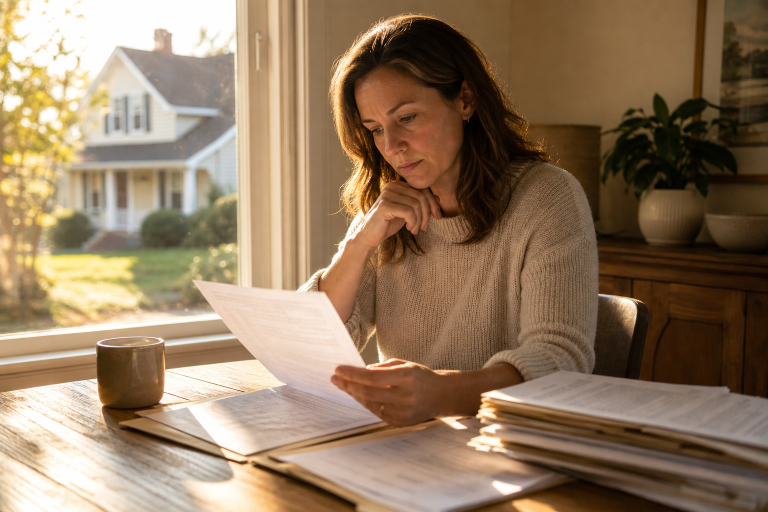
Questions to Ask Before Signing
- Are there liens, judgments, unpaid taxes, or recorded claims affecting the property?
- Does any other person need to sign a deed, affidavit, or release?
- Do easements or restrictions affect planned renovations, parking, or access?
- Does the legal description match the purchase agreement and survey, if one is available?
- Which matters must the seller resolve, and which will remain exceptions after closing?
Situations That May Need Extra Care
Extra review can be useful when a property is vacant, recently transferred, owned by a business, held in a trust, or being sold by several people. It is also sensible when the seller lives far away, the price changes sharply, or the transaction is being rushed.
Those facts do not prove wrongdoing. Still, a recent report about fake sellers posing as property owners illustrates why buyers and real estate professionals should independently confirm who has the authority to sell, particularly in remote transactions involving vacant property.
Practical Steps to Reduce Closing-Day Surprises
- Read the purchase agreement and calendar for every deadline.
- Review title materials as soon as they arrive rather than waiting for closing day.
- Keep written questions and save answers, documents, and receipts.
- Use secure channels when sending identification or financial information.
- Call a trusted, independently verified phone number to confirm wire instructions.
- Pause and request time to review any unexpected document before signing.
What to Do if a Problem Appears
A record issue does not necessarily mean the purchase must fail. A seller may be able to pay a lien, obtain a release, provide estate documents, correct a recording error, or clarify an ownership question. Ask for the issue and the proposed solution in writing, then check the purchase contract for applicable deadlines or cancellation rights.
When the concern involves inheritance, ownership authority, fraud, or disputed land rights, state-specific advice from a qualified real estate attorney may be appropriate.
Property Fraud and Public Record Alerts
Deed fraud can involve forged documents or deceptive efforts to obtain a signed transfer. Buyers can reduce exposure by checking recent records, confirming identities, resisting pressure to act quickly, and independently verifying payment instructions.
Some local recording offices offer property-record notification services. Availability and procedures vary, so buyers should check with the recording office where the property is located.
How Timing Affects the Closing Process
Property-record questions are usually easier to address early. Missing releases, estate paperwork, payoff figures, or corrected documents can take time to obtain. Building room into the schedule helps buyers avoid making significant decisions under closing-day pressure.
A Simple Buyer Checklist
- ☐ Compare names and legal descriptions across transaction documents.
- ☐ Ask about liens, taxes, easements, restrictions, and required signatures.
- ☐ Review title requirements and exceptions.
- ☐ Confirm payment instructions by phone using a verified number.
- ☐ Retain final signed documents and proof of payment.
- ☐ Seek professional guidance when a legal dispute or fraud concern emerges.
Conclusion
A careful property record review is a practical part of buying a home in 2026. Buyers do not need to solve every issue themselves, but they should read the documents, ask direct questions, and allow time for legitimate concerns to be resolved. A few focused checks before signing can make the closing process clearer and more manageable.