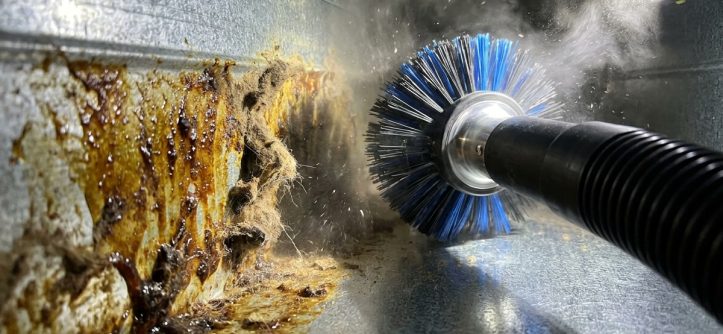
Cigarette smoke leaves more behind than an odor that disappears once a room is aired out. Years of indoor smoking can deposit sticky nicotine residue and smoke particles on registers, return pathways, duct surfaces, and HVAC components that ordinary wiping never reaches. Professional air duct cleaning can remove accessible contamination from those hidden areas, although heavily affected porous materials and residue elsewhere in the home may require additional cleaning or replacement.
Smoke Residue Behaves Differently From Ordinary Household Dust
Sticky smoke deposits can cling to metal, plastic, insulation, and layers of existing dust rather than remaining loose inside the system. Ordinary lint may respond quickly to vacuum suction, while nicotine-laden residue can form a film that holds additional particles against interior surfaces.
Unlike fresh airborne smoke, these deposits can remain long after smoking has stopped inside the property. An experienced air duct cleaner first evaluates where residue is visible and whether the affected material can tolerate the cleaning method needed to remove it.
Why Do Return Ducts Collect So Much Tobacco Residue?
Return pathways continually pull room air back toward the heating and cooling equipment, giving smoke particles repeated opportunities to enter the system. Grilles near smoking areas may develop yellow-brown staining, while deeper sections can accumulate a mixture of dust, hair, fibers, and smoke-related residue over years of use.
Once contamination reaches the return side, deposits may also appear around filter housings, plenums, blower areas, and connected duct surfaces. Homeowners searching for air duct cleaners near me should ask whether the service covers those pathways rather than focusing only on supply vents that deliver air into rooms.
Source Removal Goes Beyond Spraying Something Into the Vents
Source-removal air duct cleaning focuses on physically taking accessible contamination out of the HVAC system. Commercial negative-air equipment provides controlled suction while suitable brushes, air tools, or other agitation methods loosen material from surfaces that can be safely cleaned.
Negative pressure also gives displaced debris a defined direction of travel toward sealed collection equipment. Air duct cleaners in Columbia TN may adjust their process when smoke residue is present because sticky buildup can require more attention than dry dust that separates easily from smooth duct walls.
Duct Material Determines How Much Residue Can Be Removed
Metal ductwork generally provides a harder, less porous surface that technicians can access with appropriate mechanical cleaning methods. Visible smoke film may still take more effort to remove than loose household debris, especially where residue has bonded with grease, dust, or years of accumulated particles.
Flexible duct liners and internally insulated sections create a different problem because smoke compounds can penetrate or cling to porous material. Damaged or heavily contaminated insulation may need replacement instead of aggressive scrubbing, since forceful cleaning can tear liners or release fibers into the airflow.
A Lingering Smoke Smell May Come From More Than the Ducts
Odor can remain even after accessible duct surfaces have been cleaned because tobacco smoke settles throughout a building. Carpet, drywall, ceilings, cabinetry, curtains, insulation, flooring, and upholstered furniture can all retain compounds associated with old smoke exposure.
Because of those additional reservoirs, air duct cleaning should not be presented as a guaranteed way to eliminate every tobacco odor in a home. A property with a long smoking history may need coordinated surface cleaning, repainting, flooring work, filter replacement, or removal of contaminated porous materials alongside HVAC service.
Filters Can Hold Clues About Past Indoor Smoking
Discolored filters sometimes provide visible evidence that smoke and airborne particles have been moving through the return system. Heavy staining around the filter slot may also point to air bypass, especially when the filter fits poorly and leaves gaps along its edges.
Therefore, installing a fresh filter after cleaning can help establish a cleaner baseline for future operation. Homeowners should choose a filter appropriate for the HVAC system rather than assuming the highest efficiency rating is automatically the best match for airflow requirements.
Inspection Helps Define Where the Cleaning Needs to Reach
Camera equipment allows technicians to look past the register opening and examine accessible sections for discoloration, heavy dust, damaged lining, or concentrated residue. Findings may reveal that one return trunk has substantially more contamination than another part of the system.
Careful documentation also sets realistic expectations before work begins. During air duct cleaning in Columbia TN, technicians can explain which sections can be physically cleaned, which materials may hold permanent staining, and where another type of restoration work could be necessary.
Deep Smoke Buildup Requires More Than a Quick Vent Vacuum
Surface vacuuming may improve the appearance of register covers without addressing material farther inside branches and main trunks. Professional equipment reaches beyond those openings and combines suction with controlled agitation so residue is removed from accessible HVAC pathways rather than simply disturbed.
Targeted cleaning becomes particularly valuable in pre-owned homes where the new occupants may not know how long smoking occurred indoors. A detailed inspection can reveal conditions that were hidden during routine move-in cleaning and help determine whether a deeper service makes sense.
Post-Cleaning Care Helps Keep Fresh Residue From Returning
Household smoking needs to stop indoors if the goal is to keep newly cleaned duct surfaces from collecting another layer of smoke residue. Continued exposure can gradually contaminate filters, registers, furnishings, and HVAC pathways again regardless of how thoroughly an earlier cleaning was performed.
Fresh filters, regular surface cleaning, and attention to return grilles can help maintain the system afterward. Ventilation and broader smoke-remediation work may also be necessary when odors or staining remain elsewhere in the property.
Professional Equipment Matters With Sticky, Deep-Set Contamination
Homeowners should avoid assuming that a long brush or household vacuum can handle nicotine residue hidden deep in the duct network. Improvised tools may loosen contamination without capturing it, damage flexible material, or leave heavily affected sections untouched.
Mr. B’s Air Duct Cleaning gives Columbia homeowners a professional option for dealing with smoke-related buildup that sits beyond ordinary reach. Using inspection tools and source-removal equipment, the team can address accessible residue within the HVAC system, explain where contamination remains, and help determine whether air duct cleaning should be paired with additional smoke-remediation work elsewhere in the home.