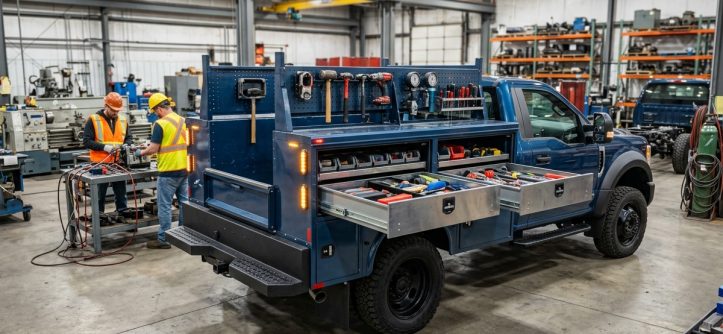
A productive work truck is not defined by how many accessories it carries. It is defined by how well it supports the work performed every day. Whether the vehicle serves a construction crew, a landscaping business, a delivery route, or a mobile repair operation, the right truck setup can reduce wasted motion, protect valuable equipment, and help drivers arrive ready to work.
Start with real conditions rather than appearance. A useful build keeps routine tools accessible, controls heavy cargo, supports safe towing, and avoids adding equipment that creates clearance, visibility, or weight problems. The goal is a truck that works reliably from the first stop to the last.
Start With The Job
Build around the truck’s actual assignment. A contractor may need secure storage for saws, fasteners, and ladders. A landscaper may need room for fuel cans, hand tools, and a trailer connection. Utility crews often need organized parts storage, while delivery drivers may prioritize easy access and clear sight lines. Track the vehicle’s tasks for one or two weeks before purchasing anything. Note what gets loaded daily, what causes delays, and where drivers repeatedly climb, reach, or search.
Plan The Load Before Choosing Accessories
Payload, towing capacity, and bed space are different limits, and all three matter. Payload is the weight carried by the truck itself, including people, tools, cargo, and installed equipment. Towing capacity concerns the trailer, while bed space concerns whether cargo can be positioned and secured properly. Keep heavy objects low and near the truck’s center, then use rated tie-downs to prevent movement during braking or turns.
A Basic Load Checklist
- Which items must stay in the truck every day?
- Which items are needed only for specific jobs?
- Where will each item be stored and secured?
- How often will the cargo arrangement change?
Improve Storage And Cargo Control
Toolboxes, enclosed bed storage, drawer systems, bed organizers, cargo carriers, and service compartments can turn a pickup into a more orderly mobile workspace. Assign every item a home, label compartments clearly, and keep frequently used supplies within easy reach. Current work truck industry discussions also show why storage design and loading efficiency remain important concerns for working fleets.
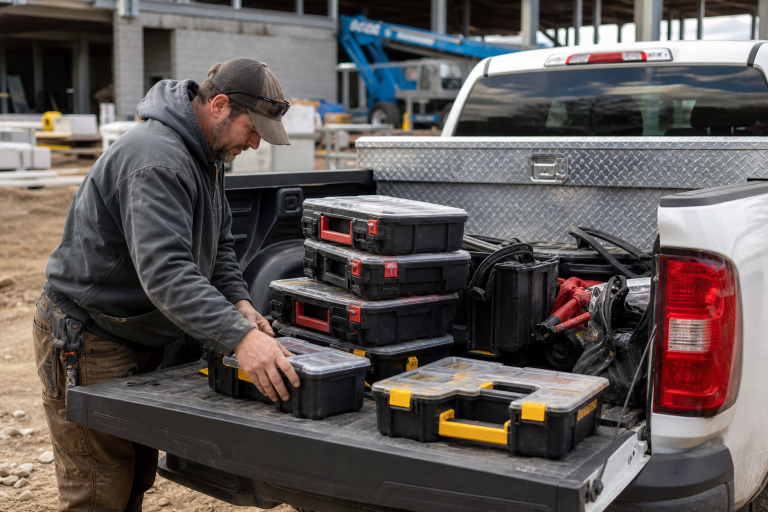
Consider a repair crew that spends ten minutes at each stop hunting for fittings, connectors, or hand tools. Over a full week, that lost time adds up quickly. Small-parts bins, removable cases, and dedicated locations for consumables reduce searching while helping drivers spot missing inventory before leaving a job site. Covered storage also keeps expensive tools less visible and better protected from the weather.
Choose Towing Gear With Care
Towing equipment should match the trailer and the work, not simply the lowest price. Receiver hitches suit many conventional trailers, while gooseneck and fifth-wheel hitches are used for heavier, specialized loads. Brake controllers help operate compatible trailer brakes, and weight-distribution equipment may improve balance for certain trailer combinations. Evaluate the loaded trailer weight, tongue weight, brakes, road conditions, and the truck manufacturer’s ratings together.
Before installation, ask what the truck will most often tow, how much the trailer weighs when fully loaded, whether the routes include hills or rough roads, and whether an electronic brake controller is required. Confirm that chains, couplers, breakaway systems, electrical connections, and trailer lighting are appropriate for the combination.
Protect The Truck From Daily Wear
Bed liners, tonneau covers, grille guards, bumpers, running boards, and headache racks can reduce damage caused by tools, debris, weather, and routine job-site activity. Choose protection based on the environment. Highway crews may value visibility and ease of cleanup; construction crews may need bed and cab protection; farms may need brush resistance; and urban service vehicles may benefit from compact equipment that preserves parking clearance.
More equipment is not always better. Heavy accessories can reduce available payload, affect fuel use, limit approach angles, or interfere with parking sensors and cameras. Check every addition for its effect on the truck as a complete working system.
Support Driver Safety And Comfort
Driver safety starts with routine details: secure cargo, clear mirrors, reliable lighting, safe entry and exit, and uncluttered controls. Running boards can reduce awkward climbing, while properly positioned mirrors and backup cameras help drivers see around a loaded vehicle. Warning lights, security systems, and remote-start features may also be useful when they suit the work and are installed correctly.
Accessories must never block lamps, airbags, sensors, emergency controls, or the driver’s field of view. Crews working alongside traffic should follow work-zone safety protocols that reinforce the importance of visibility, awareness, and disciplined equipment use near active roads.
Check Fit, Capacity, And Vehicle Limits
Confirm compatibility with the truck’s year, make, model, cab configuration, bed length, and suspension before ordering. Inspect clearance around tires, tailgates, exhaust components, fuel tanks, hitches, and wiring. Review the owner’s manual and all installation instructions. Electrical upgrades, towing components, suspension changes, and safety devices may justify professional installation. Most importantly, an accessory does not raise the factory payload or towing rating.
Use A Simple Build Process
- List the truck’s primary jobs and typical routes.
- Record normal cargo, passenger, and trailer weights.
- Rank problems by safety risk, time loss, and cost.
- Address storage and cargo control before cosmetic upgrades.
- Add towing, protection, or suspension equipment only when work requires it.
- Inspect weight, clearance, lighting, and visibility after installation.
- Test the loaded truck on a short, familiar route before a demanding assignment.
Maintain The Setup Throughout The Year
Inspect the setup monthly. Check mounts, bolts, straps, locks, hinges, wiring, lights, trailer connections, and storage latches. Seasonal conditions deserve extra attention because road salt, dust, heat, ice, and heavy rain can loosen hardware or damage electrical connections. Watch tire wear after suspension modifications or frequent heavy hauling, and have drivers report rattles, shifting cargo, damaged brackets, or changes in handling immediately.
Final Check Before Putting The Truck To Work
Before the truck enters regular service, confirm that every tool has a secure location and that the loaded vehicle remains within its ratings. Test trailer brakes, lights, safety chains, hitch connections, cameras, mirrors, windows, and lamps. Then take a short drive with a normal workload. Small adjustments made early can prevent damaged equipment, unsafe handling, and costly downtime later.
Conclusion
The best work-truck build is not the one with the most equipment. It is the one that carries the right load safely, keeps tools organized, protects the vehicle, and supports the driver through a demanding day. A thoughtful plan makes each upgrade more useful and helps the truck stay dependable long after the initial build is complete.