Key Takeaways
- Start with local demand, traffic patterns, and driver dwell time.
- Confirm utility capacity before ordering equipment or finalizing construction plans.
- Design for safe traffic flow, accessibility, clear signage, and easy cable use.
- Choose charging power and software features that match the actual site use case.
- Build maintenance, customer support, and future expansion into the original plan.
Planning a DC fast-charging site is about much more than selecting hardware. A dependable location combines useful placement, adequate electrical capacity, safe circulation, accessible design, and responsive operations. Choosing the right fast chargers for EVs matters, but the surrounding site plan determines whether drivers can consistently find, access, and use them without frustration.
The strongest projects begin with a realistic view of who will charge, when they will arrive, and what they need while they wait. By treating charging as a complete service rather than a parking-lot add-on, site owners can reduce costly redesigns and build a better experience from day one.
Why Site Planning Matters
A charger can have an impressive power rating and still deliver a poor experience if drivers cannot reach it easily, the electrical service is undersized, or bays are constantly blocked. Thoughtful planning reduces queues, protects equipment from vehicle damage, supports nearby businesses, and makes repairs less disruptive. Reliability comes from the full system, including utility service, pavement, networking, lighting, payment, and support.
Define The Site’s Main Use Case
The right design depends on the vehicles served and the expected length of each visit.
Common Charging Scenarios
- Highway stops: Prioritize visibility, quick turnover, restrooms, food, and straightforward entry and exit.
- Retail sites: Align charging time with shopping or dining visits.
- Fleet depots: Focus on dispatch schedules, vehicle readiness, managed loads, and large-vehicle movement.
- Workplaces and apartments: Consider longer dwell times, shared access, parking rules, and billing processes.
A delivery depot may need overnight charging coordinated around departure times, while a roadside travel stop needs several drivers to enter, charge, and leave quickly. Using the same layout for both can create avoidable congestion.
Choose A Location Drivers Can Use
Screen sites for traffic volume, street visibility, turning movements, amenities, lighting, drainage, and nighttime safety. Chargers should be easy to locate without sending drivers through loading zones, fuel lanes, or busy pedestrian routes. A useful test is simple: can a first-time visitor find the chargers, use them safely, and leave without confusion?
Check Power And Utility Capacity
Start utility conversations before purchasing equipment. Estimate daily sessions, peak-hour demand, simultaneous charging, and likely future expansion. Then review existing service, transformer availability, switchgear needs, interconnection timing, rate structures, communications service, and metering. The Department of Energy’s charging infrastructure planning checklist highlights the need for early utility coordination, permitting, networking, and ongoing operational needs that can shape a project’s schedule and budget.
Design The Physical Layout
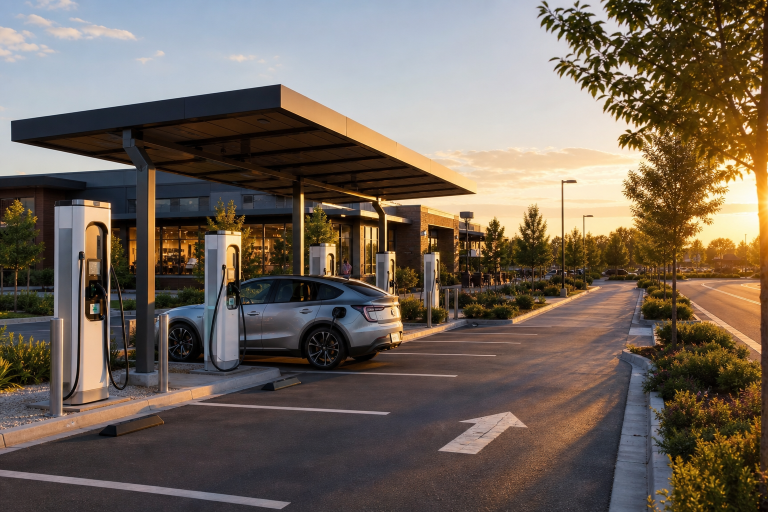
Map vehicle paths before placing dispensers, cabinets, bollards, and signs. Leave room for doors, mirrors, charging cables, and vehicles with trailers where appropriate. A small public site can reduce conflicts by using a one-way circulation pattern, clearly marked charging bays, and a separate exit route. Keep charging traffic apart from deliveries and general parking whenever practical.
Plan For Accessibility And Safety
Accessible charging is a site-wide responsibility, not just a question of parking space dimensions. Provide an unobstructed route to chargers and nearby amenities, place screens and controls within reach, and avoid cable arrangements that create trip hazards. Bright lighting, visible emergency information, security measures, and well-maintained pavement also improve confidence. The U.S. Department of Transportation points planners to design recommendations for accessible charging stations that ensure usable access for people with disabilities.
Select Equipment For The Real Need
Match charging output to expected dwell time, vehicle capability, utility limits, and the number of drivers who may charge at once. Review connector coverage, fixed versus shared power, weather protection, service access, payment methods, remote monitoring, and data availability. The highest available output is not automatically the best investment. A balanced configuration can provide better utilization and lower infrastructure costs.
Build A Plan For Daily Operations
Assign ownership for cleaning, inspections, customer assistance, repairs, and software administration before launch. Monitor uptime, failed sessions, energy use, average charging duration, repeat visits, and common support issues. Drivers need clear status information and a simple way to get help when a payment or charging session fails. Remote alerts can help operators resolve issues before they become repeated complaints.
Estimate Costs And Project Risks
Build a complete budget that includes equipment, utility studies, transformers, switchgear, trenching, concrete, paving, permits, engineering, inspections, networking, payment systems, maintenance, insurance, and electricity. Reserve contingency for utility delays, unexpected underground conditions, equipment lead times, code changes, and later repairs. A lower equipment price can prove costly if it limits service, access, or expansion.
Prepare For Future Growth
Future-proofing does not require installing every charger at once. Reserve physical space for additional bays, install spare conduit where feasible, and confirm whether electrical service can be expanded later. Select software that can manage more ports, users, pricing rules, and reporting needs. Flexible layouts also make it easier to accommodate changing vehicle sizes and connector expectations.
Use A Pre-Launch Checklist
- Confirm utility approval, permits, and electrical inspections.
- Test every port during normal and high-demand conditions.
- Verify payment, receipts, pricing, network status, and driver notifications.
- Inspect lighting, signs, striping, drainage, pavement, and accessible routes.
- Test emergency stops and train staff on common driver issues.
- Publish accurate access hours, location details, pricing, and support information.
- Review performance after 30, 60, and 90 days of operation.
Conclusion
A reliable DC fast-charging site is built through disciplined planning, not hardware alone. Define the use case, verify power early, design for safe and accessible movement, prepare for daily support, and leave room for growth. Those steps create a smoother visit for drivers and a stronger long-term foundation for site operators.