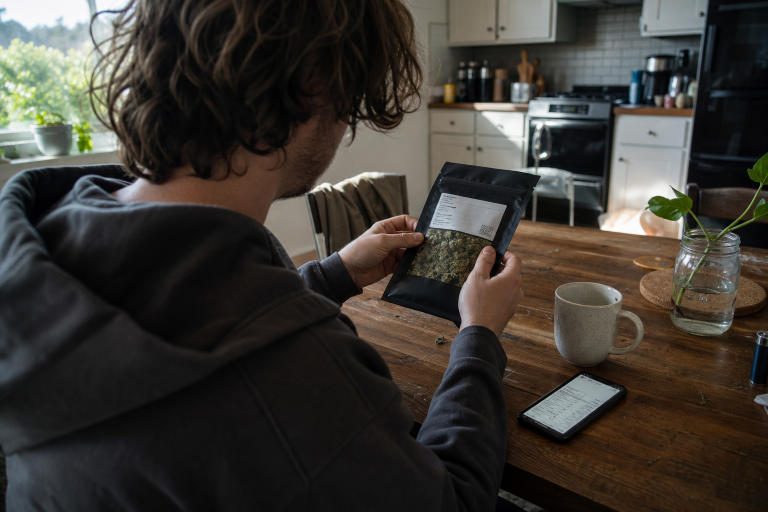
THCA flower labels can reveal much more than a strain name and a large potency number. Whether you are comparing premium THCA flower strains or reviewing a product in person, the package should make it easier to understand what is inside, when it was tested, and whether the reported results match the flower in your hand. A careful label review helps you look past marketing language and focus on useful details: cannabinoid percentages, batch identification, freshness dates, safety screening, and a certificate of analysis. A higher number is not automatically a sign of a better product. Clear, matching, and current information matters as much.
Why THCA Flower Labels Matter
A label is your first opportunity to assess the product’s identity and traceability. It should identify the flower, list meaningful cannabinoid information, and provide a lot or batch number that connects the package to testing records. If key details are missing, vague, or difficult to verify, that is useful information in itself. Strong labels also separate measurable facts from broad claims. Aroma, appearance, cultivation style, and strain lineage may be interesting, but they do not replace testing data. When two products appear similar, the one with a complete cannabinoid panel, current batch information, and accessible safety results gives you a more reliable basis for comparison.
The Main Numbers On A Label
Start with the numbers, but read them together rather than treating one percentage as the entire story.
- THCA percentage: This reports the acidic cannabinoid found in raw flower.
- Delta-9 THC percentage: This is the amount of delta-9 THC measured before potential conversion from THCA is considered.
- Total THC: This commonly reflects the potential THC amount after THCA is exposed to heat and converts.
- Total cannabinoids: This may include THCA, THC, CBD, CBG, CBC, and other listed cannabinoids.
- Net weight: This tells you how much flower is in the package. It is different from the potency percentage.
For example, a flower may show 24% THCA and a much smaller delta-9 THC result. Its total THC figure can still be substantially higher than the delta-9 number because laboratories may account for conversion potential. The total THC testing approach for hemp recognizes that THCA can convert into THC during post-decarboxylation testing or similar methods.
THCA Vs. THC: What The Difference Means
THCA is the acidic form of THC found in cannabis flower before heating. Decarboxylation is the process by which heat changes THCA into THC. Because of that distinction, raw flower measurements and heated flower outcomes are not identical, even when they relate to the same sample. Labels should give readers enough context to understand both figures. They should not imply that a single number predicts a guaranteed experience. Individual response can vary, and consumers subject to workplace, athletic, legal, or medical testing should recognize that THCA flower may lead to THC metabolites that can affect a drug test.
How To Check A Certificate Of Analysis
A certificate of analysis, often called a COA, is most useful when it matches the exact product being sold. A QR code can be convenient, but do not stop at the landing page. Open the report and compare the details.
- Match the package batch or lot number to the COA.
- Check the lab name, report date, and sample description.
- Review THCA, delta-9 THC, total THC, and other cannabinoids.
- Confirm the report includes more than potency testing.
- Look for clear pass, fail, or quantified results rather than incomplete panels.
A generic report for a different strain, old harvest, or unrelated batch does not verify the package you are considering. If the numbers on the label and COA differ without an explanation, it is reasonable to choose another product.
Safety Tests To Review
Potency results are only one part of a complete quality picture. Look for a safety panel that addresses pesticides, heavy metals, microbial contamination, and, when available, moisture or water activity. These details can help identify concerns related to cultivation, handling, and storage. Microbial screening may include molds, yeasts, and certain bacteria. Heavy-metal testing commonly evaluates substances such as lead, arsenic, mercury, and cadmium. Residual-solvent testing is more relevant for extracts than for flowers, but a broad report can still show that a company is providing more than the minimum headline numbers.
Terpenes, Freshness, And Storage
Terpenes are aromatic compounds found in cannabis and many other plants. A terpene panel can help you anticipate scent and flavor, such as citrus-forward notes associated with limonene or pine-like notes often connected with pinene. It cannot guarantee a specific effect, so treat it as a preference guide rather than a promise. Also check for harvest, packaging, testing, or recommended-use dates. Fresh flowers are generally better protected by sealed packaging and clear instructions to keep them away from excess heat, light, air, and moisture. A batch number matters here, too, since it lets you connect date information to the correct test record.
Why State Rules Still Matter In 2026
Federal hemp standards do not create identical retail rules in every state. Restrictions can differ for THCA flower, smokable hemp, testing, packaging, possession, shipping, and retail sales. Check current guidance from the relevant state agency before buying or traveling with a product, and do not treat general information as legal advice. Label accuracy remains an active regulatory issue. On May 22, 2026, the Massachusetts Cannabis Control Commission announced plans to audit THC potency on labels, illustrating why batch records and accessible laboratory documentation deserve close attention.
A Simple Label-Checking Checklist
- Confirm the product type, strain name, and net weight.
- Review THCA, delta-9 THC, and total THC together.
- Find the lot or batch number on the package.
- Open the matching COA and check its date.
- Review pesticide, heavy-metal, and microbial results.
- Consider terpene details if aroma and flavor matter to you.
- Check packaging, harvest, or recommended-use dates.
- Skip products with mismatched, missing, or unclear information.
Common Questions About THCA Flower Labels
Does A Higher THCA Percentage Mean Better Flower?
Not necessarily. Potency is one factor, while freshness, storage, terpene profile, safety screening, and accurate batch-specific testing are also important.
Can A COA Prove A Product Is Completely Safe?
No test report removes every possible risk. However, a current COA that matches the package and includes a meaningful safety panel provides much more useful information than potency alone.
Should You Trust A QR Code?
Use it as a starting point. The QR code should lead to a readable report for the same product and batch, not a generic company page or an unrelated document.
Conclusion
Reading a THCA flower label takes a few minutes, but it can prevent a rushed decision. Compare the full cannabinoid panel, verify the batch-specific COA, review safety results, assess freshness, and confirm the rules where you live. The best label does not rely on one impressive percentage. It provides the details you need to evaluate the entire product. Look for clear information about the product’s source, testing date, batch number, and listed ingredients. If important details are missing or difficult to verify, consider that a reason to pause rather than assume the product is reliable. Labels can vary between brands, so comparing several products side by side may make differences easier to spot. Taking a careful approach helps consumers understand what they are buying and avoid relying solely on marketing claims or attractive packaging.