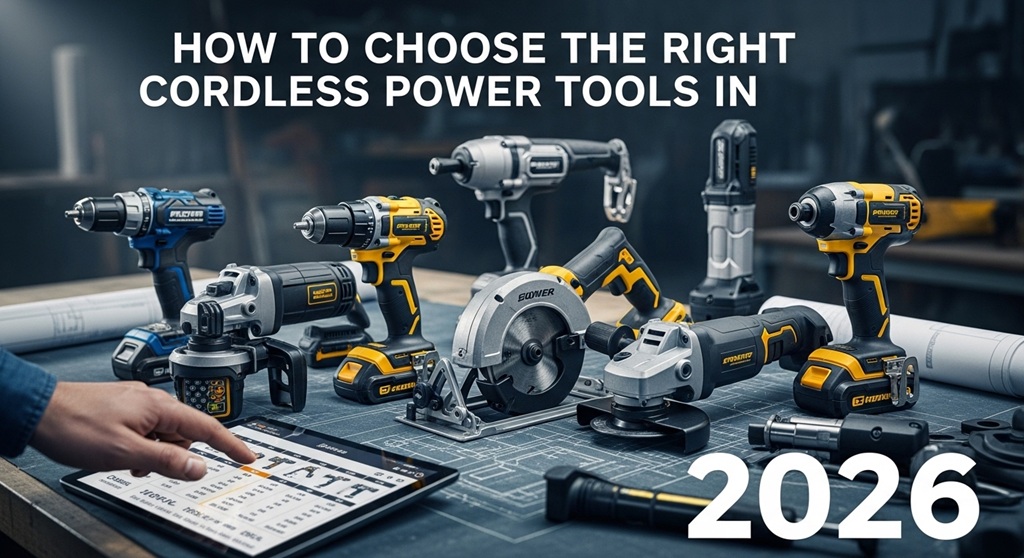
Cordless power tools are battery-powered tools designed for portability, efficiency, and flexibility. In 2026, they matter because battery technology has improved, making them powerful enough to replace many corded tools.
Here’s the reality: most buyers don’t struggle with finding tools—they struggle with choosing the right ones. You see dozens of options. Different voltages. Battery platforms. Brands claiming “more power.” It gets confusing fast.
This confusion leads to wasted money. Many users buy tools that don’t match their needs. Either too weak or unnecessarily expensive.
In 2026, cordless tools dominate both DIY and professional markets. According to industry reports, over 70% of power tool sales globally are now cordless. Lithium-ion battery advancements allow longer runtime, faster charging, and better durability.
This guide simplifies everything. You’ll learn how to choose the right cordless power tools using proven power tool buying tips and a practical tool selection guide.
How do you choose the right cordless power tools for your needs?
Short answer: Identify your use case (DIY or professional), required power level, battery system, and budget before selecting tools.
Let’s break this down using a simple decision framework.
1. Define your usage
- Light DIY: Furniture assembly, minor repairs
- Intermediate: Home renovation, drilling, cutting
- Professional: Daily heavy-duty use
Most buyers skip this step. That’s where mistakes begin.
2. Match tool power with work type
- 12V tools → Light tasks
- 18V/20V tools → Most common (balanced power)
- 36V+ tools → Heavy-duty applications
Case study: A contractor in a 2025 tool usage report reduced downtime by 22% after switching from mixed battery systems to a unified 20V platform.
3. Choose a battery ecosystem
This is critical. Once you choose a brand, you are locked into its battery platform.
- Shared batteries reduce cost
- Better workflow efficiency
- Less clutter
4. Set a realistic budget
Cheap tools often cost more long-term due to replacements and inefficiency.
What features should you look for in cordless power tools?
Short answer: Focus on battery capacity, brushless motors, ergonomics, and safety features.
Battery capacity (Ah)
Amp-hours (Ah) determine runtime.
- 2.0Ah → Light work
- 4.0Ah → Balanced use
- 6.0Ah+ → Heavy-duty tasks
More Ah = longer runtime but heavier tools.
Brushless vs brushed motors
- Brushless: More efficient, longer lifespan, less heat
- Brushed: Cheaper but less efficient
Data shows brushless tools can improve efficiency by up to 30%.
Ergonomics
Look for:
- Comfortable grip
- Balanced weight
- Compact design
Safety features
- Overload protection
- Electric brake
- LED lighting
Which cordless power tools should beginners start with?
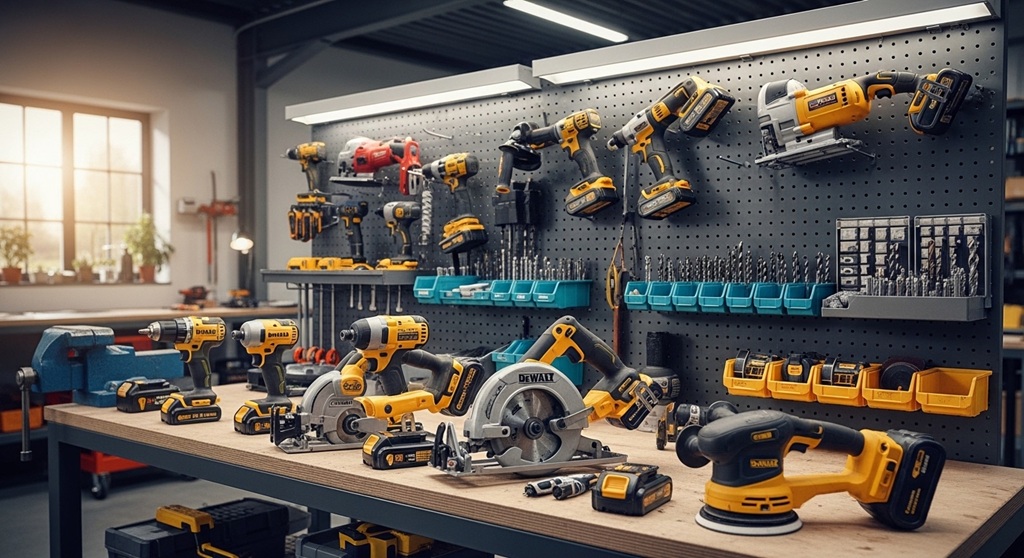
Short answer: Start with a drill/driver, impact driver, circular saw, and multi-tool.
These tools cover 80% of common tasks.
| Tool | Use Case |
|---|---|
| Drill/Driver | Drilling holes, driving screws |
| Impact Driver | High torque fastening |
| Circular Saw | Cutting wood |
| Oscillating Tool | Detail cutting, sanding |
Buying a combo kit is often cheaper than purchasing tools individually.
How important is battery technology in 2026?
Short answer: Battery technology is the most important factor in cordless tool performance today.
Lithium-ion batteries dominate due to:
- Faster charging (30–60 minutes)
- Longer lifespan (500–1000 cycles)
- No memory effect
Emerging trends in 2026:
- Smart batteries with usage tracking
- Improved thermal management
- Higher energy density
Case data: A construction firm reported a 35% productivity increase after upgrading to high-capacity lithium-ion batteries.
What are the most common mistakes when buying cordless tools?
Short answer: Choosing based on price alone, ignoring battery compatibility, and overestimating power needs.
1. Buying cheap tools
Low-cost tools often fail faster. Replacement costs add up.
2. Ignoring battery platform
Switching brands means buying new batteries and chargers.
3. Overpowering your needs
Not everyone needs high-voltage tools.
4. Ignoring ergonomics
Heavy tools cause fatigue and reduce efficiency.
How do cordless tools compare to corded tools in 2026?
Short answer: Cordless tools now match corded tools in most applications, with added mobility.
| Feature | Cordless | Corded |
|---|---|---|
| Portability | High | Low |
| Power | High (modern) | Very High |
| Convenience | Excellent | Limited |
| Runtime | Battery-dependent | Unlimited |
For most users, cordless tools are now the better choice.
Which brands offer the best cordless power tools in 2026?
Short answer: Leading brands include DeWalt, Makita, Milwaukee, Bosch, and Ryobi.
Each brand offers a strong battery ecosystem.
- DeWalt: Durable and widely used
- Makita: Reliable and lightweight
- Milwaukee: High performance and innovation
- Bosch: Precision tools
- Ryobi: Budget-friendly ecosystem
Choose based on availability, budget, and ecosystem compatibility.
How much should you spend on cordless power tools?
Short answer: Expect to spend $150–$500 for a quality starter kit and $500+ for professional setups.
- Beginner: $150–$300
- Intermediate: $300–$700
- Professional: $700+
Investing in quality tools reduces long-term costs.
Conclusion: What is the smartest way to choose cordless power tools in 2026?
The smartest approach is simple: choose tools based on your actual needs, not marketing claims. Focus on battery ecosystem, tool performance, and long-term value.
Start small. Build your tool collection gradually. Stick to one battery platform. Avoid chasing unnecessary features.
Most importantly, think long-term. The right cordless tools save time, reduce effort, and improve results.
CTA: If you’re planning to upgrade your toolkit, start with a reliable combo kit from a trusted brand. Build your system step by step and avoid switching platforms later. Make smarter tool decisions today.
FAQs: Cordless Power Tool Buying Guide
1. Are cordless tools powerful enough for professional use?
Yes. Modern cordless tools match corded tools in most applications. High-voltage systems (18V–36V) are widely used in construction and heavy-duty tasks.
2. How long do cordless tool batteries last?
Most lithium-ion batteries last 2–5 years or 500–1000 charge cycles, depending on usage and maintenance.
3. What is the best voltage for cordless tools?
18V or 20V tools offer the best balance of power and portability for most users.
4. Should I buy a combo kit or individual tools?
Combo kits are more cost-effective for beginners. They provide essential tools and batteries at a lower total cost.
5. How do I maintain cordless power tools?
Keep batteries charged properly, clean tools after use, and store them in a dry environment to extend lifespan.
6. Are brushless tools worth it?
Yes. Brushless motors are more efficient, last longer, and provide better performance than brushed motors.
Read More Also: How to Choose the Best Office Projector in 2026 for Professional Presentations
Find out: 10 Signs Your Website May Be Costing You Enquiries