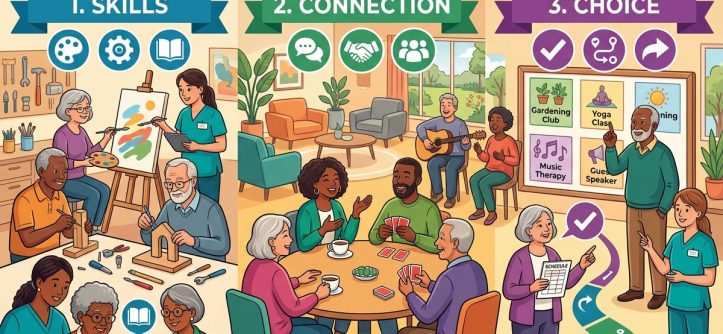
For many adults with disabilities, a meaningful weekday routine can create more opportunities to learn, connect, and participate in everyday life. Well-designed adult day care programs can offer structured support while helping participants pursue goals that matter to them, from practicing cooking skills to building friendships and becoming more comfortable in the community.
The right program is not simply a place to spend the day. It should be a setting where people are treated with respect, encouraged to make choices, and supported at a level that fits their needs. Families, guardians, case managers, and participants can make stronger decisions when they understand what different program models offer and what questions to ask.
Why Daily Purpose Matters
A steady routine can make the week easier to understand and anticipate. Knowing when to leave home, who will be there, and what activities are planned may reduce uncertainty while creating a stronger sense of independence. Just as importantly, daytime programs give people reasons to engage beyond the home.
Purpose looks different for every participant. One person may enjoy art projects and music, while another may feel proud after helping prepare lunch, organizing supplies, or greeting friends when they arrive. A quality program connects activities to personal goals instead of filling the schedule with tasks that have little meaning to the people involved.
Common Types of Adult Day Programs
Program names, service definitions, and eligibility rules vary by state. Still, most options fit into a few broad models, and some providers combine more than one approach.
Site-Based Programs
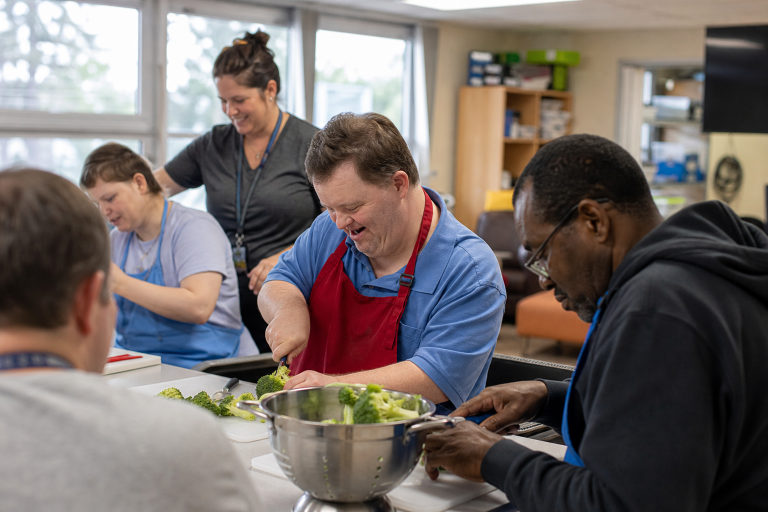
These programs take place primarily in a dedicated setting. Participants may follow a planned schedule of classes, recreation, meals, skill-building activities, and social time in spaces designed to support group interaction.
Community-Based Programs
Community-based services focus on practicing skills in real settings. A typical week may include shopping, visiting a library, attending recreation programs, volunteering, or learning how to navigate familiar places safely.
One-to-One Community Support
Some adults benefit from focused individual support. This model can help a person work toward a specific goal, such as using public transportation, managing money at a store, preparing for volunteer work, or building confidence in new environments.
Blended Programs
Many programs blend structured indoor activities with regular outings. This approach can provide the consistency of a familiar base while still creating meaningful opportunities to participate in the larger community.
Skills Participants May Practice
Everyday activities can become valuable learning opportunities when staff provide the right amount of support. Progress does not have to be dramatic to matter. Remembering part of a bus route, choosing an item from a grocery list, or starting a conversation can all reflect meaningful growth.
- Cooking, meal planning, kitchen safety, and cleaning up afterward.
- Personal routines, organizing belongings, and caring for shared spaces.
- Shopping, budgeting, handling money, and comparing choices.
- Communication, self-advocacy, and expressing preferences.
- Social skills, friendship building, and respectful boundaries.
- Community safety, problem-solving, and asking for help when needed.
- Volunteer tasks, work habits, and employment readiness.
- Exercise, recreation, and healthy ways to spend free time.
Why Choice Should Shape the Day
Choice is more than asking someone to pick between two activities after the schedule is already set. Person-centered support begins by learning what a participant enjoys, dislikes, wants to improve, and hopes to try next. The principles of person-centered planning emphasize that services should be directed by the person receiving support, with assistance when needed.
Programs can build choice into ordinary moments. Participants may choose music for a group activity, select a craft project, decide whether to attend an outing, or suggest a new volunteer opportunity. A predictable schedule remains helpful, but it should also leave room for flexibility, rest, changing interests, and individual preferences.
Building Community Connections
Community participation should involve more than occasional field trips. The larger goal is for participants to feel comfortable, recognized, and included in the places they use regularly. Repeated visits to local spaces can help build familiarity and confidence over time.
- Visiting parks, libraries, shops, museums, and local events.
- Volunteering with community organizations when interests and support needs align.
- Practicing how to make purchases, speak with staff, and ask questions.
- Taking part in recreation alongside people with and without disabilities.
- Learning practical safety skills in familiar community settings.
Access is not equal in every area. Some communities have strong transportation networks and inclusive activities, while others have fewer options, long travel times, or staffing limitations. A good program is honest about those barriers and looks for realistic ways to help each person participate.
Matching Support to Individual Needs
The best environment depends on the individual, not on a one-size-fits-all schedule. Staff should understand how a participant communicates, what helps with transitions, and how much assistance is needed for health, mobility, personal care, or safety.
Support may also include behavioral strategies, sensory breaks, visual schedules, medication procedures, and one-to-one assistance. Plans should change when circumstances change. Someone might need extra guidance while adjusting to a new program, then gradually need less help as routines, relationships, and confidence grow.
Questions to Ask Before Choosing a Program
- What does a typical day look like, and how are activities selected?
- Can participants suggest activities or decline options they do not enjoy?
- How often do participants spend time in the community?
- What staff-to-participant support is available throughout the day?
- Can staff support communication, medical, behavioral, or personal care needs?
- Are part-time schedules, gradual starts, or trial visits available?
- Is transportation provided, and what are the pickup areas and times?
- How are families and support teams updated about goals and progress?
- What happens if a participant needs a schedule change or dislikes an activity?
Funding, Transportation, and Eligibility
Costs and eligibility can depend on the state, the program, the person’s support needs, and the available funding source. Some services may be supported through Medicaid waivers, state or county disability services, managed care organizations, referring agencies, or self-pay arrangements. Federal guidance explains that home and community-based services waivers may include supports such as adult day health services and habilitation, but each state defines its own programs and requirements.
Before enrolling, ask about authorizations, required records, service limits, transportation coverage, waiting lists, and whether funding has to be renewed. Coverage should never be assumed. A state agency, case manager, managed care plan, or program coordinator can confirm the details that apply to the individual.
Steps to Get Started
- List goals: Identify the person’s interests, strengths, support needs, and skills they want to practice.
- Gather records: Collect identification, eligibility documents, support plans, medical information, and funding paperwork.
- Compare options by reviewing schedules, activities, staffing, transportation, locations, and community access.
- Visit when possible: Notice how staff speak with participants and whether people appear engaged and respected.
- Plan for review: Set a time to discuss what is working, what feels difficult, and what should change.
Final Thoughts
A strong adult day program offers more than supervision. It creates opportunities to practice useful skills, make everyday choices, develop relationships, and belong in the community. The best fit will reflect the person’s goals, preferences, support needs, location, funding, and comfort level. Taking time to compare options can lead to a program experience that feels respectful, useful, and genuinely meaningful.