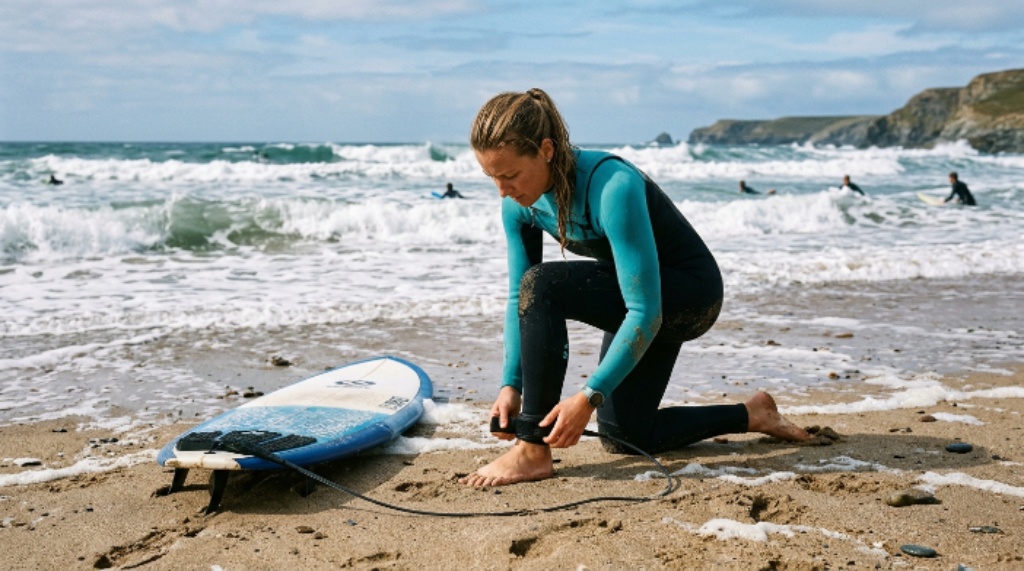
Finding the right surfboard leash can make a big difference in your surfing experience. A leash keeps your board close when you wipe out. It also protects other surfers from a runaway board. However, not every leash works well for every condition. Choosing the wrong one can cost you performance, safety, or both.
This guide walks you through everything you need to know. You will learn how to match a leash to the waves you surf most. Additionally, you will discover what features matter and which ones you can skip.
Why Your Leash Matters More Than You Think
Many surfers spend hours choosing the right board, fins, and wetsuit. Then they grab the cheapest leash on the rack. This is a mistake.
Your leash is your connection to your board. In big surf, it is also a safety device. A poor-quality leash can snap under pressure. It can also create too much drag and slow you down. Therefore, taking time to choose a good leash is worth every minute.
The right leash should match three things: your board size, the wave size, and your surfing style. When all three line up, you barely notice your leash at all. That is exactly how it should feel.
Understanding Leash Length
The most important measurement is leash length. A general rule is simple: your leash should be about the same length as your board, or just a bit longer.
For a 6-foot shortboard, use a 6-foot leash. For a 9-foot longboard, use a 9-foot leash. Going too short creates a snapping hazard. Going too long gives your board too much room to swing back toward you.
However, wave size also plays a role. In bigger surf, some surfers go one size longer. This gives the board more room to move away before the cord pulls tight. In small, calm waves, a slightly shorter leash works fine.
Leash Thickness and Wave Size
Thickness is measured in millimeters. Thicker leashes are stronger. Thinner leashes create less drag. Your wave conditions should guide this choice.
Small waves (under 3 feet): A 5mm or 6mm leash is more than enough. These leashes are light and flexible. They allow for easier movement around the board.
Medium waves (3 to 6 feet): A 7mm leash offers a solid middle ground. It handles the extra force of a wipeout without snapping. Additionally, it still feels relatively lightweight.
Large waves (over 6 feet): Use an 8mm or bigger leash. The force of a big-wave wipeout is enormous. A thin leash simply will not hold. Some big-wave surfers even use double swivels for added security.
Key Features to Look For
The Swivel System
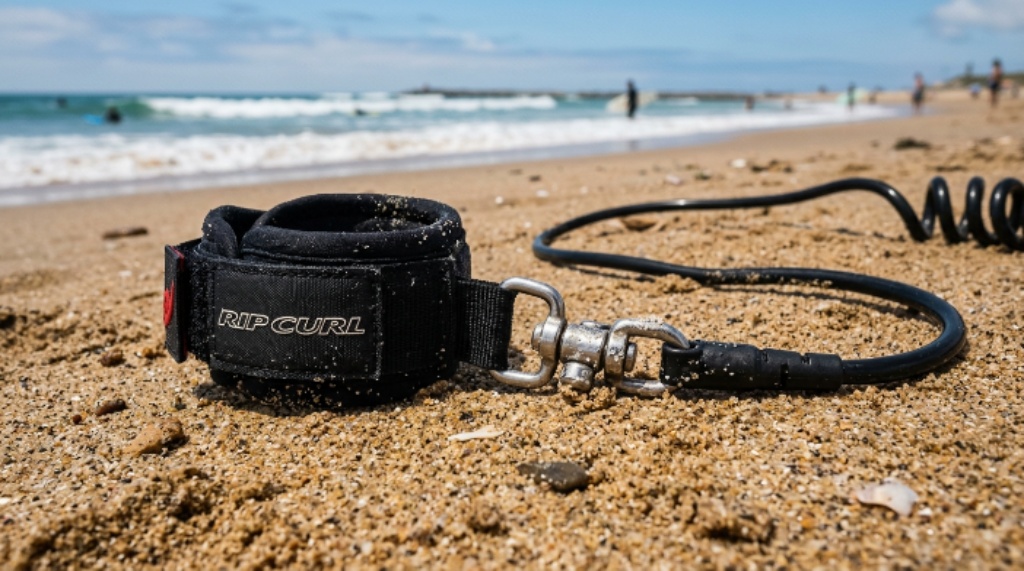
A swivel is a small rotating connector found at the cuff and sometimes at the rail saver too. It allows the cord to spin freely. This stops the leash from tangling around your legs when you wipe out.
Look for leashes with double swivels. One at each end reduces tangling even further. This small detail makes paddling back out much smoother.
The Cuff
The cuff wraps around your ankle. It should feel snug but not tight. A poorly fitted cuff digs into your skin and causes discomfort over a long session.
Look for padded cuffs with a strong velcro strap. The velcro should feel firm when pressed. A weak velcro strip can come undone at the worst moment. Additionally, some cuffs include a key pocket. This handy feature lets you lock your car and surf worry-free.
The Rail Saver
The rail saver is the wide strap that attaches the leash string to your board. Its job is to protect the tail of your board from being cut by the cord under pressure.
A wider rail saver does a better job of spreading the load. Narrow ones can dig into the board over time. Therefore, choose a leash with a rail saver that is at least one inch wide.
The Cord
Urethane cords are standard in most surf accessories today. They stretch well and return to their original shape quickly. Some cords have a slight kink from being coiled in the package.
Straighten a new leash by leaving it in the sun for a short time. This helps remove the coil memory. A straight leash performs better and tangles less.
Matching Your Leash to Specific Conditions
Beach Break Waves
Beach breaks are unpredictable. Waves break in different spots and can be powerful. A 7mm leash in the right length for your board handles most beach break conditions well.
Point Break Waves
Point breaks produce long, smooth rides. Wipeouts are usually less violent. Therefore, a lighter 5mm or 6mm leash works nicely here. Less drag means more energy for turns.
Reef Break Waves
Reef breaks can be hollow and powerful. Wipeouts happen fast and pull hard. Use a thicker 8mm leash here. Safety is the priority. Some reef break surfers also wear helmet and vest combinations for extra protection.
Big Wave Surfing
Big wave conditions demand specialized gear. Durable leash brands design products specifically for heavy surf. These leashes are thicker, stronger, and built with reinforced stitching throughout. Look for options that mention big-wave or heavy-duty labels. At this level, you want the best surf accessories available. There is no room for cutting corners.
Caring for Your Leash
A leash can last a long time with simple care. Rinse it with fresh water after every session. Salt build-up weakens the urethane over time. Let it dry in the shade, not direct sunlight. UV rays break down the material faster than water ever will.
Check your leash before every session. Run your fingers along the cord and look for cracks, fraying near the rail saver, or velcro that has lost its grip. A quick check takes thirty seconds. It could save you a long swim.
Replace your leash if you notice any damage. Durable leash brands often include a recommended lifespan on their packaging. Following this guidance keeps you surfing safely.
Budget vs. Quality
You do not need to spend a fortune on a leash. However, the cheapest option is rarely the best value. A snapped leash on a big day costs you the session and possibly your board.
Mid-range leashes from reputable surf accessories brands offer the best balance. They use quality materials, have good swivel systems, and last through regular use. Spending a little more upfront saves money in the long run.
Top-end leashes are worth it for frequent surfers or those tackling larger waves. Many durable leash brands in this category back their products with warranties. That kind of confidence in a product is a green flag.
Conclusion
Choosing the right surfboard leash is simpler once you know what to look for. Match the length to your board. Match the thickness to your wave size. Look for good swivels, a padded cuff, and a wide rail saver. Take care of your leash and it will take care of you.
Additionally, do not overlook quality. Investing in reliable surf accessories protects you, your board, and the surfers around you. Whether you surf small beach breaks or powerful reef waves, there is a leash designed for exactly those conditions. Take the time to find it, and your time in the water will be safer and more enjoyable.
Frequently Asked Questions
How long should a surfboard leash be?
Your leash should be roughly the same length as your surfboard. For example, a 7-foot board works best with a 6.5 to 7-foot leash. Bigger waves may call for going one size longer.
How often should I replace my surfboard leash?
Most surfers replace their leash every six to twelve months, depending on how often they surf. Check for cracks, weak velcro, or fraying near connection points. Replace it at the first sign of damage.
What thickness leash do I need for big waves?
For waves over six feet, use an 8mm or thicker leash. Big-wave conditions put enormous strain on the cord. A thicker leash holds up under that pressure and keeps you connected to your board.
Are coiled leashes better than straight leashes?
Coiled leashes are popular with stand-up paddle boarders and longboarders. They keep the cord off the water surface. However, most shortboarders prefer straight leashes. They stretch more naturally and feel less restrictive during turns.
Can I use one leash for all wave conditions?
You can, but it is not ideal. A mid-range 7mm leash covers a wide range of conditions. However, having a lighter leash for small days and a heavier one for larger surf gives you the best performance and safety in each situation.
Related Topics:
How to Build the Perfect Men’s Surf Apparel Kit for Any Season
How to Find Affordable DIY Tools Without Losing Quality