
Surfing is more than a sport. It is a lifestyle that demands the right gear from head to toe. Whether you are a beginner catching your first wave or a seasoned rider chasing swells year-round, what you wear in and out of the water matters. The right apparel protects your skin, improves your performance, and keeps you comfortable in any conditions.
However, building a complete surf kit can feel overwhelming. There are so many options on the market that it is hard to know where to start. This guide simplifies the process. It walks you through every essential piece of clothing and gear you need, season by season, so you are always ready when the waves call.
Why Your Surf Apparel Choices Matter
The ocean is an unpredictable environment. Sun, wind, saltwater, and changing temperatures all affect your body during a session. Wearing the wrong gear can lead to sunburn, rashes, chills, or restricted movement. Therefore, choosing the right apparel is not just about looking good on the beach.
Quality surf clothing is designed to move with your body. It resists the wear that saltwater and sand cause. It also protects your skin from UV rays and abrasion. When your gear works well, you can focus entirely on surfing instead of fighting discomfort.
Starting with the Foundation: Board Shorts
Every men’s surf kit starts with a great pair of board shorts. They are the single most important piece of beach sportswear in any surfer’s wardrobe. The right pair fits close enough to stay on during wipeouts but loose enough to allow full leg movement.
Look for board shorts made from quick-drying, stretch-woven fabric. Four-way stretch material gives you the most freedom. A secure closure at the waist is essential — a drawstring combined with a hook-and-loop tab works best. Avoid shorts with bulky pockets that fill with water and create drag.
Length matters too. Most surfers prefer shorts that sit just above the knee. This length keeps the fabric out of the way during paddling while still offering coverage during wipeouts.
Additionally, consider having two or three pairs in rotation. Saltwater breaks down fabric over time, so rotating your shorts extends their lifespan significantly.
Rash Guards: Protection You Cannot Skip
A rash guard is the next essential item. It protects your chest, back, and arms from board rash, which is the friction burn caused by rubbing against your surfboard during paddling. It also provides UV protection, which is one of the most overlooked surfing outfit tips for beginners.
Short-sleeve rash guards work well for warm, sunny conditions. Long-sleeve options offer more coverage and are better suited for cooler days or extended sessions in strong sun. Look for rash guards rated UPF 50+, which blocks the majority of harmful UV radiation.
Fit is critical. A rash guard should be snug against your body without being restrictive. A loose fit bunches up and creates friction in all the wrong places. Most rash guards are made from spandex-nylon blends that stretch, dry fast, and hold their shape over time.
Wetsuits for Cold Water and Year-Round Surfing
If you surf in cooler climates or during winter months, a wetsuit is a non-negotiable addition to your kit. Wetsuits trap a thin layer of water between the suit and your skin. Your body heats that water, creating insulation that keeps you warm even in cold conditions.
Wetsuit thickness is measured in millimetres and listed as two numbers. A 3/2mm suit, for example, has 3mm of neoprene on the body and 2mm on the arms. This is the most versatile option and works well in a wide range of water temperatures.
For very cold water, a 4/3mm or 5/4mm suit provides significantly more warmth. However, thicker suits restrict movement more than thinner ones. Therefore, choose the lightest suit that keeps you warm enough for your local conditions.
Entry style also matters. Back-zip suits are easy to get on and off. Chest-zip suits offer a better water seal and more flexibility, though they take a little more practice to put on correctly.
Building a Seasonal Surf Kit
Your apparel needs change with the seasons. A well-rounded kit accounts for all conditions so you are never caught underprepared.
Summer Surfing Essentials
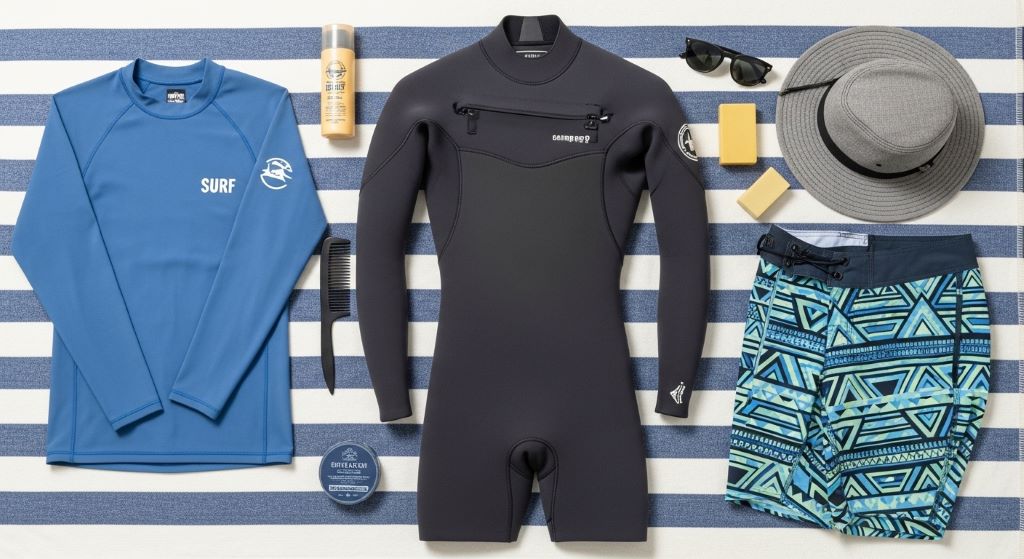
Summer is the most forgiving season for surf apparel. The water is warm and the sun is strong. Your core summer kit should include:
- Lightweight board shorts in quick-dry fabric
- Short-sleeve rash guard with UPF 50+ protection
- UV-blocking surf hat or cap for time spent on the beach
- Polarized sunglasses with a strap to keep them secure
- Reef-safe sunscreen for exposed skin
The focus in summer is sun protection. Even on cloudy days, UV rays penetrate through cloud cover. Therefore, never skip the rash guard just because it feels hot outside.
Spring and Autumn Transitional Gear
Spring and autumn bring inconsistent conditions. Water temperatures are cooler, but air temperatures can vary widely throughout the day. This is where a versatile kit pays off.
A 3/2mm wetsuit covers most transitional weather scenarios. Pair it with wetsuit boots if the water is particularly cold early in the morning. Additionally, a hooded rash guard worn under the wetsuit adds warmth without much bulk.
On warmer days within these seasons, board shorts and a long-sleeve rash guard may be all you need. Keeping both options in your bag means you can adapt to whatever the morning brings.
Winter Surfing Clothing
Winter surfing demands a more complete approach. Cold water drains body heat faster than most people expect. A quality 4/3mm or 5/4mm wetsuit should be the centerpiece of your winter kit.
Add wetsuit gloves and booties to protect your extremities. Cold hands make paddling difficult and can affect your grip on the board. Cold feet affect your balance and sensation on the deck. Therefore, these accessories are worth the investment if you plan to surf through winter.
A hood, either attached to the wetsuit or worn separately, prevents significant heat loss through the head. Many surfers are surprised at how much warmer they feel once they add a hood to their setup.
Surf Clothing Essentials for After the Session
The surf session does not end when you walk out of the water. What you wear afterward matters for comfort and recovery. Packing the right post-surf clothing is one of the most practical surf clothing essentials many surfers overlook.
A microfibre changing towel or poncho is indispensable. It absorbs water fast, keeps you warm while you change, and takes up very little space in your bag. Many surf-specific ponchos include a hood and kangaroo pocket, making them practical in breezy conditions.
After drying off, a lightweight hoodie or long-sleeve shirt made from soft, quick-dry fabric is ideal. Avoid heavy cotton immediately after surfing. Cotton absorbs moisture and stays cold against your skin. Synthetic or blended fabrics dry faster and feel more comfortable.
Flip flops or slip-on sandals complete the post-surf look. They are easy to put on quickly, protect your feet from hot sand, and allow your feet to air out after being in a wetsuit or rash guard boots.
Fabric Quality and What to Look For
Not all surf apparel is created equal. The fabric quality determines how long your gear lasts and how well it performs. When shopping for any piece of surf apparel, keep these points in mind:
- Quick-dry fabrics are essential for comfort during and after sessions
- Four-way stretch allows full range of motion for paddling and pop-ups
- Flatlock stitching lies flat against the skin and reduces chafing
- UPF-rated materials protect against UV exposure during long sessions
- Recycled or eco-conscious fabrics are increasingly available and worth considering
Spending a little more on quality materials upfront saves money over time. Cheap surf apparel wears out quickly in saltwater environments. Therefore, treat quality fabric as a long-term investment rather than an unnecessary expense.
Putting It All Together: A Year-Round Kit List
Building a complete kit does not have to happen all at once. Start with the basics and add seasonal pieces as you need them. A solid starting point covers:
- Two or three pairs of quality board shorts
- Two rash guards, one short-sleeve and one long-sleeve
- A 3/2mm wetsuit for transitional and cool conditions
- A changing poncho or microfibre towel
- Post-surf footwear and a lightweight layer
From there, add a thicker wetsuit, gloves, boots, and a hood as your surfing takes you into colder conditions. Following practical beach sportswear and surfing outfit tips from experienced surfers in your local community can also help you fine-tune your choices based on the specific conditions where you surf most.
Conclusion
Building the perfect men’s surf apparel kit is about matching your gear to your environment and your level of commitment to the sport. It starts with quality board shorts and a rash guard, then expands to include wetsuits and seasonal accessories as needed. Choosing the right fabrics, fit, and protection for each season keeps you comfortable, safe, and focused on the waves.
A well-built kit does not require buying everything at once. However, investing in quality pieces from the start means your gear will perform session after session. With the right apparel behind you, nothing stands between you and the perfect ride.
Frequently Asked Questions
What is the most important piece of surf apparel for beginners?
A well-fitting rash guard is the most important starting point. It protects against board rash and UV exposure, which are the two most common physical complaints among new surfers.
How do I know what wetsuit thickness I need?
Match the wetsuit thickness to your local water temperature. A 3/2mm suit works for temperatures between 16–20°C (61–68°F). Colder water calls for a 4/3mm or thicker suit.
How should board shorts fit for surfing?
Board shorts should sit firmly at the waist with a secure closure and fall just above the knee. They should allow full leg movement without slipping down during wipeouts.
Can I wear regular swim shorts instead of board shorts for surfing?
Regular swim shorts can work for casual use, but they lack the stretch, secure closure, and durability that dedicated board shorts provide. They are more likely to come off in heavy surf.
How do I care for my surf apparel to make it last longer?
Rinse all surf apparel in fresh water after every session to remove salt and sand. Dry it in the shade rather than direct sunlight, which degrades elastic fibres and colours over time.
Related Topics:
How to Safely Use Heated Wetsuits in Extreme Cold Water
Harmonicode Sports Elite Athlete Performance Tuning