
Surfing demands a lot from your body. It demands even more from what you wear. Your boardshorts are not just a fashion statement. They are a functional piece of gear that affects how well you move in the water. Choosing the right pair can genuinely improve your session.
However, the options available today are overwhelming. Walk into any surf shop and you will find dozens of styles, fabrics, and price points. Therefore, knowing what to look for before you buy makes the whole process much easier. This guide breaks down everything you need to consider, from materials to fit, so you can make a confident and informed choice.
Why the Right Boardshorts Make a Real Difference
Many surfers underestimate how much their shorts affect their performance. When you paddle out, pop up, and ride a wave, your legs need full freedom of movement. Stiff or poorly fitted shorts restrict that movement. They also create drag in the water and can chafe badly during long sessions.
Additionally, comfort in the surf is not just about feel. It is also about focus. When your shorts are pulling, riding up, or soaking heavy with water, part of your attention stays on fixing the problem. The right pair disappears on your body. You stop thinking about what you are wearing and start thinking about the wave.
Therefore, spending a little time choosing the right boardshorts is well worth the effort. It is one of the simplest ways to upgrade your experience in the water.
Fabric Is Everything: What to Look For
The fabric is the single most important factor in boardshort quality. It determines how the shorts feel, how they move, and how they hold up over time. Not all surf shorts are made equal in this department.
Stretch Fabric for Freedom of Movement
Traditional boardshorts were made from stiff woven polyester. They worked, but they were not particularly comfortable. Modern stretch boardshorts changed everything. These use elastane or spandex blended into the fabric, giving it a four-way stretch that moves with your body naturally.
When you pop up on a board, you need your hips and legs to move freely and instantly. Stretch fabric makes that possible without resistance. It also means the shorts sit closer to your body, reducing drag when you paddle through the water.
Quick-Dry Swimwear Technology
Fabric weight and drying speed matter more than most surfers realize. Heavy boardshorts that hold water become uncomfortable and slow. Good quick-dry swimwear uses lightweight polyester construction that sheds water almost immediately after you leave the ocean.
This matters most when you are spending hours in and out of the water. Shorts that dry fast are also more comfortable during breaks on the beach. Additionally, fabrics that dry quickly tend to be more resistant to salt, chlorine, and UV degradation over time.
Durability and UV Protection
Salt water, sun, and sand are brutal on fabric. Look for boardshorts with a UPF rating if you spend long days outside. Additionally, check the fabric weight listed in the product specs. Lighter fabrics dry faster but may wear out sooner. A mid-weight fabric around 100 to 150 grams per square meter is often the best balance between durability and quick drying.
Getting the Fit Right
Even the best fabric will let you down if the fit is wrong. Boardshorts come in a range of cuts, and the right one depends on how you surf, your body type, and your personal preference.
Length and Leg Opening
Boardshorts typically range from sixteen to twenty-two inches in length. Shorter shorts give you more leg movement and less drag. Longer shorts offer more sun coverage and a more relaxed look. For performance surfing, a length between seventeen and nineteen inches tends to work best for most surfers.
The leg opening should be wide enough to allow full range of motion. If it feels tight when you lift your knee toward your chest, the opening is too small. That restriction will affect your pop-up every single time.
Waistband and Closure Systems
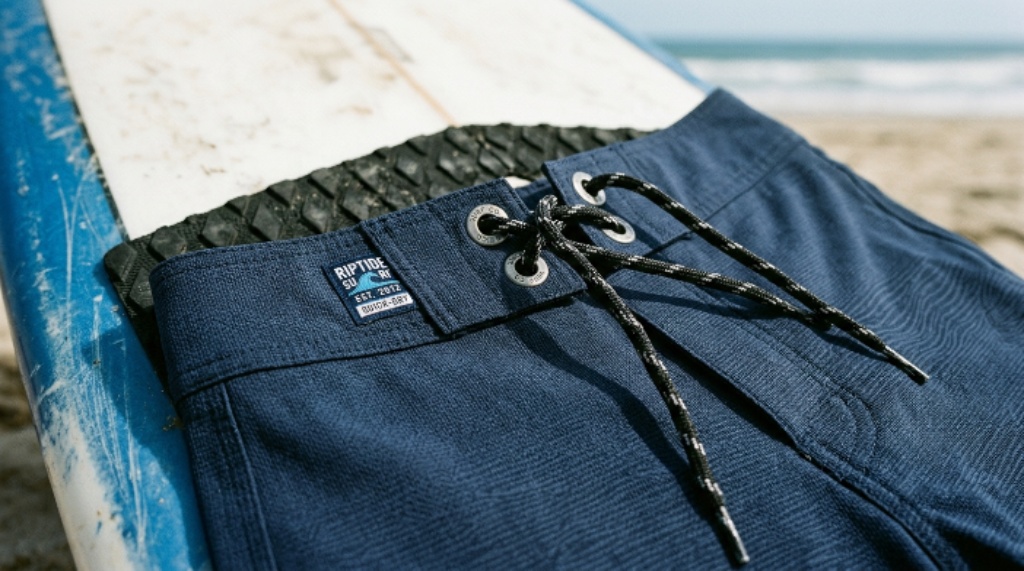
The waistband is your lifeline in the surf. A poorly designed one will loosen in the water and create real problems. There are three main closure systems to know about:
- Velcro fly with a lace tie: The most common system. It is reliable, adjustable, and widely available. Make sure the velcro sits flat and does not scratch your board or your body.
- Elastic waistband: Offers great comfort and is common in performance-focused shorts. However, it provides less precise adjustment.
- Button and lace system: Seen in lifestyle and retro-style shorts. Secure and stylish, but can sometimes take longer to adjust.
Whatever system you choose, make sure the waistband fits snugly at your natural waist. Shorts that sit too low will shift during active movement. Additionally, avoid overly rigid waistbands that dig in when you are paddling flat on your board.
Seams and Construction Details That Matter
Construction quality separates a solid pair of boardshorts from a frustrating one. Flat-lock stitching is the standard to look for. This type of seam lies flat against the fabric and does not create raised ridges that irritate your skin.
Avoid shorts with thick inner seams along the inner thigh. This is a common chafe point during surfing. Some premium boardshorts eliminate the inner seam entirely by using a different pattern cut. This dramatically improves surf comfort during long sessions.
Additionally, check the number of panels used in the construction. Fewer panels mean fewer seams. Fewer seams mean less chafing and a cleaner look. High-performance boardshorts often use as few as two or three panels for this exact reason.
Style vs. Function: Finding the Balance
Surfing has always had a strong identity tied to style. Boardshorts come in countless colors, prints, and designs. It is tempting to choose purely based on looks. However, the best approach is to let function lead and let style follow.
Fortunately, you do not need to choose between the two. Most leading surf brands now produce shorts that perform well and look great. The key is to start with the functional checklist, fabric stretch, quick-dry properties, fit, and seam quality, and then choose the design you love most from the options that pass those tests.
Additionally, consider versatility. A pair that works in the surf and looks good enough for a beach lunch means you get more use from every purchase.
Caring for Your Boardshorts to Make Them Last
Even the best boardshorts will deteriorate quickly without proper care. Salt water, sunscreen, and heat are the main enemies. Here are the habits that will extend the life of your shorts significantly:
- Rinse your shorts in fresh water after every surf session. This removes salt, sand, and sunscreen residue.
- Wash them by hand or on a delicate machine cycle using a gentle detergent.
- Air dry in the shade. Direct sunlight bleaches colors and breaks down elastic fibers over time.
- Never put boardshorts in a tumble dryer. The heat damages the stretch fibers and the water-repellent coating.
- Apply sunscreen before putting your shorts on. Sunscreen soaked into fabric repeatedly causes faster degradation.
These simple steps take very little time. However, they can easily double the lifespan of a quality pair.
Top Features to Check Before You Buy
Before you add a pair of boardshorts to your cart, run through this quick checklist:
- Does the fabric include a stretch component such as elastane or spandex?
- Is the fabric lightweight enough to dry quickly after leaving the water?
- Are the seams flat-lock stitched to prevent chafing?
- Does the waistband feel secure and comfortable when tied properly?
- Is the leg length and opening appropriate for your style of surfing?
- Do the shorts have UV protection if you surf in strong sunlight regularly?
If a pair checks most of these boxes, it is worth serious consideration regardless of the price point.
Conclusion
Picking the right boardshorts is a small decision with a big impact on your time in the water. The best pair is one that moves with your body, dries fast, stays secure, and holds up through many sessions. Start with fabric quality and fit. Everything else, style, color, and brand, can follow.
Look for stretch boardshorts that offer genuine four-way movement. Prioritize quick-dry swimwear that sheds water fast and resists UV damage. Pay close attention to seam placement and waistband security. Additionally, take care of your shorts after every session to extend their life.
The ocean gives you an incredible arena to play in. Your boardshorts should never hold you back from enjoying every moment of it. With the right pair on, all your energy can go where it belongs: reading the wave, feeling the water, and making the most of every ride.
Frequently Asked Questions
1. What is the best fabric for surf boardshorts?
The best boardshorts use a polyester and elastane blend. Polyester dries quickly and resists saltwater damage. Elastane adds stretch so the shorts move with your body. Together, they offer the best combination of performance and durability for surfing.
2. How tight should boardshorts fit?
Boardshorts should fit snugly at the waist without pinching. The leg should have enough room for full range of motion. If you can lift your knee to your chest without resistance, the fit is correct. Overly loose shorts create drag and shift during surfing.
3. How long do boardshorts typically last?
With proper care, a quality pair of boardshorts can last two to four surf seasons. Rinsing with fresh water after every use and air drying in the shade are the two most important habits for preserving them. Exposure to heat and sunscreen without rinsing will shorten their lifespan significantly.
4. Can I wear boardshorts for activities other than surfing?
Absolutely. Modern boardshorts are versatile enough for swimming, beach volleyball, casual beach days, and even light outdoor activities. However, they are specifically designed to perform in the surf, so you get the most value from them in the water.
5. Do I need to size up or down for boardshorts?
It depends on the brand and the closure system. Shorts with an adjustable lace tie and velcro give you more flexibility. If you are between sizes, go with your true waist measurement. Stretch fabrics accommodate a small range of body shapes, but do not rely on stretch to compensate for the wrong size.
Related Topics:
How to Find Affordable DIY Tools Without Losing Quality
How to Build the Perfect Men’s Surf Apparel Kit for Any Season