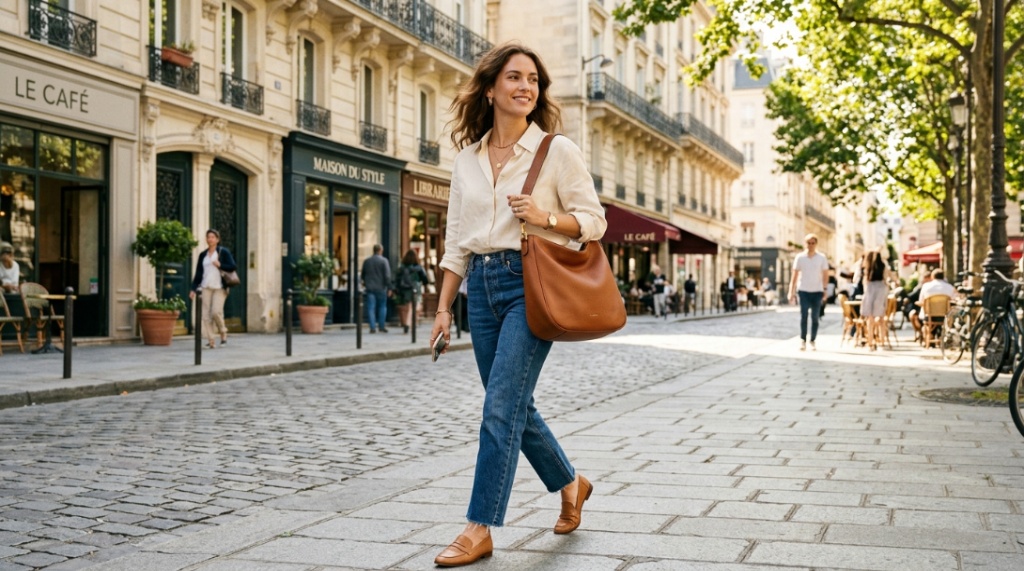
A woman reaches into her handbag an average of 20–25 times per day — and every single one of those moments reveals whether her bag was chosen with intention or impulse. Finding the best hobo shoulder bag for everyday use means selecting a design that balances effortless style with genuine daily functionality. A hobo shoulder bag is a crescent-shaped, soft-bodied handbag with a single shoulder strap that slouches naturally when carried — creating a relaxed, bohemian-inspired silhouette that conforms to your body’s movement. The problem? The market floods with hundreds of hobo bags annually, most prioritizing aesthetics while ignoring what actually matters during a 14-hour day: accessible pockets, weight distribution, strap comfort, and material durability against daily wear. This mismatch leads to buyers cycling through bags every few months, never finding one that truly works. This guide identifies exactly what makes stylish everyday handbags function beautifully from morning commute through evening errands — so your next hobo bag becomes your last impulse purchase.
What Makes a Hobo Shoulder Bag Ideal for Everyday Carry?
An ideal everyday hobo bag combines lightweight construction (under 2 lbs empty), a wide, comfortable strap, at least two interior pockets, and soft leather or high-quality nylon that resists daily abrasion without requiring constant maintenance.
Daily carry demands differ fundamentally from occasional use. Your everyday bag endures:
- 6–14 hours of continuous wear across commuting, working, and errands
- Repeated reaching, opening, closing — 20+ access cycles daily
- Contact with varied surfaces: car seats, office floors, restaurant chairs, transit seats
- Weather exposure: sun, rain, humidity,y depending on your region
- Weight fluctuation as contents change throughout the day (laptopin then morning, groceries in the evening)
Features that matter most for daily performance:
- Strap width: Minimum 1 inch, ideally 1.5–2 inches. Narrow straps dig into shoulders under load. Padded straps distribute weight across a broader area, eliminating the red-mark fatigue that thin straps create by mid-afternoon.
- Base structure: A slightly reinforced bottom prevents the “black hole” effect, where everything sinks to a shapeless pile. Even soft hobo bags benefit from a flat base that lets the bag sit upright when set down.
- Closure security: Magnetic snaps work for low-risk environments. Zip-top closures protect contents during commuting and crowded spaces. Open-top hobos look beautiful but create anxiety in busy settings.
- Weight empty: Under 2 lbs keeps the total carry weight manageable. A 3 lb empty bag plus 5 lbs of contents means 8 lbs on one shoulder — enough to cause discomfort within hours.
Which Hobo Bag Materials Handle Daily Wear Best?
Full-grain leather and premium nylon handle daily wear best — leather develops attractive patina over time while nylon resists moisture, scratches, and maintains appearance with zero maintenance.
Material choice determines whether your bag looks better or worse after six months of daily use:
| Material | Daily Durability | Maintenance Level | Aging Character | Best For |
|---|---|---|---|---|
| Full-grain leather | Excellent (10+ years) | Moderate (condition quarterly) | Develops rich patina | Professional + casual environments |
| Pebbled leather | Excellent (hides scratches) | Low | Graceful aging, less visible wear | High-activity daily use |
| Premium nylon (Cordura, ripstop) | Exceptional (virtually indestructible) | Minimal (wipe clean) | Maintains original appearance | Commuters, travel, and active lifestyles |
| Suede | Moderate (shows wear quickly) | High (protective spray, brushing) | Can look worn rather than aged | Dry climates, occasional use only |
| Vegan leather (PU) | Low-moderate (2–3 years) | Low | Peeling, cracking over time | Budget-conscious, trend-driven |
| Canvas | Good (sturdy but stains) | Moderate (spot cleaning) | Softens, may discolor | Casual environments only |
For the best everyday hobo shoulder bag, pebbled leather delivers the optimal balance. Its textured surface naturally conceals minor scratches and scuffs that smooth leather would display prominently. You get leather’s sophistication and longevity without smooth leather’s maintenance demands — ideal for women who want their bag to look polished without babying it daily.
What Size Hobo Bag Works for Daily Essentials Without Being Too Bulky?
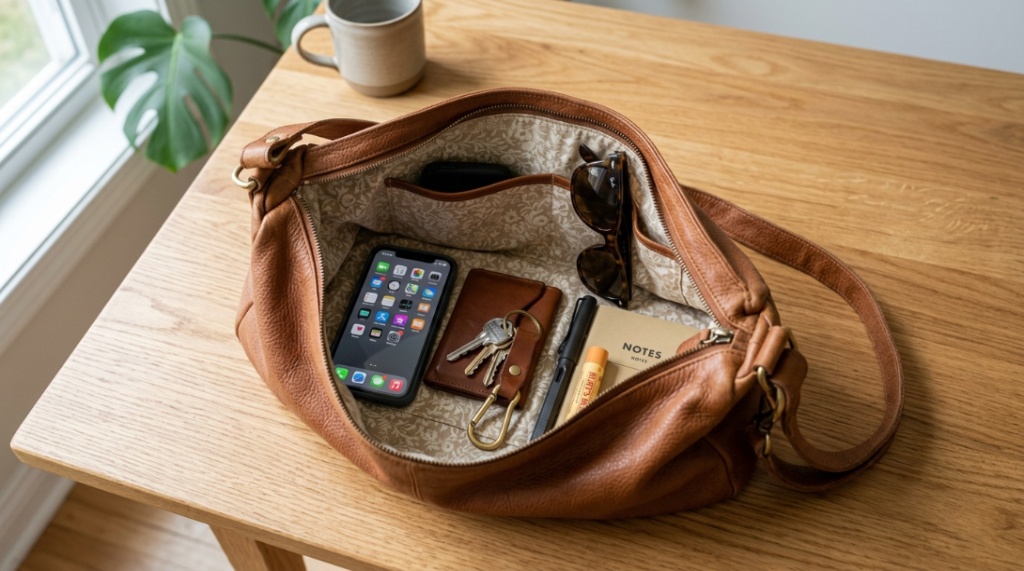
A medium hobo bag measuring 12–14 inches wide and 10–12 inches tall carries daily essentials — wallet, phone, keys, water bottle, cosmetics pouch, and a tablet or book — without creating visual bulk or shoulder strain.
Size determines daily satisfaction more than any other factor. Too small forces painful decisions about what to leave behind. Too large a bag encourages overpacking and creates shoulder fatigue by the afternoon.
Daily essentials capacity checklist:
- Wallet or card case
- Phone (even in a bulky case)
- Keys with a lanyard or organizer
- Sunglasses in case
- Small cosmetics pouch or lipstick
- Water bottle (slim 16 oz)
- Book, tablet, or e-reader
- Earbuds or headphone case
- Tissues, hand sanitizer, pens
If this list matches your daily carry, a medium hobo (12–14″ width) handles it comfortably. If you carry a laptop, size up to large (14–16″ width) — though at this size, weight management becomes critical. Never choose a hobo bag where your laptop fills it edge-to-edge; leave 2 inches of clearance for comfortable access.
Visual proportion also matters. Petite frames (under 5’4″) look overwhelmed by hobos exceeding 13 inches. Taller frames carry up to 16 inches without disproportion. Hold the bag against your body in-store — it should sit between your armpit and hip without hanging below your waist.
How Do You Evaluate Strap Comfort Before Buying?
Evaluate strap comfort by checking width (minimum 1.5 inches for daily use), testing flexibility (stiff straps dig, soft straps conform), and loading the bag with realistic weight for at least two minutes of shoulder wear in-store.
The strap makes or breaks daily hobo bag satisfaction. Most buyers test empty bags and miss the loaded-carry experience entirely. Red flags to watch for:
- Narrow strap (under 1 inch): Creates pressure points within 30 minutes under load. Acceptable only for ultralight bags under 1 lb total carry weight.
- Rigid/stiff strap: New leather straps may be stiff initially, but should show some natural flexibility. If the strap holds its shape rigidly when bent, it won’t conform to your shoulder curve, causing sliding and readjusting throughout the day.
- Non-adjustable length: Fixed-length straps work only if the drop length (distance from strap top to bag top) matches your body perfectly. Adjustable straps accommodate layering (thicker jackets in winter raise your effective shoulder height).
- Attachment points: Where the strap connects to the bag body affects swing and stability. Wide-set attachments create less swing. Close-set attachments create more pendulum movement when walking.
Ideal daily-carry strap specs: 1.5–2 inches wide, soft-grained leather or woven material, 18–22 inch drop (adjustable), wide-set attachment points. This combination distributes weight evenly, stays put on your shoulder, and avoids the mid-day discomfort that ruins otherwise beautiful bags.
What Interior Organization Features Matter Most?
The most essential interior features for a daily hobo bag are one zip pocket for valuables, one slip pocket for phone quick-access, and a key clip or leash — without these three, you’ll spend cumulative hours fishing through a shapeless main compartment.
Hobo bags are inherently unstructured, which creates the “bottomless pit” problem. Smart interior organization counters this without sacrificing the bag’s relaxed silhouette:
- Zip pocket (interior): Secures wallet, passport, or any item you’d panic about losing. Non-negotiable for commuters and anyone in crowded environments.
- Slip pocket (phone-sized): Allows single-hand phone retrieval without looking. Your phone should slide in and out by feel alone. Test this specifically — if the pocket is too tight or too loose, it defeats the purpose.
- Key clip/leash: Eliminates the daily key-hunt ritual. Even a short fabric strap that clips to a D-ring saves measurable frustration across 365 days of use.
- External pocket (optional but valuable): A back slip pocket or front zip pocket gives transit-card and receipt access without opening the main compartment. Particularly valuable for commuters.
Avoid bags with excessive compartmentalization. More than 4–5 pockets in a hobo bag creates decision fatigue (“which pocket did I put my chapstick in?”) and adds interior bulk that reduces usable main-compartment space. Three well-placed pockets outperform seven poorly positioned ones.
What Colors and Styles Are Trending for Everyday Hobo Bags This Year?
This year’s trending hobo bag colors center on warm neutrals (cognac, saddle tan, warm taupe) and muted earth tones (sage, clay, espresso), while the trending silhouette emphasizes medium-sized soft crescents with minimal visible hardware.
Everyday bags need to work with your existing wardrobe — making trend-proof colors more valuable than seasonal statements:
- Cognac/saddle tan: The single most versatile hobo bag color. Pairs with denim, black, white, navy, cream, and earth tones. Leather versions develop beautiful, warm patina over months of daily use.
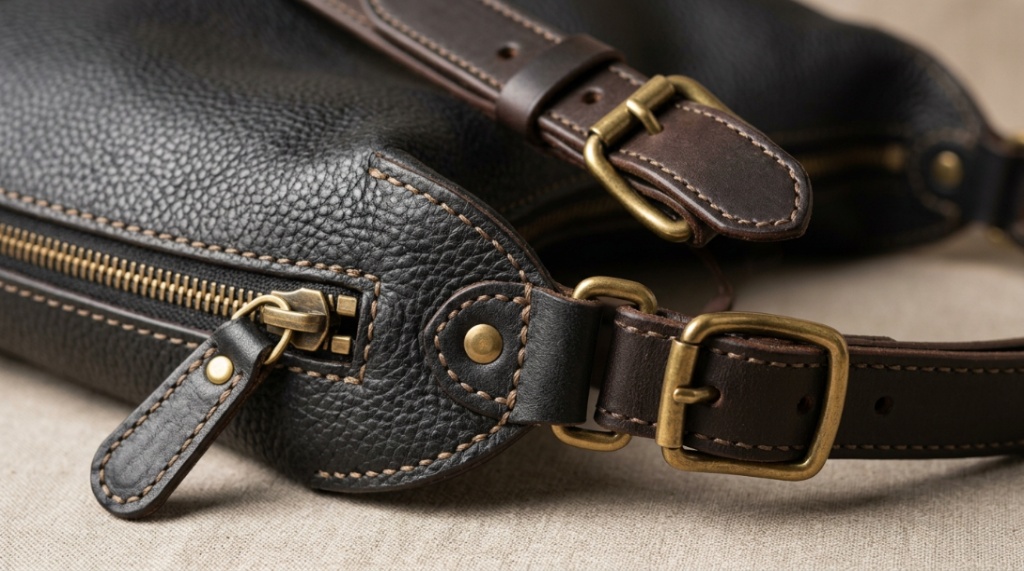
- Black (textured): Perpetually reliable but choose textured rather than smooth — pebbled, woven, or soft tumbled leather hides daily wear marks that smooth black leather displays immediately.
- Warm taupe/mushroom: Emerging as the new neutral. Softer than brown, warmer than grey. Works across all seasons and pairs with both warm and cool wardrobe palettes.
- Sage/muted green: This year’s breakout color for everyday bags. Earthy enough to feel neutral, interesting enough to add personality. Particularly popular in California and Pacific Northwest markets.
- Espresso/dark chocolate: Rich depth without black’s severity. Professional yet approachable. Excellent choice for work-to-weekend transitions.
Style trends favor clean, minimal designs — reduced hardware, hidden closures, and smooth silhouettes that let the leather speak. Oversized buckles, chain details, and visible logos are declining in everyday hobo bags as buyers prioritize timeless simplicity over brand signaling.
How Much Should You Spend on an Everyday Hobo Bag?
For a genuine leather hobo bag that handles daily use for 3–5+ years, expect to invest $150–$400 from quality mid-range brands, or $500–$1,500 from a luxury house, with the sweet spot at $200–$350 for most buyers.
Daily-use bags face the most wear of any accessory you own. Cost-per-day math:
- $50 fast-fashion hobo: Lasts 3–6 months daily = $0.27–$0.55/day. Material deteriorates visibly within weeks. False economy.
- $150–$250 quality mid-range: Lasts 2–4 years, daily = $0.10–$0.34/day. Genuine leather, acceptable construction. Best value tier for budget-conscious buyers.
- $250–$400 premium mid-range: Lasts 4–7 years, daily = $0.10–$0.27/day. Superior leather, excellent construction, and brand repair options. Optimal value zone.
- $500–$1,500 luxury: Lasts 7–15+ years, daily = $0.09–$0.59/day. Finest materials, artisan construction, comprehensive repair services. Cost-per-day is competitive with mid-range when lifespan is maximized.
The $200–$350 range from brands like Madewell, Coach, Fossil, and Cuyana delivers the best balance of quality leather, thoughtful design, and realistic lifespan for most daily-use buyers. This tier provides genuine leather with proper finishing, functional organization, and comfortable hardware without the luxury premium.
Finding the perfect daily purse is all about balancing storage capacity with comfort. While a slouchy hobo bag is unmatched for carrying your daily essentials in style, you might occasionally want a hands-free alternative for busier days. If you want to switch things up, exploring Trendy Crossbody Bags can offer that effortless, lightweight convenience without sacrificing your personal style.
Conclusion
Choosing the best hobo shoulder bag for everyday use isn’t about finding the trendiest shape or the most recognized brand. It’s about identifying a bag that serves your actual daily life — one that carries comfortably for hours, organizes your essentials accessibly, withstands daily wear gracefully, and complements the majority of your wardrobe without thought. Start with strap comfort and material durability. Add practical interior organization. Choose a size proportional to your body and carrying habits. Select a versatile color in a trending but timeless tone.
The right stylish everyday handbag should feel like an extension of yourself — reaching for it should never involve hesitation or compromise. Invest in quality materials, test with realistic weight, and choose a design you’ll still love six months into daily use. That’s the bag worth keeping.
Frequently Asked Questions
What is the difference between a hobo bag and a shoulder bag?
A hobo bag is a type of shoulder bag — specifically characterized by its crescent or half-moon shape and soft, unstructured body that slouches when carried. All hobo bags are shoulder bags, but not all shoulder bags are hobos. Standard shoulder bags can be structured, boxy, or flat, while hobo bags always feature that distinctive curved, relaxed silhouette.
Are hobo bags still in style this year?
Yes — hobo bags are experiencing a significant resurgence. Fashion search data shows a 34% increase in hobo bag searches year-over-year. The current iteration favors medium sizes, soft leather, minimal hardware, and earth-toned colors. Their relaxed aesthetic aligns perfectly with the ongoing quiet luxury and laid-back sophistication trends dominating fashion.
Can you use a hobo bag as a work bag?
Yes, if sized appropriately (14–16 inches wide for laptop capacity) and in professional materials (leather, quality nylon). Choose structured hobos with reinforced bases over ultra-soft versions for work settings. A leather hobo in black, cognac, or navy reads professional while feeling more approachable than a rigid structured tote. Ensure it has interior pockets for pens and cards.
How do you keep a hobo bag organized?
Use a bag organizer insert (felt or nylon) with multiple pockets that fits inside the main compartment. This transforms the hobo’s open interior into a structured space without altering the bag’s exterior silhouette. Alternatively, use small pouches — one for cosmetics, one for tech accessories, one for wellness items — to create grab-and-go groupings within the larger space.
What size hobo bag is most versatile?
A medium hobo measuring 12–13 inches wide and 10–11 inches tall offers the most versatility. This size carries daily essentials without looking oversized for evening outings or weekend errands. It accommodates a tablet but not a full laptop — for laptop carry, size up to 14–15 inches, though versatility decreases as size increases.
How long does a quality hobo bag last with daily use?
A genuine leather hobo bag from a quality brand (priced $200+) typically lasts 3–7 years of daily use with basic care. Premium and luxury leather hobos ($500+) can last 10–15+ years when conditioned regularly and stored properly. The most vulnerable failure points are strap attachment hardware and interior lining — check these during purchase for reinforcement quality.
What’s the best hobo bag brand for everyday use?
Top everyday hobo bag brands by price tier include: Coach, Madewell, and Fossil ($150–$350), Polène and A.P.C. ($350–$600), and Bottega Veneta, The Row, and Saint Laurent ($1,000+). Each delivers quality appropriate to its price point. For the best value combination of leather quality, design, and durability, Coach and Polène consistently receive strong daily-use reviews from real buyers.