Transporting automotive batteries requires careful attention to safety regulations. These power sources contain hazardous materials that can pose risks during shipping. Understanding the proper classification helps ensure safe handling and compliance with federal laws.
The Department of Transportation establishes strict guidelines for moving dangerous goods. Automotive batteries fall under specific hazard categories based on their chemical composition. Therefore, knowing these classifications protects workers, the public, and the environment.
Understanding DOT Hazard Classes
The DOT divides hazardous materials into nine primary classes. Each class represents different types of dangers. These classifications help transportation workers identify risks quickly.
Hazardous materials require special labeling, packaging, and handling procedures. Additionally, drivers need specific training to transport these goods legally. The classification system creates a universal language for safety across the transportation industry.
Automotive Battery Classification: Class 8 Corrosive Materials
Automotive batteries are classified as Class 8 hazardous materials under DOT regulations. This classification identifies them as corrosive substances. The battery acid inside can cause severe damage to living tissue and materials.
Class 8 materials can destroy or irreversibly damage other substances through chemical action. Wet cell batteries contain sulfuric acid, which is highly corrosive. This acid can burn skin, damage metal, and create dangerous situations if containers break during transport.
However, the specific classification depends on the battery type and condition. Different batteries receive different hazard codes based on their chemical makeup and potential risks.
Types of Automotive Batteries and Their Classifications
Lead-Acid Wet Cell Batteries
Traditional automotive batteries are wet cell lead-acid batteries. These batteries contain liquid sulfuric acid electrolyte. Therefore, they carry the UN number UN2794 or UN2800, depending on whether they are filled with acid or electrolyte.
The corrosive liquid inside poses the primary hazard. If the battery cracks or leaks during transport, the acid can spill. This creates immediate danger to handlers and can damage other cargo.
Sealed Lead-Acid Batteries
Sealed or valve-regulated lead-acid batteries have different requirements. These batteries contain immobilized electrolyte as gel or absorbed in glass mat. Consequently, they present lower spillage risks than traditional wet cell batteries.
Many sealed batteries qualify for an exception under UN2800. They may not require full hazardous materials shipping procedures if they meet specific criteria. The battery must pass a vibration test and pressure differential test to qualify.
Lithium-Ion Batteries
Modern vehicles increasingly use lithium-ion batteries, especially electric and hybrid cars. These batteries fall under Class 9 miscellaneous hazardous materials. They carry UN numbers UN3480 or UN3481, depending on whether they ship alone or installed in equipment.
Lithium batteries present different risks than lead-acid types. They can overheat, catch fire, or explode under certain conditions. Therefore, they require special packaging and labeling distinct from Class 8 materials.
DOT Packaging Requirements for Automotive Batteries
Proper packaging prevents accidents during transportation. The DOT requires specific packaging standards for Class 8 corrosive materials. Batteries must ship in containers that prevent leakage and protect against damage.
The outer packaging must be strong enough to withstand normal shipping conditions. Additionally, it must contain any leaks that might occur. Inner packaging often includes acid-resistant materials and absorbent substances.
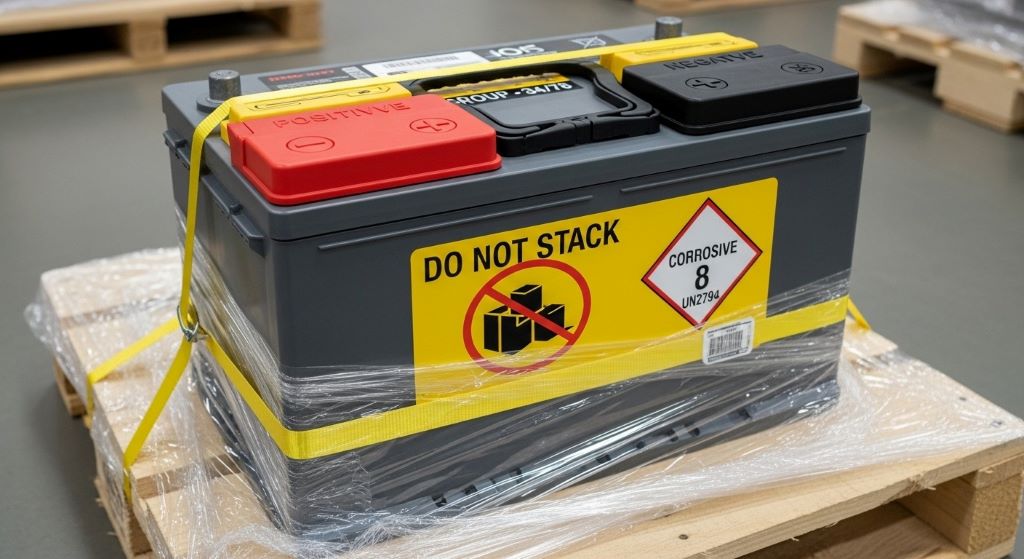
Batteries should be secured to prevent movement inside packages. However, terminals must be protected from short circuits. Covering exposed terminals with non-conductive caps or tape is essential.
Labeling and Marking Requirements
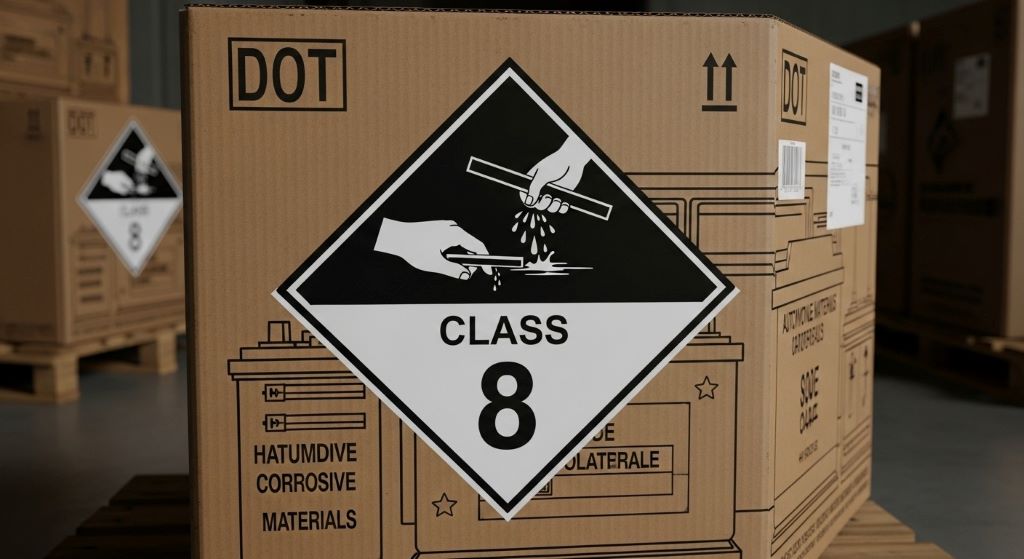
All packages containing automotive batteries need proper hazard communication labels. The Class 8 corrosive label features a distinctive black and white design. It shows a hand and metal being damaged by liquid.
The package must display the proper shipping name and UN identification number. For example, “Battery, wet, filled with acid, UN2794, Class 8” clearly identifies the contents. This information helps emergency responders handle incidents appropriately.
Additionally, orientation arrows may be required to show which end should stay upright. The “Corrosive” label must be visible on the package exterior. Damaged or obscured labels create compliance violations and safety risks.
Shipping Documentation and Paperwork
Transporters must prepare proper shipping papers for hazardous materials. These documents include the material’s proper shipping name, hazard class, UN number, and packing group. The information follows a specific order mandated by DOT regulations.
The shipping papers must be accessible to the driver and emergency responders. Therefore, they typically stay in the vehicle cab within immediate reach. This ensures quick access during inspections or emergencies.
Commercial drivers need a hazardous materials endorsement on their commercial driver’s license. This endorsement requires passing a written test about hazmat regulations. Consequently, only qualified drivers can legally transport automotive batteries in commerce.
Exceptions and Special Provisions
Some automotive battery shipments qualify for exceptions from full hazmat requirements. Batteries transported with vehicles or installed in equipment may have relaxed rules. The exception depends on battery size, quantity, and packaging method.
Small quantities may qualify for a limited quantity exception. This reduces labeling, packaging, and paperwork requirements. However, basic safety measures still apply to prevent leaks and damage.
The specific exception rules can be complex. According to the Pipeline and Hazardous Materials Safety Administration guidelines, reviewing current regulations ensures compliance. Rules change periodically, so staying updated is crucial.
International Transportation Considerations
International shipments follow similar but distinct regulations. The International Air Transport Association and International Maritime Dangerous Goods Code govern air and sea transport. These regulations align with DOT rules but include additional requirements.
Air transport of batteries faces stricter limitations due to fire risks at altitude. Many airlines restrict or prohibit certain battery types. Therefore, shippers must check carrier-specific rules before booking international shipments.
Ocean transport requires specific container specifications and deck placement. Batteries may need segregation from incompatible materials. Understanding these international standards prevents costly shipping delays.
Environmental and Safety Concerns
Automotive batteries contain toxic heavy metals like lead. Environmental protection is a major reason for strict transportation rules. Spills can contaminate soil and water sources for years.
Proper handling protects workers from chemical exposure. Sulfuric acid burns can cause permanent injury. Therefore, personal protective equipment is essential when handling damaged or leaking batteries.
Emergency response procedures must be in place before transport begins. Drivers should know how to contain small spills and when to call for help. Quick response minimizes environmental damage and personal injury.
Recycling and Disposal Transportation
Used automotive batteries require the same hazmat classification during recycling transport. The hazard does not disappear when the battery reaches the end of its life. In fact, damaged used batteries may pose greater risks than new ones.
Recycling facilities must follow DOT regulations when receiving shipments. They need proper permits and trained staff. The entire lifecycle of the battery involves hazardous materials handling.
Most states require battery retailers to accept old batteries for recycling. This helps ensure proper disposal and reduces illegal dumping. The transportation aspect remains critical to this environmental protection system.
Training Requirements for Handlers
Anyone who handles hazardous materials in commerce needs proper training. This includes shipping, receiving, and transporting automotive batteries. The DOT mandates initial training and refresher courses every three years.
Training covers general awareness, function-specific duties, safety procedures, and security awareness. Additionally, drivers need specific instruction on emergency response. Employers must document all training and keep records accessible.
Untrained employees cannot legally prepare or transport hazmat shipments. Therefore, businesses must invest in proper education programs. This protects the company from liability and ensures public safety.
Penalties for Non-Compliance
Violating DOT hazardous materials regulations carries serious consequences. Civil penalties can reach tens of thousands of dollars per violation. Criminal charges may apply in cases of willful violations or injuries.
Businesses can face shipment delays, fines, and loss of transportation privileges. Additionally, insurance may not cover damages resulting from non-compliant shipping. The financial and legal risks make compliance essential.
According to Kisi, violations remain common despite clear regulations. Regular audits and training help companies maintain compliance.
Best Practices for Safe Battery Transportation
Following best practices goes beyond minimum regulatory compliance. Always inspect batteries before shipping to identify damage or leaks. Replace damaged packaging immediately rather than risking transport.
Use battery-specific packaging designed for the hazard class. Generic boxes often lack necessary acid resistance and cushioning. Investing in proper materials prevents accidents and regulatory violations.
Maintain detailed records of all hazmat shipments. Documentation proves compliance and helps track any issues that arise. Good recordkeeping also simplifies audits and inspections.
Conclusion
Automotive batteries are classified as Class 8 corrosive materials under DOT transport rules due to their sulfuric acid content. This classification requires specific packaging, labeling, documentation, and training for safe transportation. Different battery types may have varying requirements, with lithium-ion batteries falling under Class 9 instead.
Understanding these regulations protects public safety and prevents environmental damage. Proper handling reduces the risk of chemical burns, spills, and other hazards. Compliance also avoids costly penalties and legal consequences.
Whether shipping new batteries to retailers or transporting used ones to recycling facilities, following DOT guidelines is mandatory. The classification system creates clear safety standards that benefit everyone involved in the transportation chain. Staying informed about current regulations ensures responsible and legal battery transport.
Frequently Asked Questions
What hazard class are most automotive batteries under DOT regulations?
Most traditional automotive batteries are Class 8 corrosive materials due to their sulfuric acid content. However, lithium-ion batteries used in electric vehicles are Class 9 miscellaneous hazardous materials.
Can I transport automotive batteries in my personal vehicle without special permits?
Personal transportation of small quantities typically does not require commercial hazmat permits. However, the batteries must still be properly secured and protected from damage to prevent leaks.
Do all automotive batteries require hazmat shipping labels?
Not all batteries require full hazmat labeling. Some sealed batteries and small quantities may qualify for exceptions. However, commercial shipments generally require proper hazard communication labels.
What should I do if an automotive battery leaks during transport?
Stop in a safe location immediately. Wear protective equipment if available. Contain the leak with absorbent materials and contact emergency services. Never continue transporting a leaking battery.
Are used automotive batteries subject to the same DOT regulations as new ones?
Yes, used batteries maintain their hazard classification and require the same transportation precautions. Damaged used batteries may actually pose greater risks and need extra care during handling and transport.
Related Topics: