Key Takeaways
- The right engagement ring should suit the wearer’s taste, routine, and budget.
- Stone type, shape, cut, setting, and metal all affect how a ring looks and wears.
- A practical setting can be just as important as a beautiful center stone.
- Trends can inspire a choice, but comfort and personal meaning matter more over time.
Choosing an engagement ring is easier when the goal is not to find a universally “perfect” design, but to find a piece that feels right for the person who will wear it. Comparing moissanite and lab-grown diamond jewelry alongside traditional diamonds and colored gemstones can help couples see how different materials, shapes, and settings support different priorities. A ring may be worn every day for years, so the decision should balance appearance with comfort, durability, and cost. Start by considering the wearer’s usual jewelry, preferred metal color, work environment, hobbies, and whether they like understated pieces or noticeable sparkle.
Start With the Wearer’s Everyday Life
Personal habits should guide the purchase from the beginning. Someone who works with their hands, exercises often, gardens, cooks, or frequently wears gloves may prefer a lower-profile setting with fewer exposed edges. A person who loves dramatic jewelry may still choose a larger center stone, but could place it in a secure setting less likely to catch on clothing. For example, a tall halo ring can create impressive sparkle, yet it may not be the best practical fit for someone who wants to wear it during busy daily activities. A lower solitaire, bezel, or three-stone design can preserve the look of a meaningful center stone while making the ring easier to live with. There is no single rule for selecting a ring. Some couples shop together, while others rely on conversations, saved photos, borrowed jewelry, or advice from close friends and family members.
Compare the Main Stone Options
Each center-stone option has its own appearance, care needs, origin, and price range. Seeing stones in person or through detailed videos is especially useful because lighting, cut quality, size, and setting can all change how a gem appears.
- Moissanite: A lab-created gemstone known for bright brilliance and noticeable colorful flashes of light. It can appeal to shoppers who want a durable, high-sparkle alternative at a lower cost than many diamonds.
- Lab-grown diamond: A diamond created in a controlled environment with the same basic crystal structure as a mined diamond. It is often chosen by shoppers who want the familiar diamond look while considering different sourcing and budget options.
- Natural diamond: A traditional choice for people who value a diamond formed in the earth over long geological periods.
- Sapphire: A durable colored gemstone available in blue as well as pink, yellow, green, purple, and other shades. It can make a ring feel distinctive without sacrificing everyday wearability.
Know the Difference Between Shape and Cut
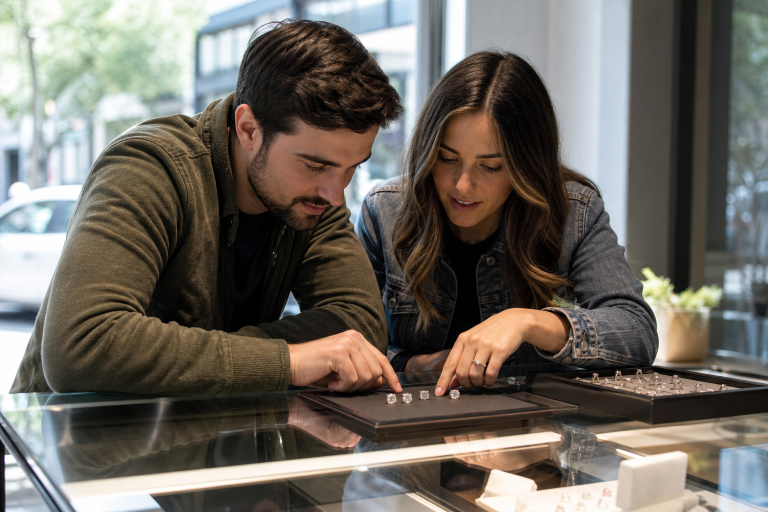
Shape describes a stone’s visible outline, such as round, oval, pear, or emerald. Cut describes the facets, proportions, angles, and finish that affect how the stone handles light. Understanding the basics of diamond cut helps explain why two stones with the same shape and carat weight can look very different. A beautiful shape can still appear dark or lifeless if its proportions are weak. Compare close-up photos, videos, measurements in millimeters, and grading information when it is available. Carat weight matters, but it does not fully capture how large a stone appears from the top or how lively it looks in normal lighting.
Match the Shape to the Desired Look
- Round: Classic, balanced, and easy to pair with many setting styles.
- Oval: Soft and elongated, often creating generous finger coverage.
- Pear: Graceful and distinctive, with a pointed end that benefits from protective prongs or a bezel detail.
- Radiant: Bright and modern, available in square and rectangular outlines.
- Emerald: Clean and elegant, with broad step facets that can make clarity more noticeable.
- Cushion: Romantic and soft-edged, available in square or elongated proportions.
- Marquise: Long, dramatic, and known for a strong face-up presence.
- Princess: Crisp and geometric, with corners that need thoughtful protection.
Proportions matter within every shape. One oval may look narrow and elongated, while another appears wider and softer. Before deciding, compare several stones with different length-to-width ratios and view them in your hand whenever possible.
Choose a Setting That Works Every Day
The setting affects both the ring’s personality and its level of protection. A solitaire keeps the focus on the center stone. A halo adds surrounding sparkle. Pavé bands add small accent stones, while three-stone rings create a more detailed silhouette. Bezel settings use a rim of metal around part or all of the stone, and hidden halos add sparkle from the side.
- Decide how much sparkle feels right.
- Choose whether you prefer visible metal or a more stone-forward look.
- Check if the center stone sits high or low on the finger.
- Look for pointed corners, prongs, or details that could catch.
- Confirm that a future wedding band can sit comfortably beside the ring.
Prongs reveal more of a stone, while a bezel generally provides more metal coverage around it. Neither is automatically better. The ideal choice depends on the stone shape, the wearer’s routine, and the desired style.
Use Style Ideas Without Chasing Them
Current engagement-ring inspiration includes elongated stones, bezel details, three-stone designs, warmer metal tones, antique-inspired cuts, and personalized settings. These ideas can be useful starting points, especially for shoppers who want a ring with more individual character. Still, a trend should be treated as inspiration rather than a requirement. A shopper might choose a marquise center stone or sculptural band while keeping the rest of the design simple enough to enjoy for decades.
Build a Practical Budget
Set a total amount that feels financially comfortable instead of following old salary-based rules. Include more than the center stone in the plan:
- The center stone and any accent stones
- The setting and metal choice
- Ring sizing, taxes, and shipping
- Insurance, appraisal, cleaning, and future repairs
Size is only one part of value. A smaller, well-cut stone in a thoughtful setting may look more appealing than a larger stone with poor proportions or a design that does not suit the wearer.
Plan for Durability and Care
Durable does not mean indestructible. Pointed corners, thin bands, delicate pavé, exposed center stones, and high settings may require extra care. It is wise to remove a ring during activities involving impact, harsh chemicals, or heavy equipment. For routine maintenance, follow a gentle approach consistent with safe diamond cleaning guidance: use mild soap, warm water, a soft brush, and a secure bowl or closed drain. Dry the ring with a lint-free cloth, inspect prongs for visible movement or damage, and arrange professional inspections when the ring is worn frequently.
Review the Details Before Buying
Before placing an order, compare listings and sellers carefully. Confirm the stone measurements, metal purity, sizing policy, return window, warranty terms, delivery coverage, and available customer support. Request videos or multiple photos, and review grading reports when they are appropriate for the stone being purchased.
A Simple Decision Process
- Set a comfortable all-in budget.
- List the wearer’s lifestyle needs and favorite styles.
- Choose two or three possible stone types.
- Compare shapes and proportions on a hand or through a digital try-on tool.
- Select a setting that balances beauty, comfort, and protection.
- Review measurements, policies, and care requirements.
- Compare the final options side by side before purchasing.
Final Thoughts
The strongest engagement-ring choice balances beauty, comfort, durability, meaning, and cost. Rather than focusing solely on carat weight, current trends, or a ring’s appearance in photographs, consider how the design will fit the wearer’s hand, lifestyle, daily activities, and personal preferences. The center stone, setting style, metal, band width, and overall proportions can all influence how the ring looks and feels over time. It is also worth considering maintenance requirements, stone security, resizing options, and how the engagement ring may pair with a future wedding band. Whether the design follows a current style, borrows from a classic era, or creates something entirely personal, the best ring is the one that feels natural to wear and meaningful long after the proposal. Taking time to compare designs, understand the materials, and stay within a realistic budget can make the final choice more thoughtful and practical.