
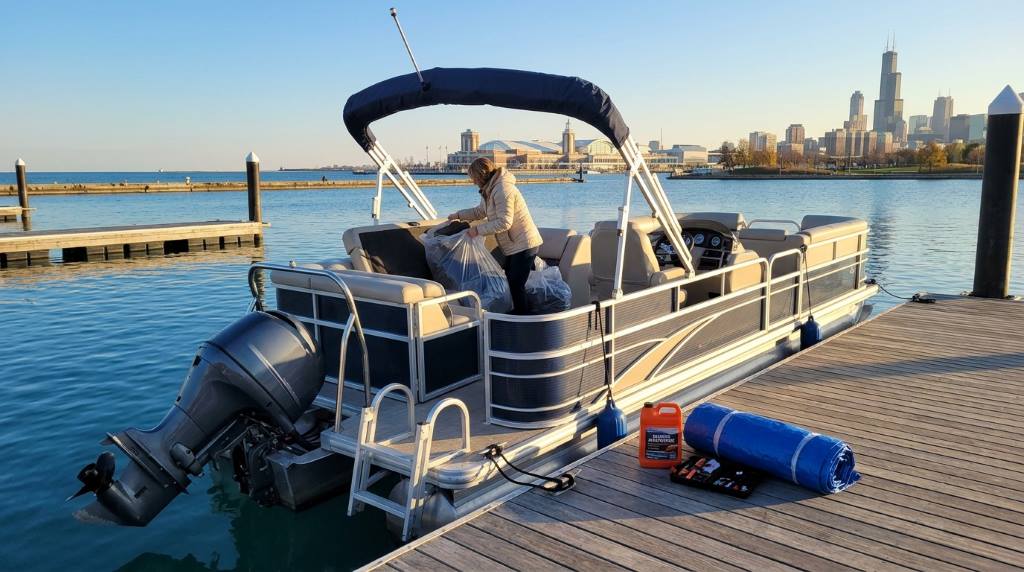
Chicago winters can damage an unprotected pontoon faster than many boat owners expect. According to the National Weather Service, winter temperatures in Chicago often drop below 20°F for extended periods each year. Ice buildup, trapped moisture, and fuel breakdown can create expensive repair problems before spring arrives. Therefore, preparing your family pontoon before the first freeze protects both performance and long-term value. Many experienced owners also use mercury marine fuel treatment to stabilize fuel systems during cold storage. Proper winterization also keeps your family safer and saves money on avoidable maintenance.
Understand Why Chicago Winters Are Tough on Pontoons
Chicago weather creates unique problems for pontoon owners every winter. Freezing temperatures often combine with lake-effect moisture and heavy snow accumulation. As a result, untreated pontoons can develop cracked pipes, corroded wiring, and damaged flooring. Even small amounts of trapped water may freeze and expand inside the system.
Lake Michigan also increases humidity around storage areas throughout the colder months. Moisture trapped under covers can slowly damage seats, carpet, and electronic components. Therefore, many local boat owners now focus on ventilation instead of fully sealing the boat. Some families also review durable gear protection tips because weather-resistant equipment lasts longer in harsh outdoor conditions.
Clean the Pontoon Thoroughly Before Storage
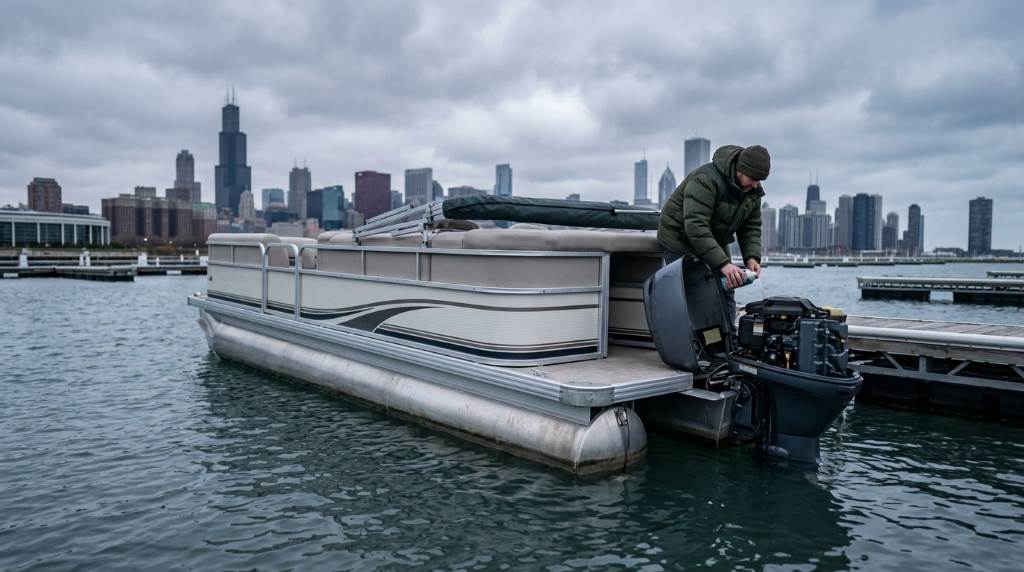
A deep cleaning session prevents long-term staining and mold growth during winter storage. Dirt, algae, and food residue often trap moisture inside the boat during freezing months. Consequently, these materials can damage upholstery and flooring by spring. Cleaning also helps you spot hidden cracks or loose fittings early.
Wash Exterior Surfaces Carefully
Use marine-safe soap to clean pontoons, rails, and deck surfaces before storage begins. Soft brushes remove dirt without scratching aluminum panels or painted areas. Additionally, washing away salt residue reduces corrosion caused by winter moisture exposure. Rinse everything fully and let surfaces dry completely afterward.
Vacuum and Dry Interior Areas
Interior moisture becomes a major problem once temperatures start freezing overnight. Vacuum crumbs, leaves, and debris from seats, flooring, and storage compartments carefully. Then wipe all surfaces with mildew-resistant cleaners designed for marine upholstery. Dry conditions help prevent mold growth during long Chicago winters.
Drain Water Systems Completely
Frozen water can destroy plumbing systems inside your family pontoon within a single night. Water expands during freezing conditions and cracks pipes, pumps, and fittings quickly. Therefore, draining every water-related component remains one of the most important winterization tasks. Many repair shops see costly freeze damage every spring because owners skip this step.
Empty Live Wells and Water Tanks
Live wells and freshwater tanks must remain completely empty before winter storage begins. Even small pockets of water can freeze and create internal pressure damage. Open all drain plugs and allow systems to dry fully for several hours. Afterward, inspect hoses for hidden moisture or sediment buildup.
Protect Marine Toilets and Pumps
If your pontoon includes a portable toilet or sink system, use marine antifreeze carefully. Non-toxic antifreeze protects pumps and hoses from freezing temperatures during storage. Moreover, flushing systems fully prevents lingering odors from developing over winter. Always follow manufacturer instructions for proper antifreeze application.
Stabilize and Protect the Fuel System
Fuel degradation becomes a serious issue when boats remain unused for several months. Old gasoline creates varnish buildup that clogs injectors and damages engines over time. Consequently, stabilizing the fuel system keeps the motor ready for spring operation. This step also improves engine reliability once boating season returns.
Add fuel stabilizer directly into the tank before your final run of the season. Then operate the engine for several minutes so treated fuel circulates completely. Many owners also inspect fuel lines for cracks caused by changing temperatures. Some boaters researching seasonal outdoor equipment care often apply similar storage habits to marine gear as well.
Prepare the Engine for Freezing Temperatures
The engine requires extra attention because winter damage often leads to expensive repairs later. Chicago’s prolonged cold spells can harm internal engine components without proper preparation. Therefore, careful engine winterization protects both performance and resale value. A well-maintained engine also starts faster once spring arrives.
Change Engine Oil Before Storage
Old engine oil contains contaminants that slowly damage internal parts during long storage periods. Replacing oil before winter removes harmful acids and moisture from the system. Fresh oil also creates better lubrication for months of inactivity. Always replace oil filters during this maintenance process.
Fog the Engine Properly
Fogging oil coats internal engine parts and reduces rust during cold-weather storage. This process protects cylinders, pistons, and valves from moisture buildup throughout winter. Additionally, fogging helps older pontoon motors remain reliable after months without operation. Follow the engine manual carefully for the correct procedure.
Remove and Store the Battery Correctly
Cold temperatures can shorten battery life dramatically if the battery stays neglected during winter. Frozen batteries may crack internally and fail completely before spring arrives. Therefore, removing and maintaining the battery indoors remains a smart investment. Proper storage also improves long-term charging performance.
Disconnect the battery terminals carefully and clean away any corrosion before storage. Store batteries in a cool and dry indoor space away from concrete floors. Using a trickle charger helps maintain healthy charge levels through winter months. Check the battery condition at least once every few weeks.
Protect Seats, Flooring, and Electronics
Interior damage often appears slowly during winter storage and becomes noticeable only in spring. Moisture buildup can destroy vinyl seating and weaken marine flooring materials over time. Consequently, preventive protection saves money and keeps the pontoon looking newer longer. Electronics also require special care during freezing conditions.
Use Moisture Absorbers Inside the Boat
Moisture absorbers help reduce condensation inside covered pontoons during snowy Chicago winters. Damp air trapped under covers often creates mildew and unpleasant odors quickly. Therefore, place moisture control products in storage compartments and seating areas evenly. Replace them periodically if winter storage lasts several months.
Remove Sensitive Electronics
Portable fish finders, GPS units, and speakers should remain indoors during extreme cold weather. Freezing temperatures may weaken internal circuits and reduce battery performance permanently. Additionally, indoor storage lowers theft risk during the off-season. Label wires clearly before disconnecting equipment for easier spring installation.
Choose the Right Storage Method
Storage decisions strongly affect how well your pontoon survives Chicago’s winter climate. Outdoor exposure creates more risks from snow accumulation, ice, and freezing rain. However, proper preparation still protects boats stored outside successfully. Understanding each option helps families make the best long-term decision.
Indoor Storage Advantages
Indoor storage provides the highest level of protection against severe winter conditions. Heated facilities reduce moisture buildup and limit temperature fluctuations around the boat. Consequently, interiors, engines, and electronics usually remain in better condition. Many owners also save time on spring cleaning and repairs.
Outdoor Storage Best Practices
If outdoor storage becomes necessary, choose a heavy-duty marine cover with proper ventilation. Tight covers without airflow often trap condensation underneath during temperature swings. Also, support poles help prevent snow from pooling across the cover surface. Clear heavy snow accumulation quickly to avoid structural stress.
The Overlooked Winter Threat Most Blogs Ignore
Many winterization guides focus only on engines and plumbing while ignoring rodent damage completely. During Chicago winters, mice and small animals often seek shelter inside covered pontoons. They chew wiring, destroy seat foam, and create nests inside compartments surprisingly fast. Therefore, rodent prevention deserves serious attention before storage begins.
Place rodent deterrents near storage compartments, wiring areas, and seating bases before sealing the boat. Peppermint-based repellents and dryer sheets remain popular among experienced marina owners locally. Additionally, inspect the boat monthly for signs of nesting or chewed materials. This uncommon but practical step can prevent costly spring repairs.
Create a Simple Winter Inspection Schedule
Many owners forget about their pontoon completely once winter storage begins in late fall. However, periodic inspections help catch problems before they become severe. Snow damage, loose covers, and moisture buildup often develop gradually over time. Therefore, monthly inspections remain extremely valuable during Chicago winters.
- Check cover tension after heavy snowfall.
- Inspect moisture absorbers monthly.
- Look for signs of pests or nesting.
- Verify battery charger operation regularly.
- Remove excess snow immediately after storms.
Prepare Early Instead of Waiting for the First Freeze
Many Chicago boat owners delay winterization until temperatures suddenly drop below freezing overnight. Unfortunately, early freezes can arrive faster than expected during late autumn. Preparing ahead reduces stress and allows more time for careful inspections. Early winterization also helps avoid crowded service appointments at local marinas.
Scheduling maintenance in early fall often lowers service costs before peak winter demand begins. Additionally, replacement parts become easier to find before repair shops get overwhelmed. Families who prepare early usually experience fewer spring startup issues as well. Planning ahead creates a smoother boating season overall.
Conclusion
Winterizing your family pontoon before the freeze in Chicago, IL protects your investment from expensive seasonal damage. Careful preparation helps preserve the engine, fuel system, interior, and electronics during months of freezing temperatures. Moreover, regular inspections and moisture control keep the boat in stronger condition for spring adventures. Families who follow consistent winterization routines often enjoy longer boat life and lower repair costs. For even better long-term protection, many outdoor enthusiasts also explore weather-resistant gear maintenance ideas that apply well to marine equipment care. Start preparing your pontoon today so your family can enjoy a smoother and safer boating season next year.
FAQs
How early should I winterize my pontoon in Chicago?
You should winterize your pontoon before nighttime temperatures consistently approach freezing levels.
Can I leave my pontoon battery inside the boat during winter?
Removing and storing the battery indoors helps extend battery life and prevents freeze damage.
Do I need antifreeze for my pontoon plumbing system?
Yes, marine antifreeze protects pumps and plumbing components from freezing temperatures.
How often should I inspect my stored pontoon during winter?
Checking the boat at least once each month helps identify moisture, snow, or pest problems early.
Is indoor storage better than outdoor storage for pontoons?
Indoor storage offers stronger protection against snow, moisture, and temperature fluctuations.