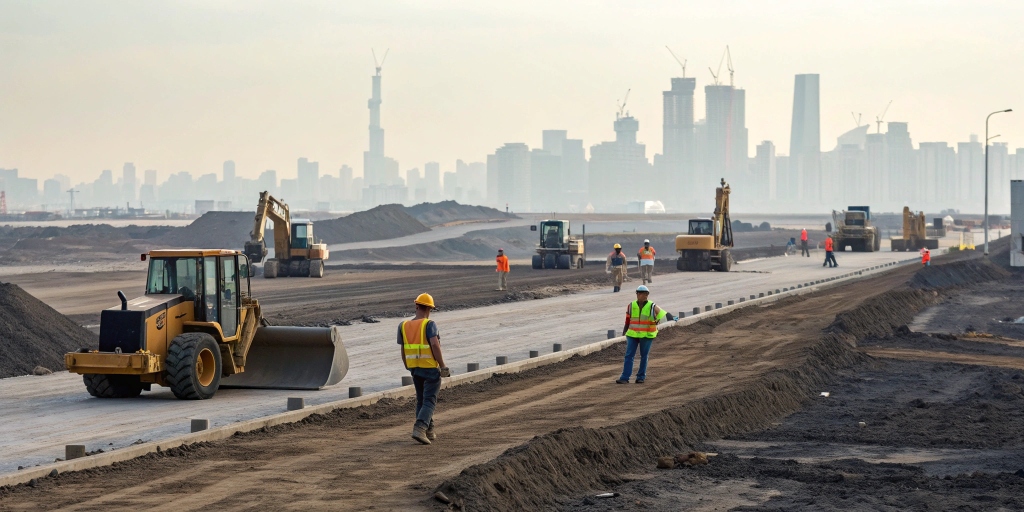
Public works projects demand coordination, resources, and expertise that extend far beyond standard local builds. Cities and nations increasingly turn to international construction companies to deliver complex infrastructure that meets both modern needs and long-term sustainability goals. These partnerships bring together a mix of global experience, advanced technology, and standardized quality that reshape how large-scale government construction is executed worldwide.
Broader Project Execution Capacity Across Multiple Jurisdictions
An international construction company operates across borders with logistical precision. Their networks allow seamless coordination between teams stationed in different countries, giving them the ability to take on massive projects that span multiple jurisdictions. This global construction reach enables governments to work with a single contractor capable of uniting architectural design, engineering expertise, and workforce mobilization from several regions.
Such capacity ensures consistent progress even in remote or politically diverse environments. By working with established global frameworks, these companies maintain uninterrupted supply lines and manage complex scheduling requirements that local firms may struggle to handle. This efficiency becomes especially valuable in defense installations, public utilities, and transport infrastructure that rely on timely delivery and international compliance.
Consistent Construction Standards Aligned with Global Benchmarks
Uniformity in quality remains one of the strongest assets of global construction firms. Their projects adhere to international safety codes, environmental guidelines, and performance certifications recognized across continents. This alignment ensures public facilities such as hospitals, airports, and bridges are built to the same high standards found in leading global cities.
These standards also help governments maintain transparency and accountability in their construction investments. An international construction company uses detailed reporting systems and performance audits to document compliance with both global and local requirements. The result is infrastructure that stands the test of time and reflects international benchmarks in engineering excellence.
Access to Specialized Crews for Infrastructure-scale Builds
Large-scale government construction demands specialized skill sets not always available locally. International firms recruit teams with expertise in areas like tunneling, marine engineering, or energy systems integration. This access to niche professionals shortens project timelines and enhances precision across all technical phases.
In many cases, these specialized crews transfer advanced techniques to local teams, creating long-term workforce development benefits. An international construction company invests in training and safety programs that raise standards within host nations. Such collaboration strengthens regional capabilities while ensuring each project meets global expectations.
Streamlined Procurement Through International Vendor Networks
Sourcing materials for public infrastructure can be one of the most challenging aspects of large projects. Global construction firms simplify this through established vendor networks that operate across multiple continents. These partnerships provide access to high-quality materials, machinery, and technology without the delays that often come from fragmented supply chains.
In addition to speed, international procurement delivers cost efficiency. Because these companies buy in large volumes and maintain long-term supplier relationships, they secure better pricing and more reliable delivery schedules. This streamlined approach reduces project risk and helps governments allocate funds more effectively during major construction initiatives.
Resilient Project Management in Cross-border Environments
Public works carried out under varying legal and cultural systems require adaptable management structures. International construction companies implement frameworks that synchronize different regulatory requirements while maintaining consistent oversight. Their teams manage documentation, logistics, and workforce deployment through integrated systems designed for cross-border efficiency.
This level of coordination minimizes misunderstandings and reduces project downtime. Government construction projects benefit from such management resilience, particularly in politically sensitive or geographically dispersed developments. The ability to coordinate diverse teams under unified standards distinguishes global construction operations from purely domestic competitors.
Enhanced Risk Control Supported by Multinational Experience
Large-scale infrastructure projects carry financial, environmental, and operational risks that require advanced mitigation strategies. An international construction company draws from its global experience to anticipate potential disruptions—ranging from supply shortages to weather extremes—and design contingency plans around them.
This multinational perspective allows better forecasting and proactive problem-solving. With experience across multiple climates and regulatory systems, firms like Nav Int apply proven risk management models that safeguard budgets and schedules. Government agencies partnering with such companies gain assurance that projects will withstand unforeseen conditions while maintaining consistent progress.
Seamless Collaboration with Government and Private Stakeholders
Public works often involve coordination between state agencies, contractors, and private investors. International construction companies excel in this environment because they maintain dedicated liaison teams that handle multi-party communication. Their established processes help align objectives between different stakeholders and ensure regulatory transparency throughout development.
Effective collaboration also builds trust. Through structured reporting systems and digital project monitoring, these firms keep both government officials and community representatives informed. The resulting transparency not only strengthens accountability but also accelerates decision-making on large-scale projects requiring cross-sector coordination.
Proven Adaptability to Regional Building Regulations and Climates
Infrastructure built across various nations must meet different environmental and regulatory expectations. A global construction firm understands how to adapt its building methods to local codes and climate conditions without sacrificing performance. This adaptability allows governments to benefit from modern engineering solutions while maintaining compliance with domestic laws.
Their experience in regions with extreme weather, seismic zones, or strict energy standards gives them insight that smaller local firms often lack. International teams apply this knowledge to modify materials, insulation methods, or foundation designs suited for local conditions. This adaptability ensures projects are both durable and sustainable in their specific environments.
Long-term Value Realized Through Globally Integrated Construction Systems
Public infrastructure built by global construction experts delivers measurable value far beyond its initial completion. These companies integrate systems designed for long-term maintenance, scalability, and energy efficiency. Their focus on lifecycle cost management ensures that facilities continue to perform efficiently decades after installation.
An international construction company’s ability to blend advanced technology with regional practicality creates a foundation for sustainable development. Projects managed under this model—such as highways, water systems, and civic complexes—embody innovation and operational reliability. The result is lasting value that benefits both present and future generations.